
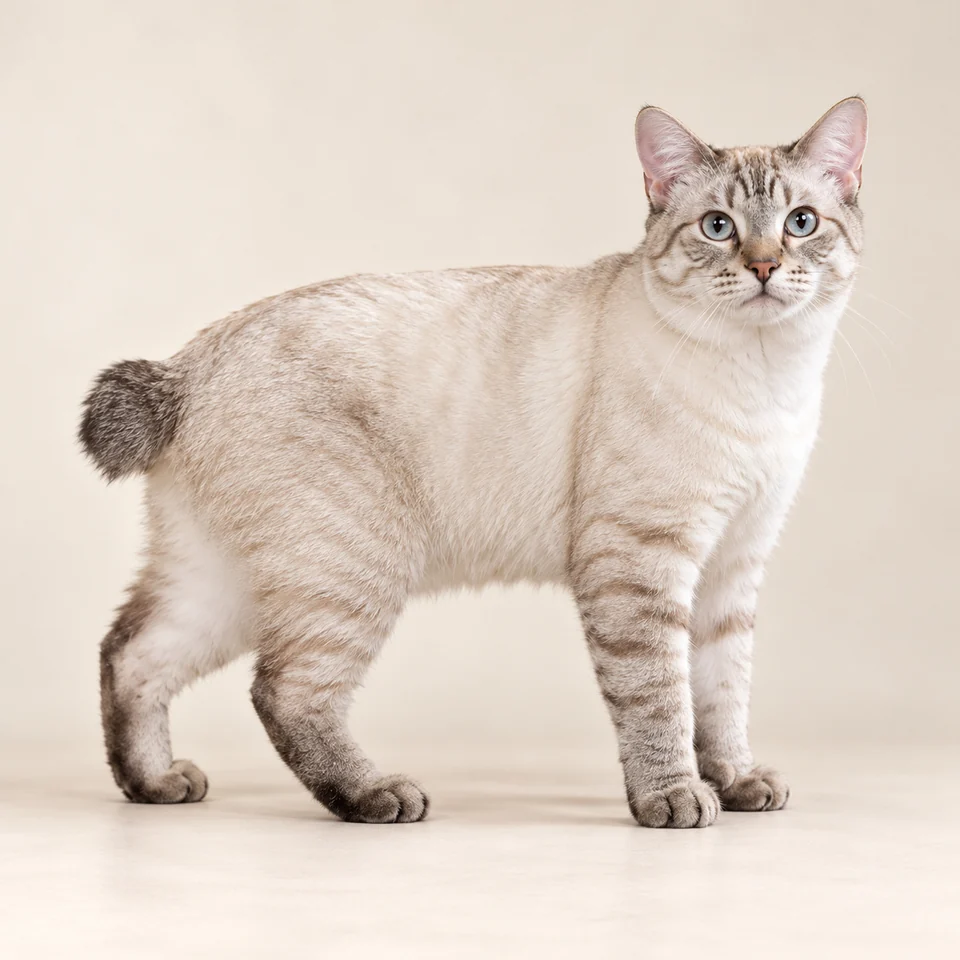
The American Bobtail has a naturally short tail and a wild, hunting-cat look.
But it is 100% domestic. It has a mellow, adaptable personality and very high intelligence. It is athletic and powerful, yet gentle and loving. The American Bobtail Shorthair is the shorthair version of the breed.
Quick facts
- Where it beganCFATICA
- United States (Arizona) and Canada. The breed was inspired by a bobtailed cat found in Arizona and built from feral bobtailed cats across the US and Canada. The show standard calls it native to North America.
- When it beganCFA
- Late 1960s
- Coat feelCFATICA
- Non-matting and resilient with slight loft; hard topcoat with soft, downy undercoat. It is medium-short, stands slightly away from the body and suits all weather.
- WeightCFATICA
- Adult females weigh 7–11 lb and adult males 12–16 lb. Females are generally smaller than males.
- LifespanTICA
- Life expectancy is 11 to 15+ years, with proper care.
Appearance
The head and body stand out more than the tail.
A fleshy brow over almond-like eyes gives a 'hunting gaze'. The body is moderately long with a broad chest. It may feel surprisingly heavy because of its muscle. The tail is about half the length of a normal tail.
Source:CFA
Body
Moderately long and substantial, rectangular stance, full broad chest, muscular and athletic; substantial boning
Colors and patterns
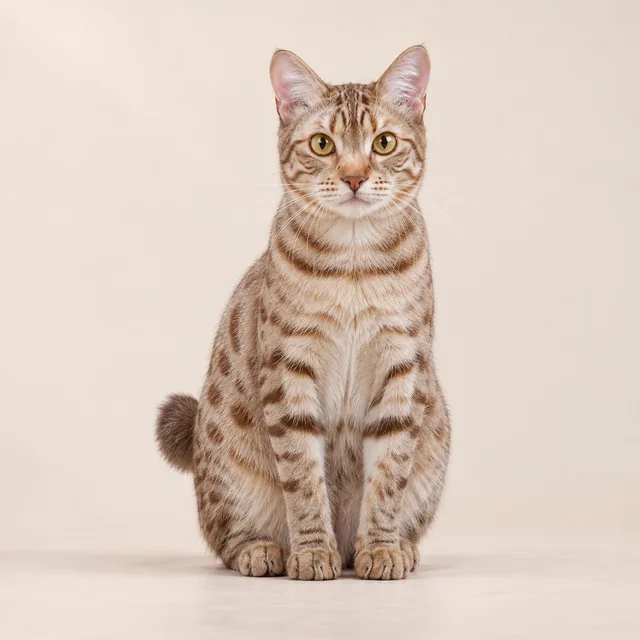
Any color or pattern. Any genetically possible color is allowed, and colors that enhance the wild look are preferred.
Eye colors
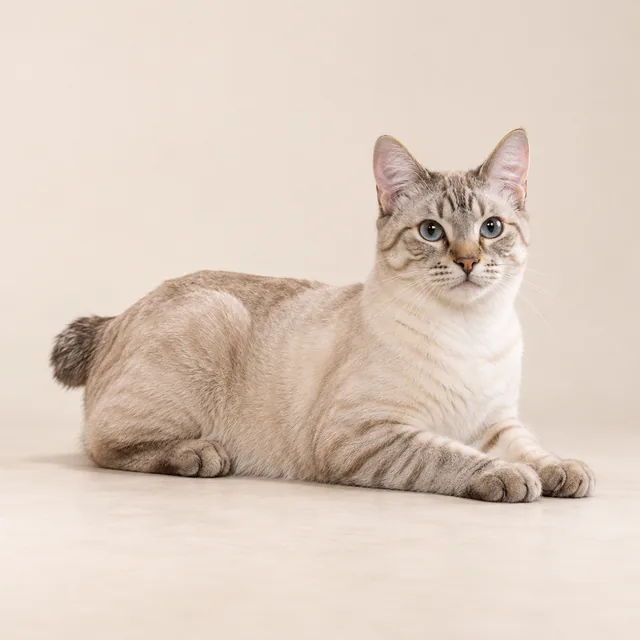
All eye colors are acceptable: copper, gold, yellow or green; blue in bi-color/van, colorpoint, lynx point or odd-eyed white cats. Eye color does not depend on coat color, except in pointed, mink and sepia cats.
Personality
American Bobtails are very intelligent and independent, yet affectionate.
They form strong bonds with their families. The breed has a subtle personality, affectionate rather than demanding. They seem sensitive to human moods.
With their people
They do not like to be alone. They attach to the whole family, not just one person. They may seek out upset owners to offer a purr or cuddle.
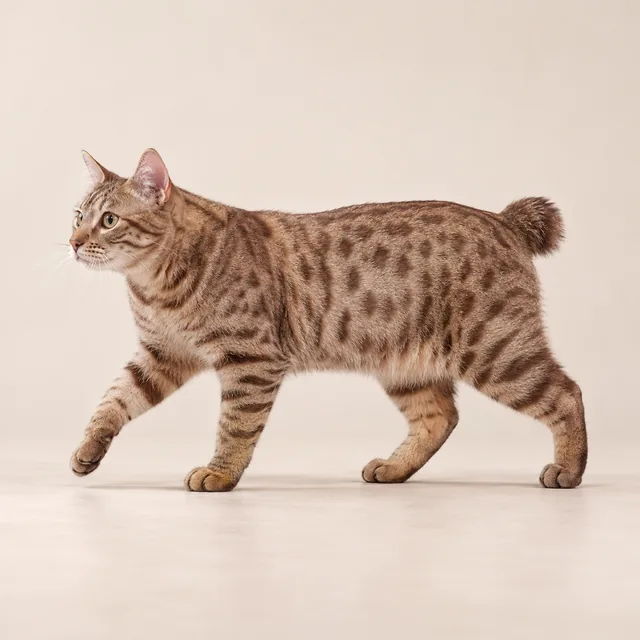
Living with an American Bobtail Shorthair
They are easygoing and tolerant.
They are excellent companions for children and get on well with dogs. They get along well with older children and other pets, including dogs.
With children
An excellent companion for children. It gets along well with older children.
With other pets
They are quite compatible with dogs. They get along with other pets, including the family dog.
Activity
Most are moderately active. They are neither couch potatoes nor always on the move. They develop their own games, most about hunting. They love to stalk and pounce on toys. They often carry the 'prey' around proudly.
Care
Health
Major health problems are not expected, given the breed's diverse genes.
But the tail mutation could raise the risk of spine and hip problems. Some of these can be inherited. Completely tailless cats may have incontinence.
Source:CFA
Screening
Completely tailless cats may have incontinence. Responsible breeders quickly remove cats with such issues from breeding.
Source:CFA
CFA health notes
The tail mutation could make cats prone to spine and hip problems, some heritable. Completely tailless cats may have incontinence. Responsible breeders remove such cats from breeding.
Source:CFA
This is what CFA says about the breed. It is not a health promise for any kitten. TrueKitten verifies breeder identities and documents, but that does not guarantee a kitten's health. Ask the breeder for test results and talk to your vet.
History
The breed was inspired by a bobtailed cat found in Arizona in the late 1960s.
This brown tabby stray, 'Yodie', was bred to a seal point Siamese. The short-tailed kittens pointed to a dominant bobtail gene in feral cats. Breeders then used feral bobtailed cats from across the US and Canada.
Source:CFA
Did you know?
- American Bobtails often carry captured toy 'prey' in their mouths.
- They are often used in special needs classrooms and for people with PTSD and anxiety disorders.
- Cats from thousands of miles apart with no common ancestry looked strikingly alike.
- They may trill, chirp or make clicking sounds.
Source:CFA
For breeders
Details from the CFA and TICA show standards. Cat show judges use them. They do not rate a kitten as a pet.
What the show standards ask for
- Both: medium to large, naturally occurring short-tailed cat; athletic and well muscled.
- Head: broad modified wedge without flat planes or doming (both).
- Brow: fleshy brow creating the 'hunting gaze'; eyes large, almost almond, deep set.
- Ears: medium to moderately large, wide-set, slight outward tilt; tipping/furnishings desirable.
- Body: moderately long, substantial, rectangular stance, full broad chest (both).
- Tail: visible above the back when alert; at least 1 inch of bone; may reach but not pass a stretched hind hock.
- Coat: double coat in both lengths; seasonal variation recognized (both).
- Slow to mature: two to three years.
Points show how much each part counts when a judge scores a cat at a show. They add up to 100.
CFA colors and patterns
Any genetically possible color or combination, including solids, smokes, tabbies, parti-colors, bi-colors, pointed, lynx point and mink patterns; buttons and lockets allowed.
Source:CFA
CFA allowed outcrosses
No recognized breeds or wild blood. Single registration of domestic shorthair or longhair cats with a natural bobtail is allowed with written approval (for cats born 1/1/2002–1/1/2030). No tailless cats in breeding.
Source:CFA
CFA allowances
- Slow maturation; adult body type develops over three years.
- Seasonal coat variation; softer coat in dilutes, lynx points and silvers.
- No penalty for lack of rufusing in tabbies.
- Buttons and lockets allowed with no penalty.
Source:CFA
TICA allowances
- Tail may be slightly knotted or kinked, curled or hooked at the end, if flexible at the base.
- A kitten's tail bone may be shorter than the adult 1 inch.
- Seasonal coat variation recognized.
- Lockets allowed; tarnishing on silvers not penalized.
Source:TICA
CFA penalties
- Tail too long or too short for balance.
- Tail kinked or knotted out of shape.
- Tail rigid, fragile or set low.
- Straight tail without a fat pad.
- Round eyes.
- Weak chin.
- Extremely short muzzle or nose break.
- Cottony coat.
Source:CFA
CFA disqualifications
- Total lack of tail or full-length tail.
- Delicate bone structure.
- Incorrect number of toes.
Source:CFA
TICA disqualifications
- No tail, full-length tail or docked tail.
- Tail with less than 1 inch of bone, or fused and not flexible at base.
- Plus the general show-rule disqualifications (e.g. biting, challenging temperament).
Source:TICA
CFA breeding notes
Tailed kittens may occur in litters. They cannot be shown, but are excellent pets and part of an ethical breeding program. Tailless cats, recognized breeds and wild blood are forbidden in the breeding program.
Source:CFA
Common questions
Adult females weigh 7–11 lb and adult males 12–16 lb. Females are generally smaller than males.
Life expectancy is 11 to 15+ years, with proper care.
This breed matures slowly. It can take up to three years to reach full size. One show standard says 2–3 years. The other says over three years.
They are easygoing and tolerant. They are excellent companions for children and get on well with dogs. They get along well with older children and other pets, including dogs.
They do not like to be alone. They attach to the whole family, not just one person. They may seek out upset owners to offer a purr or cuddle.
They are easily leash trained and love walks with their people. They can easily be taught to walk on a leash and play fetch.
The coat, even the longhair, is easy to keep up. Weekly brushing or combing is enough.
Major health problems are not expected, given the breed's diverse genes. But the tail mutation could raise the risk of spine and hip problems. Some of these can be inherited. Completely tailless cats may have incontinence.
Tailed kittens may occur in litters. They cannot be shown, but are excellent pets and part of an ethical breeding program. Tailless cats, recognized breeds and wild blood are forbidden in the breeding program.
Questions to ask a breeder
- Have the parents or earlier kittens had any spine or hip problems?
- Has any cat in your lines been completely tailless, and were there incontinence issues?
- How long is this kitten's tail, and is it flexible at the base?
- How do you handle tailed kittens in your litters?
- Has this kitten been around children or dogs?
Sources
Every fact on this page comes from the two cat registries, CFA and TICA.
Last updated