
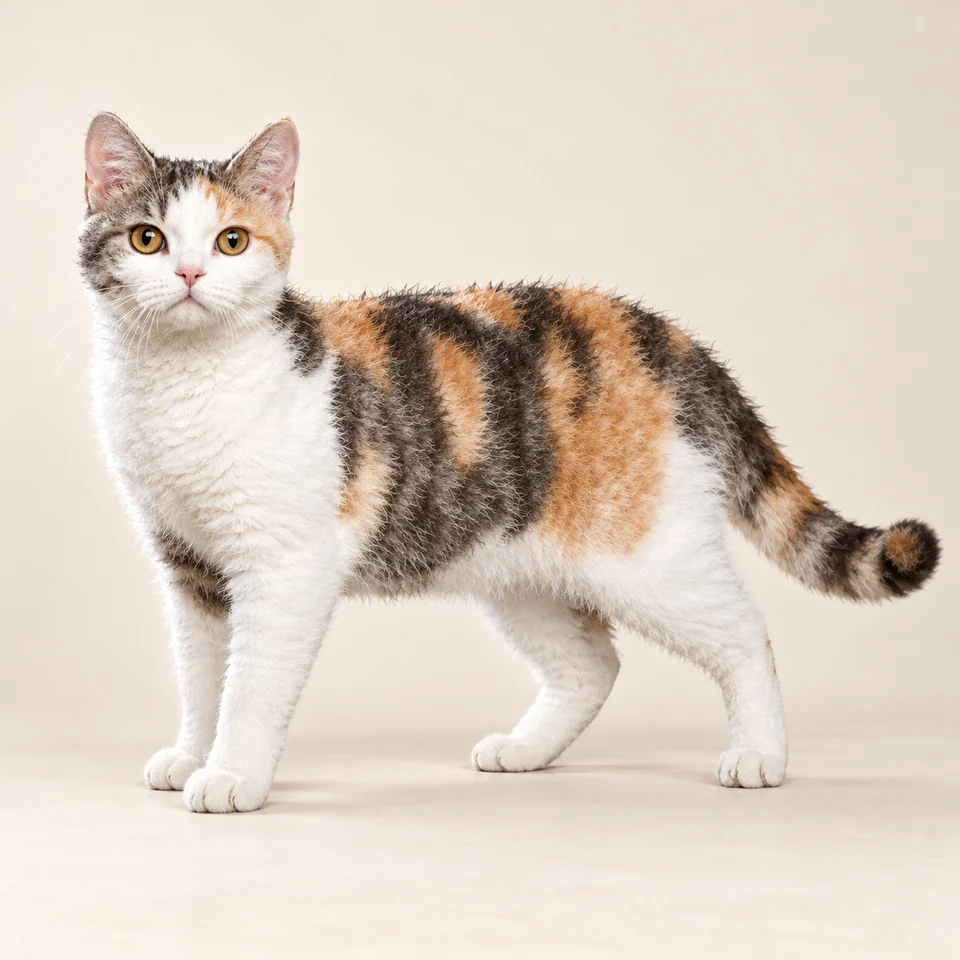
The American Wirehair is known for its crisp, springy, wiry coat.
It is like steel wool, but fuzzy. The breed began as a natural mutation in upstate New York in 1966. It looks much like the American Shorthair. It has an easy-going, friendly personality.
Source:CFA
Quick facts
- Where it beganCFA
- Upstate New York, USA.
- When it beganCFA
- 1966
- SizeCFA
- Medium to large.
- Coat lengthCFA
- Shorthair (wired or straight coat)
- Coat feelCFA
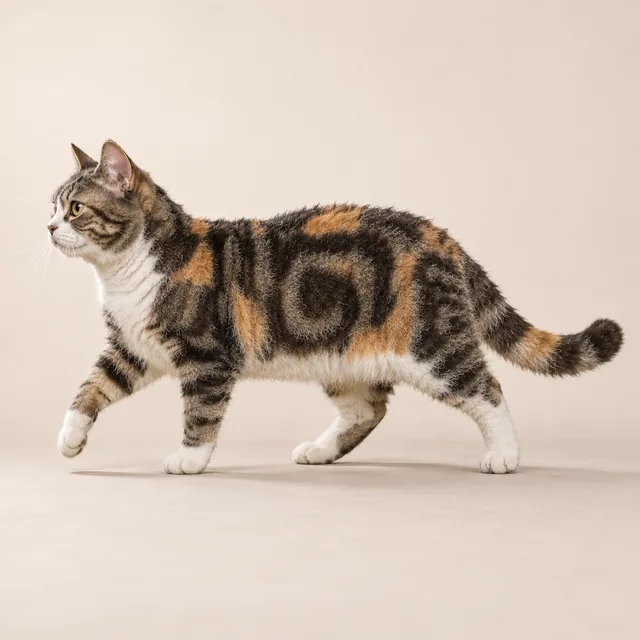
- Wired coat: springy, dense, resilient, coarse and hard to the touch. Hairs are crimped, hooked or bent, even inside the ears. Coats vary from soft and wooly to harder and sparser. The straight-coat version is dense and thick.
- WeightCFA
- The breed is medium to large, with males larger than females.
- Fully grownTICA
- They do not mature until around three or four years old.
- CFA statusCFA
- Championship (since 1978)
Appearance
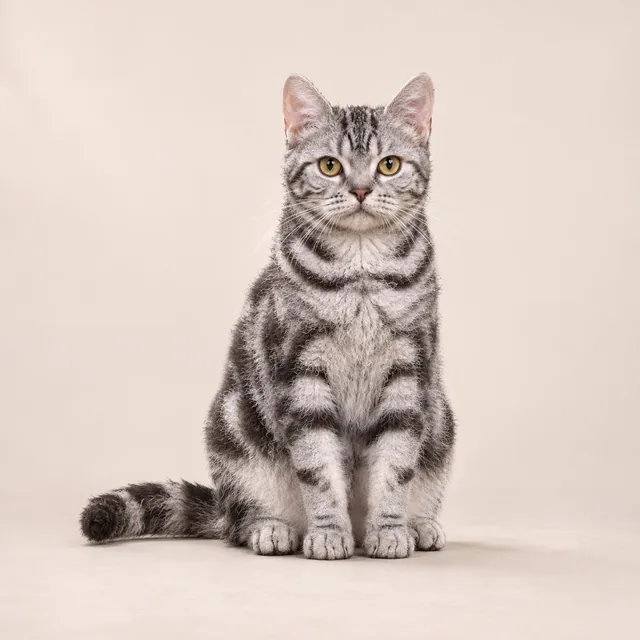
Wirehairs look like American Shorthairs in build, with strong bodies and well-developed muzzles.
Their cheekbones are more prominent. Their eyes are large and round. Even the whiskers and ear hair should be crimped or bent.
Source:CFA
Body
Like the American Shorthair: strong, powerful body; level back; shoulders and hips the same width; well-rounded torso
Source:CFA
Colors and patterns
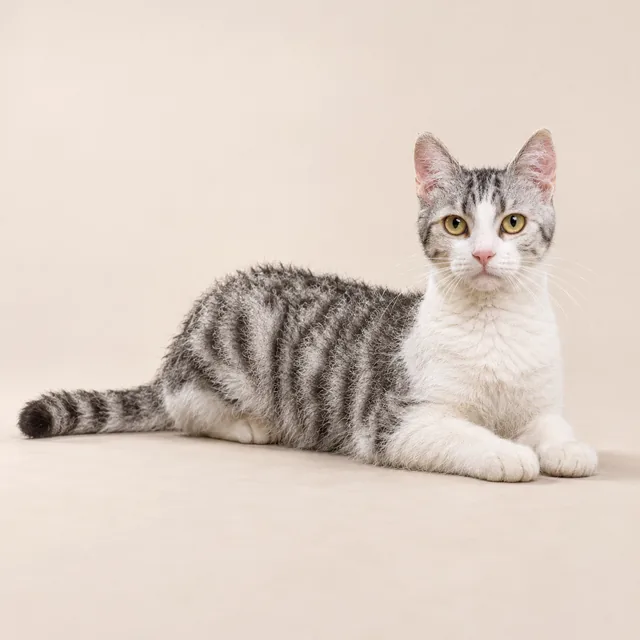
Many colors and patterns: solids, silvers and cameos, smokes, tabbies (classic, mackerel, spotted, ticked), tortoiseshell, calico, blue-cream and bi-color. One registry disqualifies chocolate, lavender and the Himalayan pattern. The other accepts all colors.
About this variety
The wired coat is the breed's mark. The coat counts for 45 of 100 points in judging, more than in any other breed. Some kittens are straight-coated. Shows have classes for both the wired and straight versions. Head and body type match the American Shorthair; only the coat differs.
Personality
Wirehairs are easy-going and amiable, with an even temperament.
With their people
A Wirehair may have a favorite person but makes time for everyone. Each family member gets head butts and purrs. They are independent enough to be left alone during the day.
Source:CFA
Voice
They are not very vocal. They may greet you with a questioning mew after a long absence. They may purr to remind you it is playtime.
Source:CFA
Living with an American Wirehair
They adapt easily to other pets and are gentle with children.
Activity
Wirehairs like to watch what you do more than join in. But once a toy game starts, they get quite excited. You might not get the toy back. The breed is active and agile.
Source:CFA
Training
Some are mechanically gifted and can learn to open cabinets or drawers, especially ones with food.
Source:CFA
Care
Wirehairs are one of the easiest breeds to groom.
Source:CFA
Baths
An occasional bath can reduce shedding. No blow-drying is needed; towel dry and keep the cat warm until dry. Some owners use a rolling lint collector instead of a bath.
Source:CFA
Skin care
Some American Wirehairs have sensitive skin. To keep the skin and coat clean with regular bathing. The coat can be a little greasy, and bathing removes the grease.
Source:TICA
Heat and cold
After a bath, towel dry the cat. Then keep it in a warm room until it is no longer damp.
Source:CFA
Health
There is no record of health problems characteristic to the breed.
It is not known to be prone to genetic or hereditary illness. Regular vet visits are still advised.
Screening
Most breeders use genetic testing. Some also check breeding cats by echocardiogram to help prevent hypertrophic cardiomyopathy (HCM). This reflects breeder care, not known health issues.
Source:CFA
CFA health notes
Despite close line breeding, no health problems are on record as characteristic of the breed. Most breeders use genetic tests and may echocardiogram breeding cats to help prevent HCM.
Source:CFA
This is what CFA and TICA say about the breed. It is not a health promise for any kitten. TrueKitten verifies breeder identities and documents, but that does not guarantee a kitten's health. Ask the breeder for test results and talk to your vet.
History
The wire coat first appeared in 1966 in a litter of barn cats in upstate New York.
Did you know?
- The wirehair mutation has not occurred in any other country that it knows of.
- The coat carries 45 of 100 points in the show standard, more than any other breed's coat.
- Even the whiskers should be crimped or bent.
- Some owners use a rolling lint roller instead of a bath.
Source:CFA
For breeders
Details from the CFA and TICA show standards. Cat show judges use them. They do not rate a kitten as a pet.
What the show standards ask for
- A spontaneous mutation; the wired coat — springy, dense, resilient, coarse and hard — sets it apart.
- Coat: crimped, hooked or bent hairs, including in the ears; ringlets rather than waves; overall wiring matters more than each hair.
- Straight coat: dense, thick, medium length; may show slight crimping and curly whiskers.
- Head: round bone structure, prominent cheekbones, well-developed muzzle and chin, slight whisker break.
- Eyes: large, rounded, bright, clear, set well apart, slight upward tilt.
- Body: medium to large; level back; shoulders and hips same width; males larger.
- Tail: in proportion, tapering to a rounded tip.
- Head and body type same as the American Shorthair; only the coat differs.
Points show how much each part counts when a judge scores a cat at a show. They add up to 100.
CFA colors and patterns
Solids (white, black, blue, red, cream); chinchilla/shaded silver and cameo; smokes; classic, mackerel, spotted and ticked tabbies; tortoiseshell, calico, dilute calico, blue-cream, bi-color; OWC (other colors) except hybridization colors (chocolate, lavender, Himalayan pattern).
Source:CFA
CFA allowances
- Jowls allowed in adult males.
- Wired or straight coat may be shown, each in its class, with the same point allocation.
Source:CFA
CFA disqualifications
- Incorrect coat.
- Kinked or abnormal tail.
- Long or fluffy fur.
- Incorrect number of toes.
- Hybridization colors: chocolate, lavender, the Himalayan pattern, or these with white.
Source:CFA
CFA breeding notes
The wire coat is dominant but semi-penetrating. Bred to a straight-coated cat, about half the kittens will be wired on average. Two Wirehairs produce more wired kittens. The American Shorthair is an allowable outcross.
Source:CFA
TICA standard version
Revised 05/01/04 American Shorthair Breed Group Standard, 05/01/2004
Source:TICA
Common questions
The wired coat is the breed's mark. The coat counts for 45 of 100 points in judging, more than in any other breed. Some kittens are straight-coated. Shows have classes for both the wired and straight versions. Head and body type match the American Shorthair; only the coat differs.
The wire coat is dominant but semi-penetrating. Bred to a straight-coated cat, about half the kittens will be wired on average. Two Wirehairs produce more wired kittens. The American Shorthair is an allowable outcross.
Wirehairs are one of the easiest breeds to groom.
An occasional bath can reduce shedding. No blow-drying is needed; towel dry and keep the cat warm until dry. Some owners use a rolling lint collector instead of a bath.
They adapt easily to other pets and are gentle with children. They are popular with families and very tolerant of children.
A Wirehair may have a favorite person but makes time for everyone. Each family member gets head butts and purrs. They are independent enough to be left alone during the day.
They do not mature until around three or four years old.
There is no record of health problems characteristic to the breed. It is not known to be prone to genetic or hereditary illness. Regular vet visits are still advised.
Questions to ask a breeder
- Is this kitten wire-coated or straight-coated?
- Have the parents been genetically tested or echocardiogram screened for HCM?
- How should I care for this kitten's coat?
- Do you have retired adults or straight-coated kittens available?
- How has this kitten been socialized with children and pets?
Sources
Every fact on this page comes from the two cat registries, CFA and TICA.
Last updated