
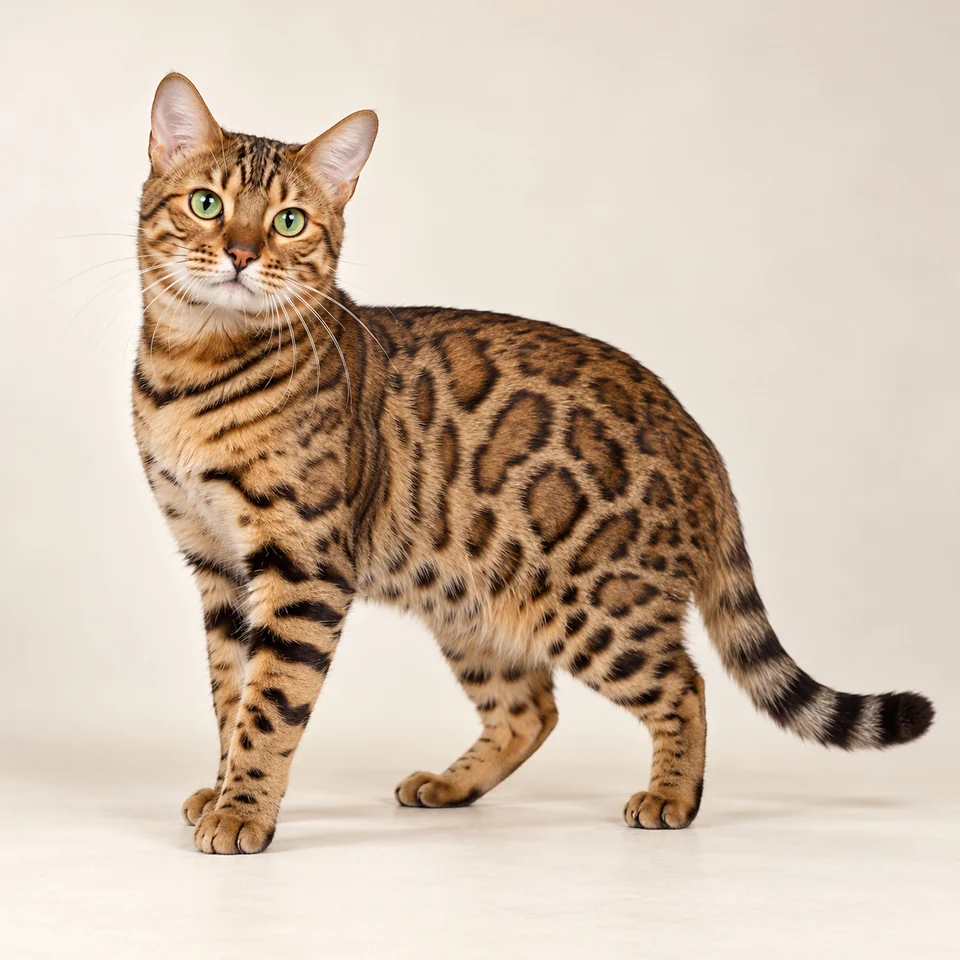
The Bengal has a wild look and a sweet nature.
Only the Bengal has dramatic rosettes with dark outlines. It descends from a wild cat, the Asian Leopard Cat. Breeders have long made good temperament a top priority. Today’s Bengal is a playful and loving companion.
Source:CFA
Bengal kittens you can meet
See all Bengal kittens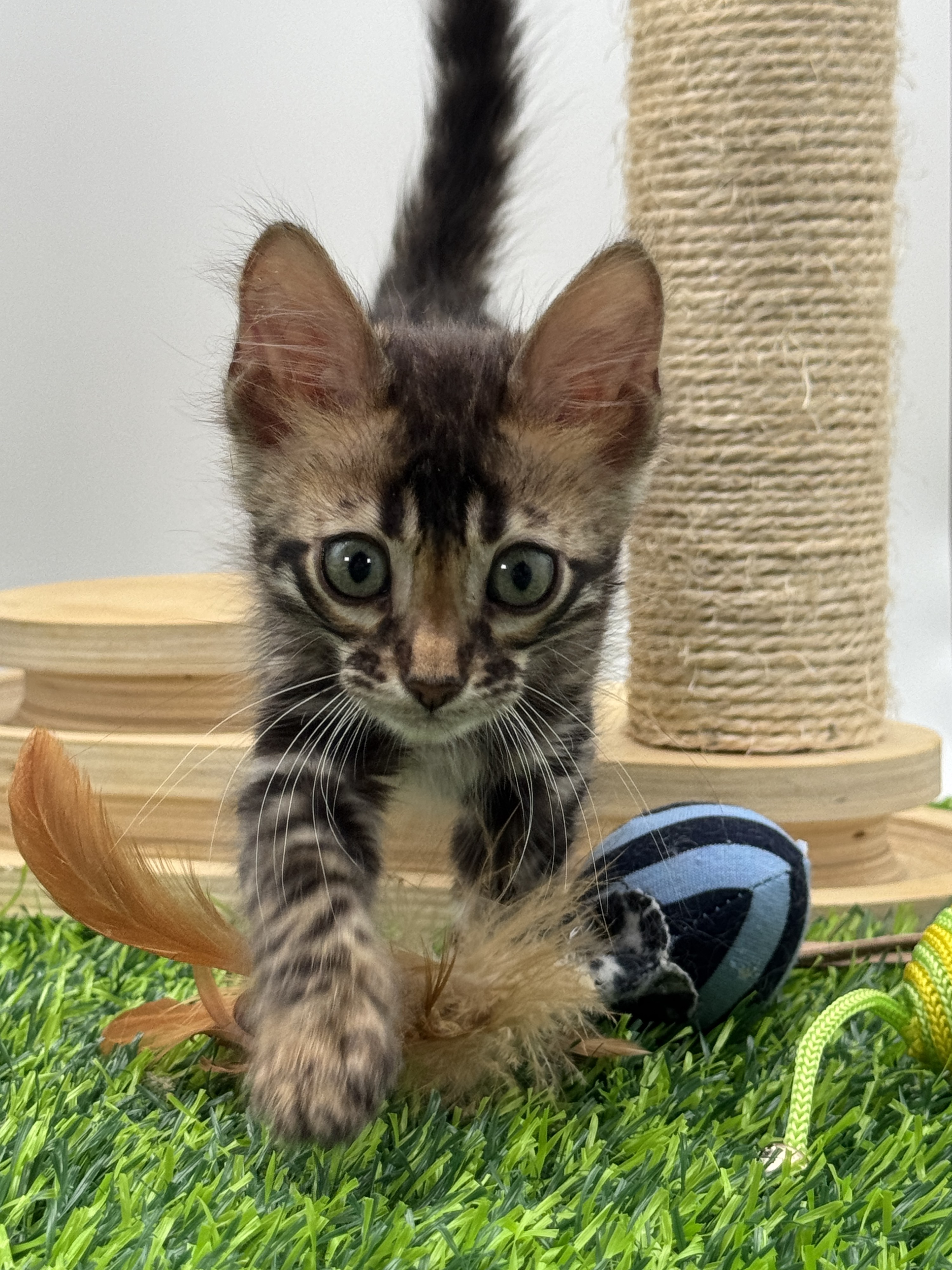
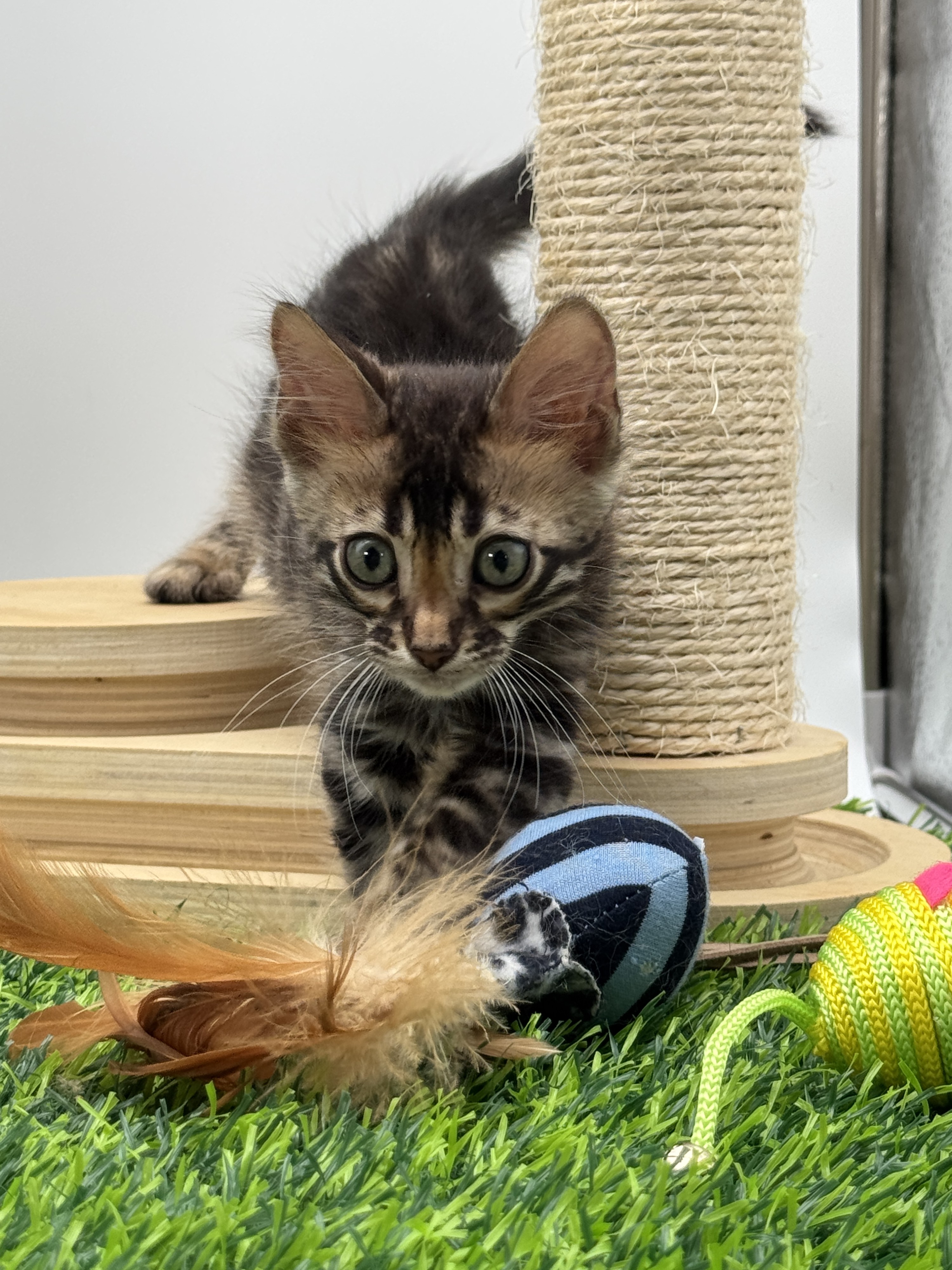
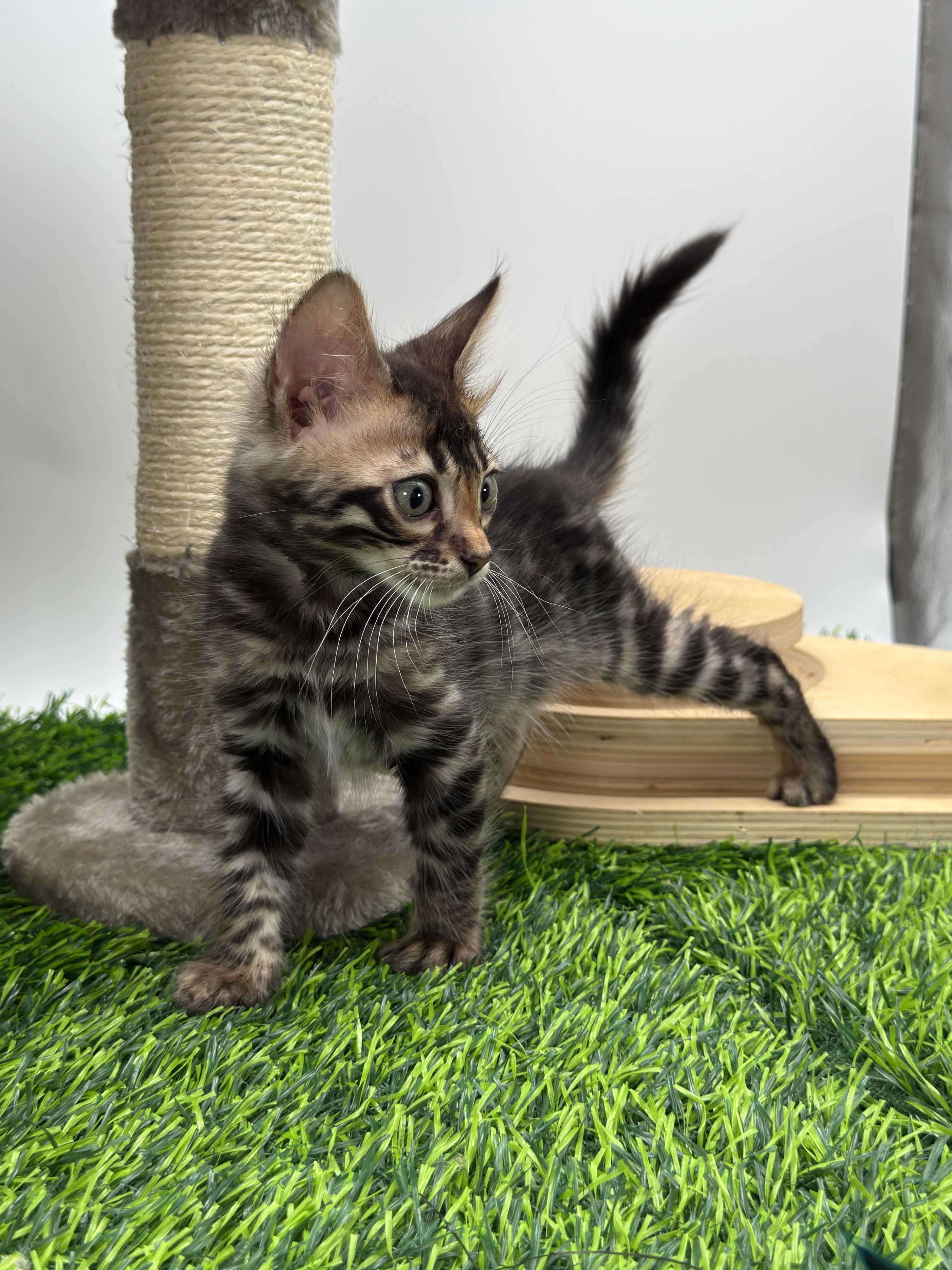
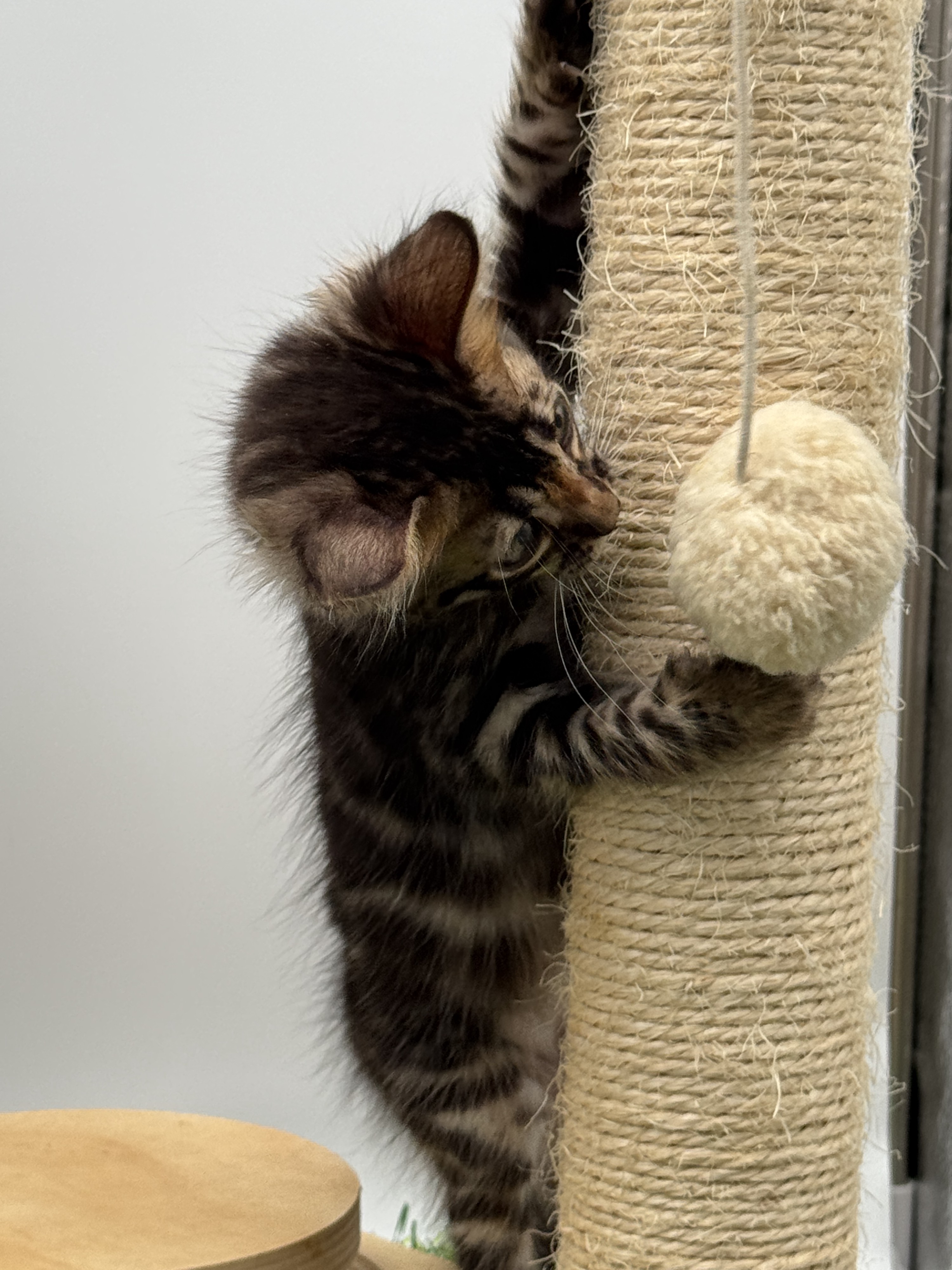
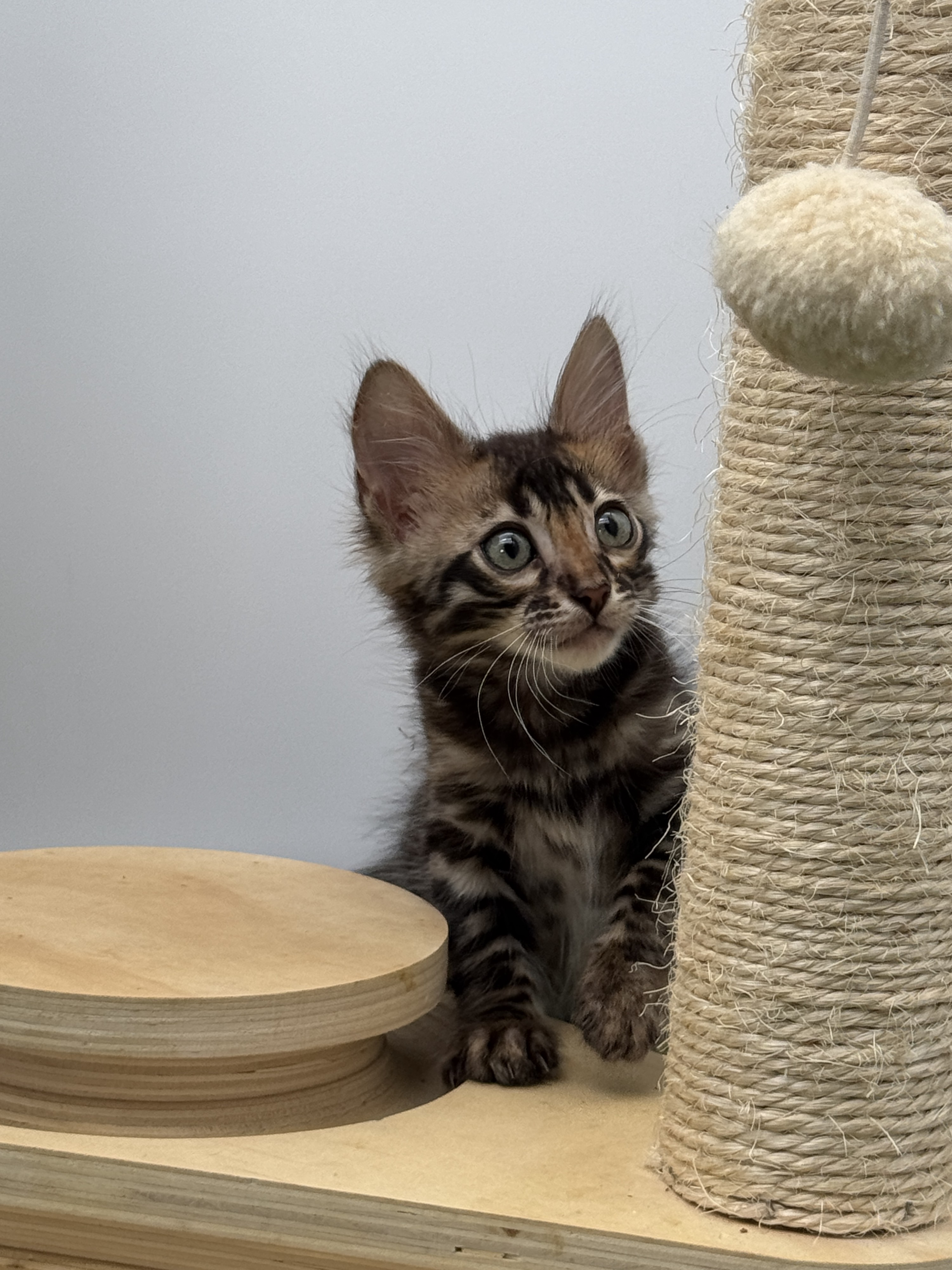
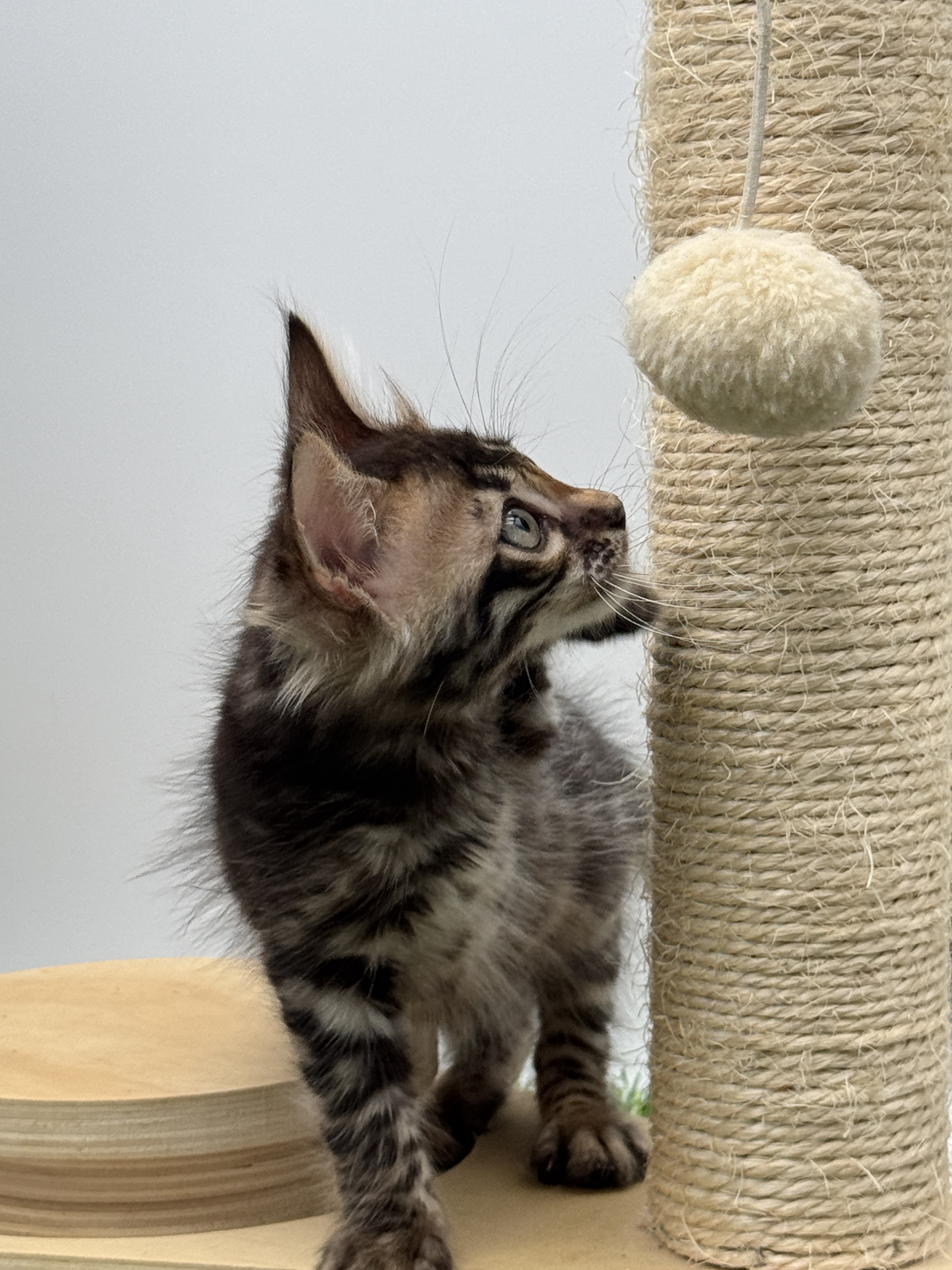
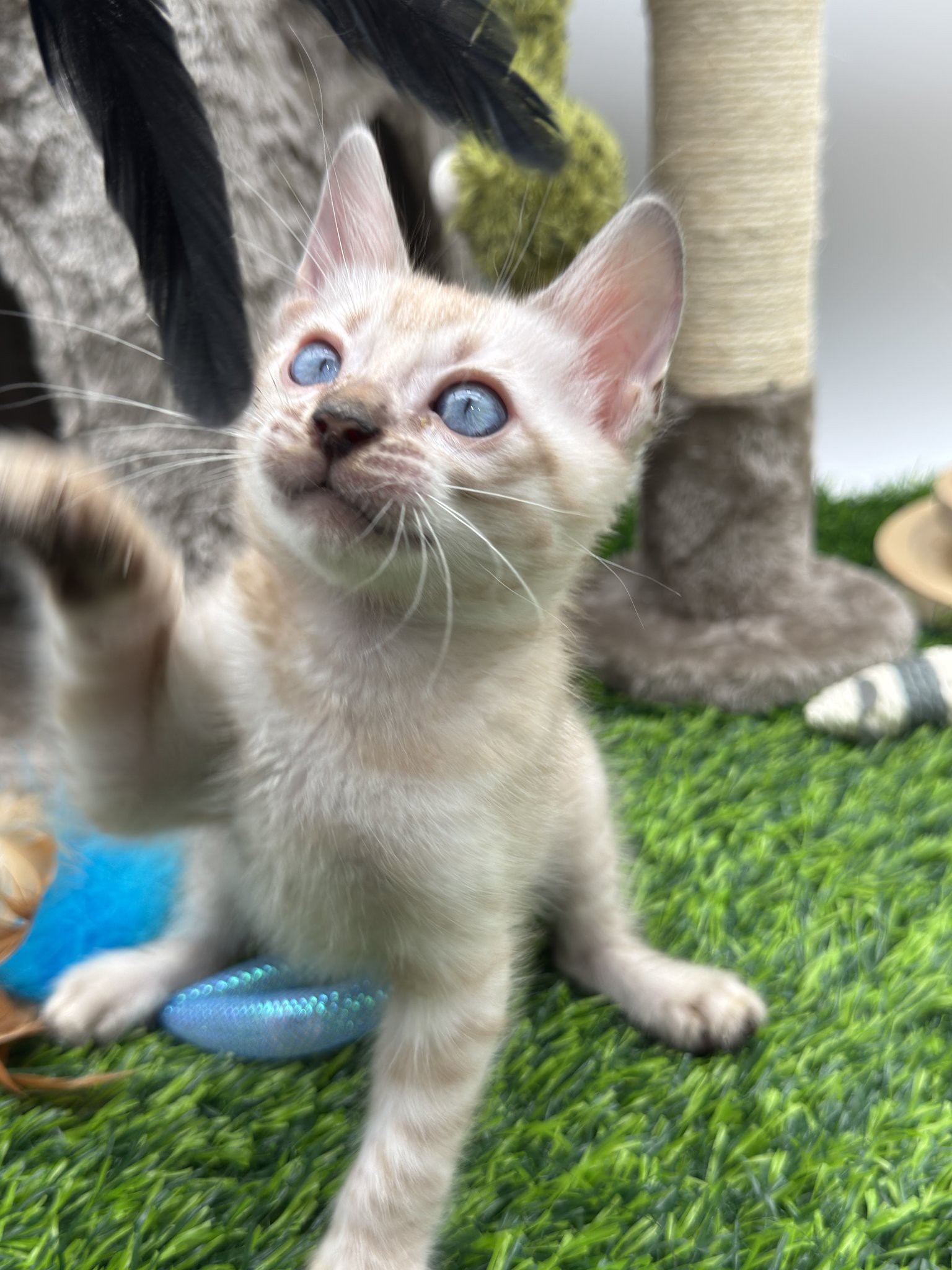
Louie
Ready Dec 1610 weeks oldMale
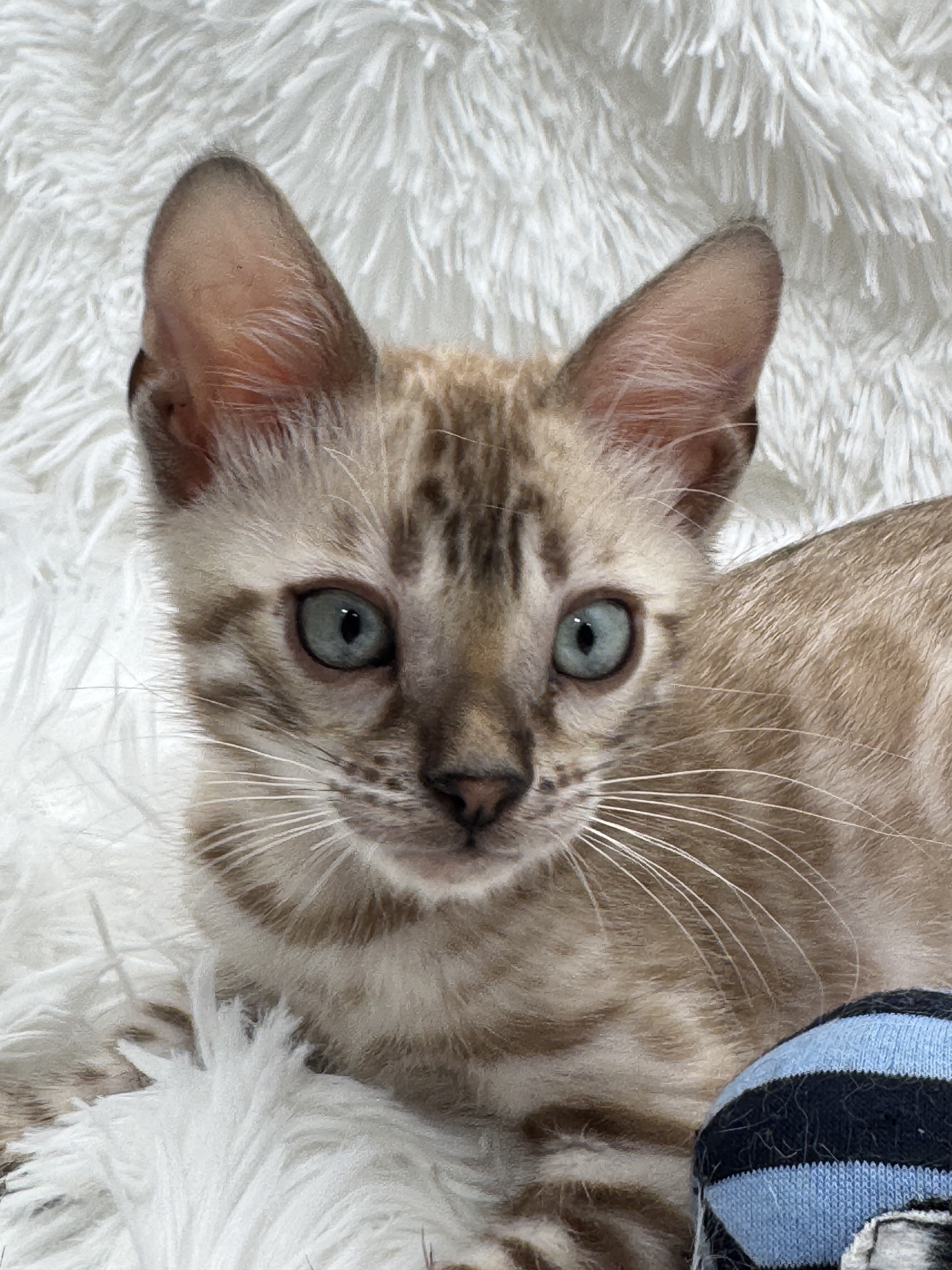
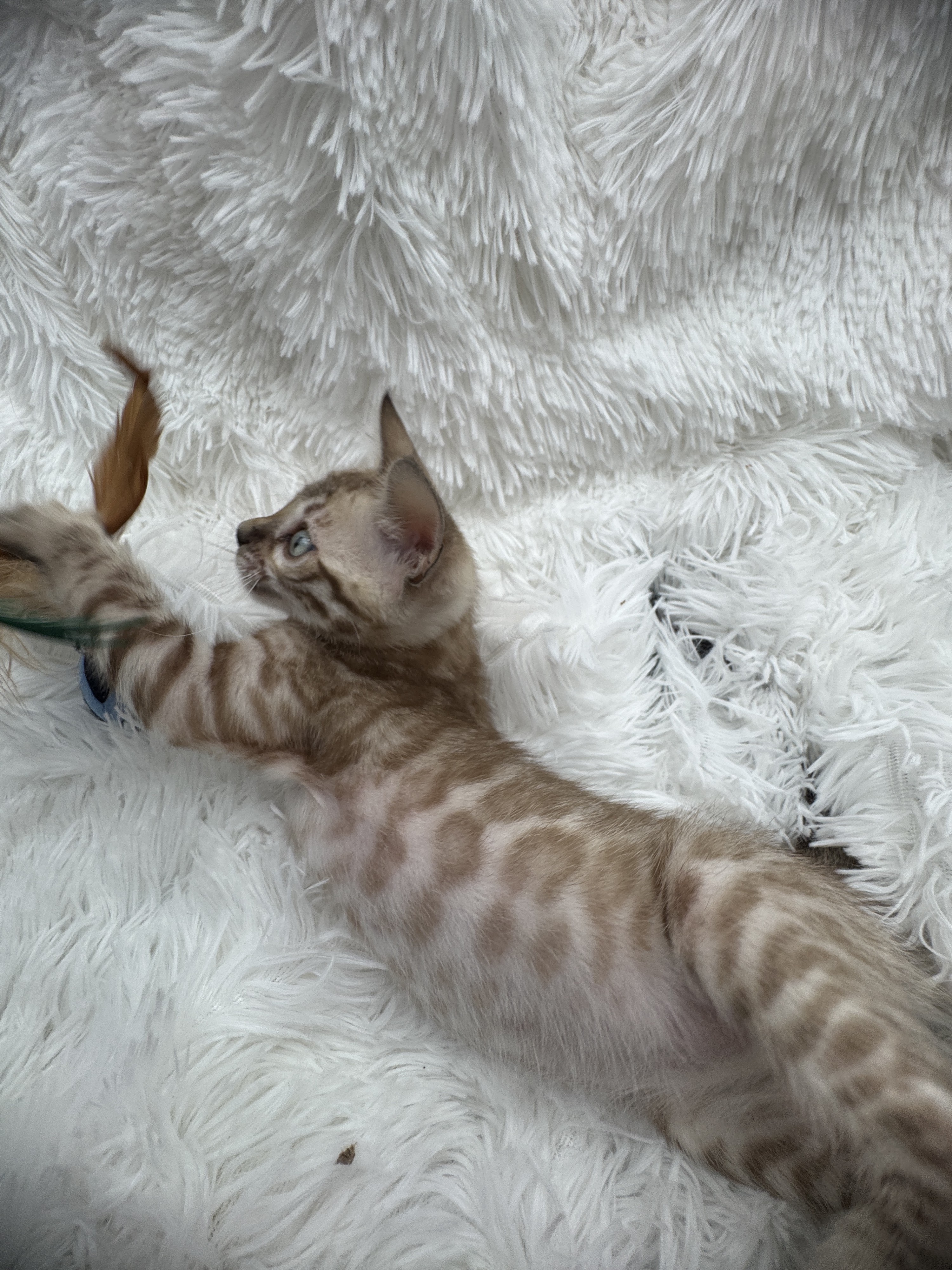
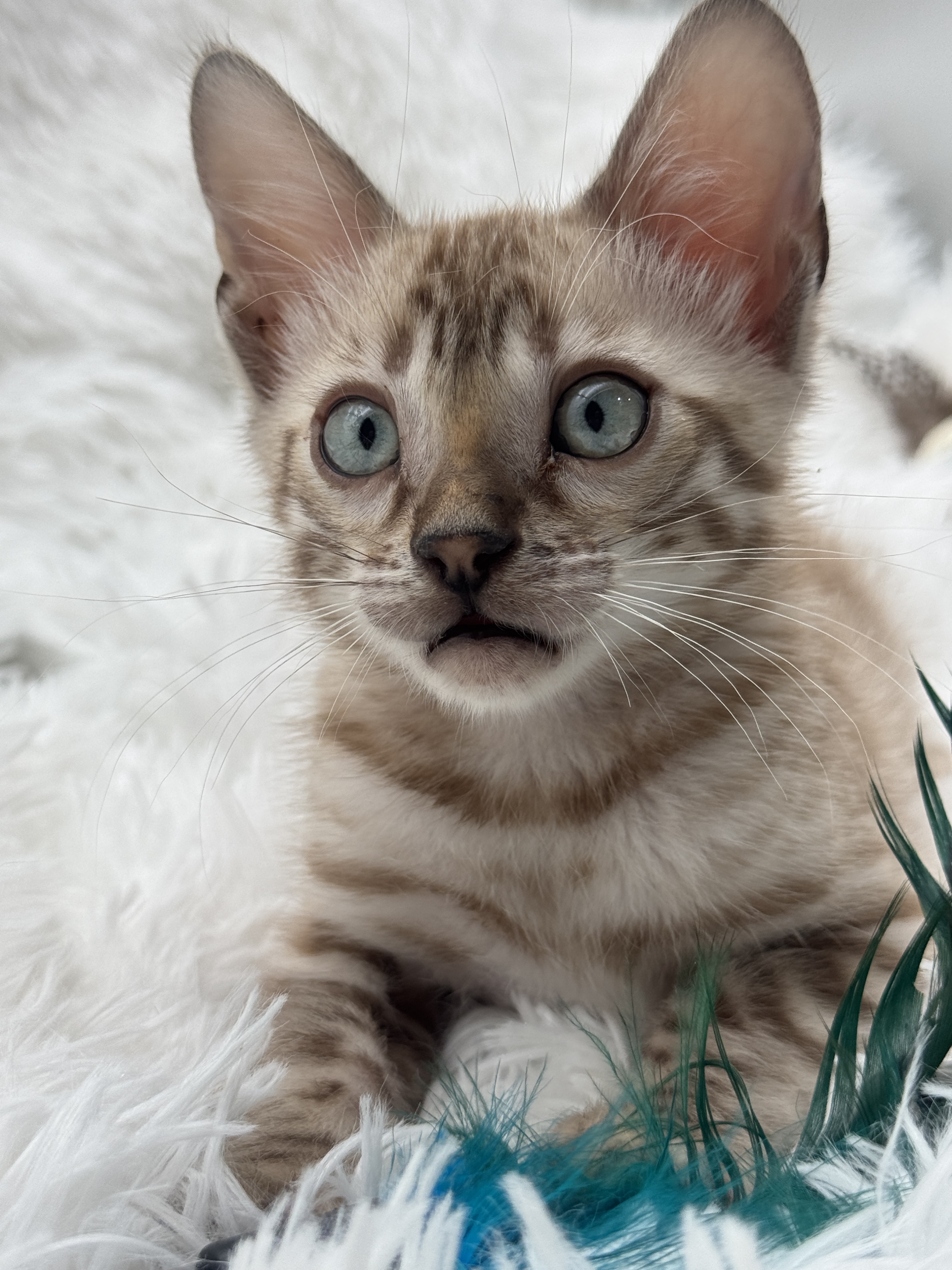
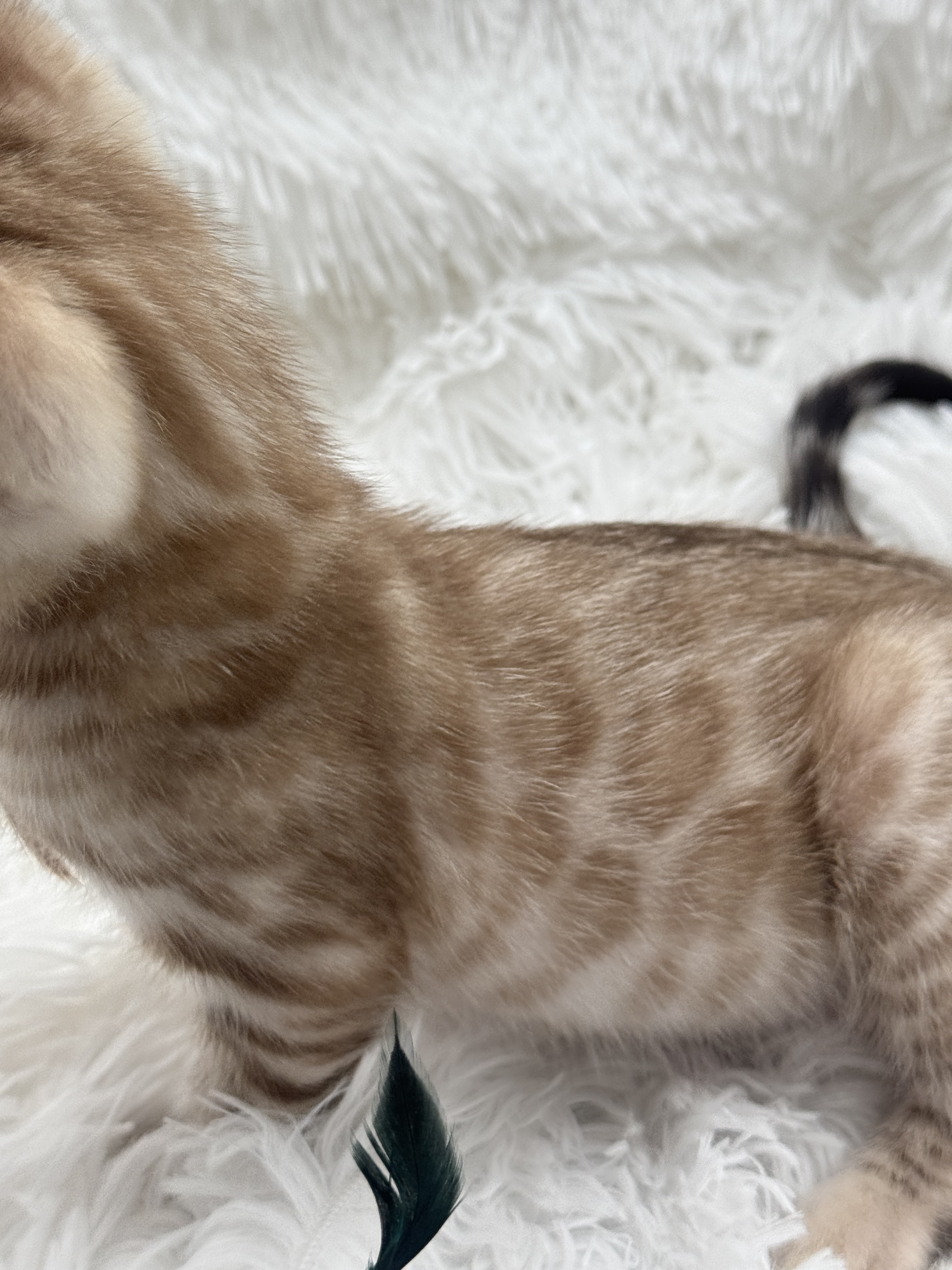
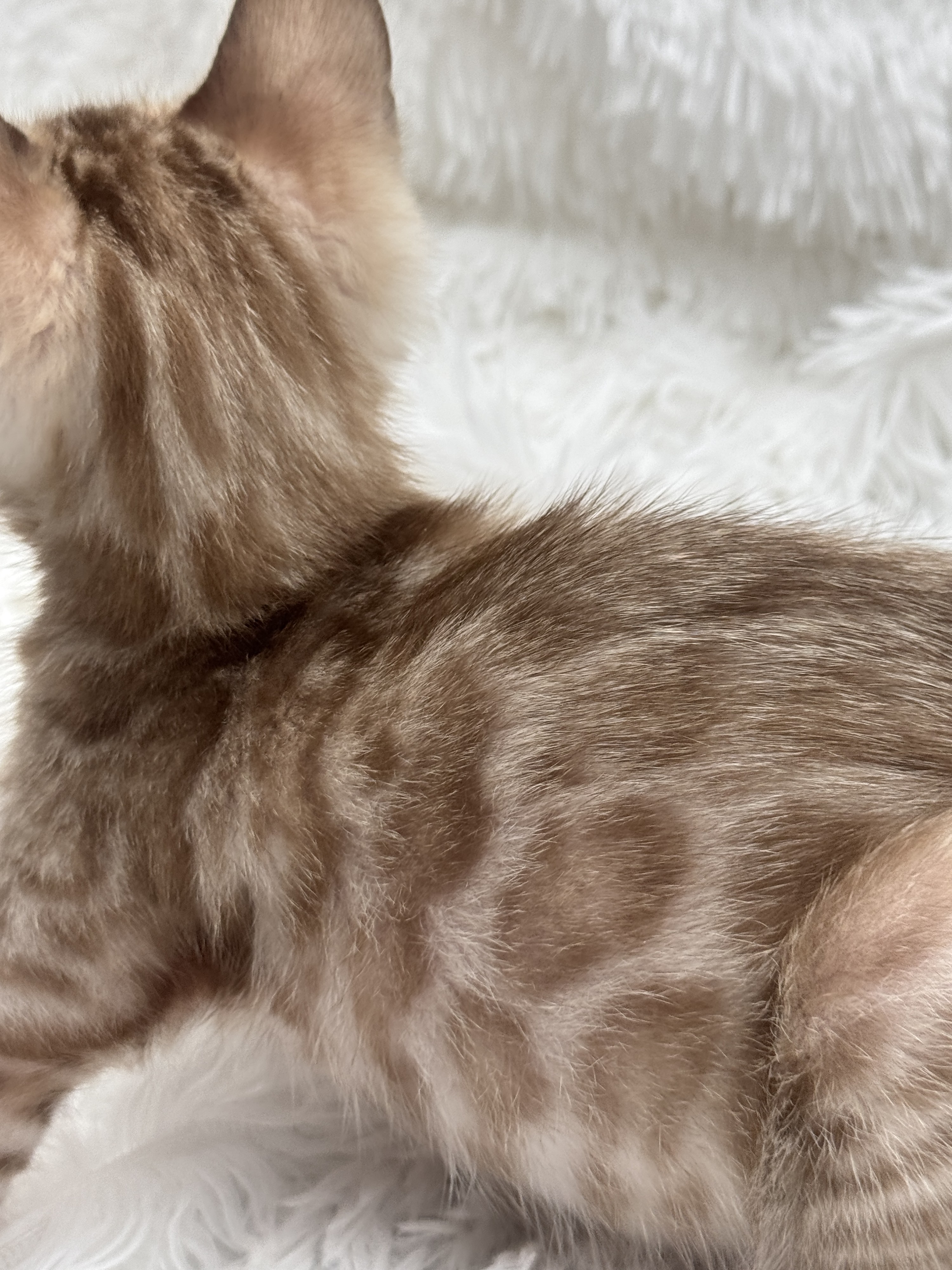
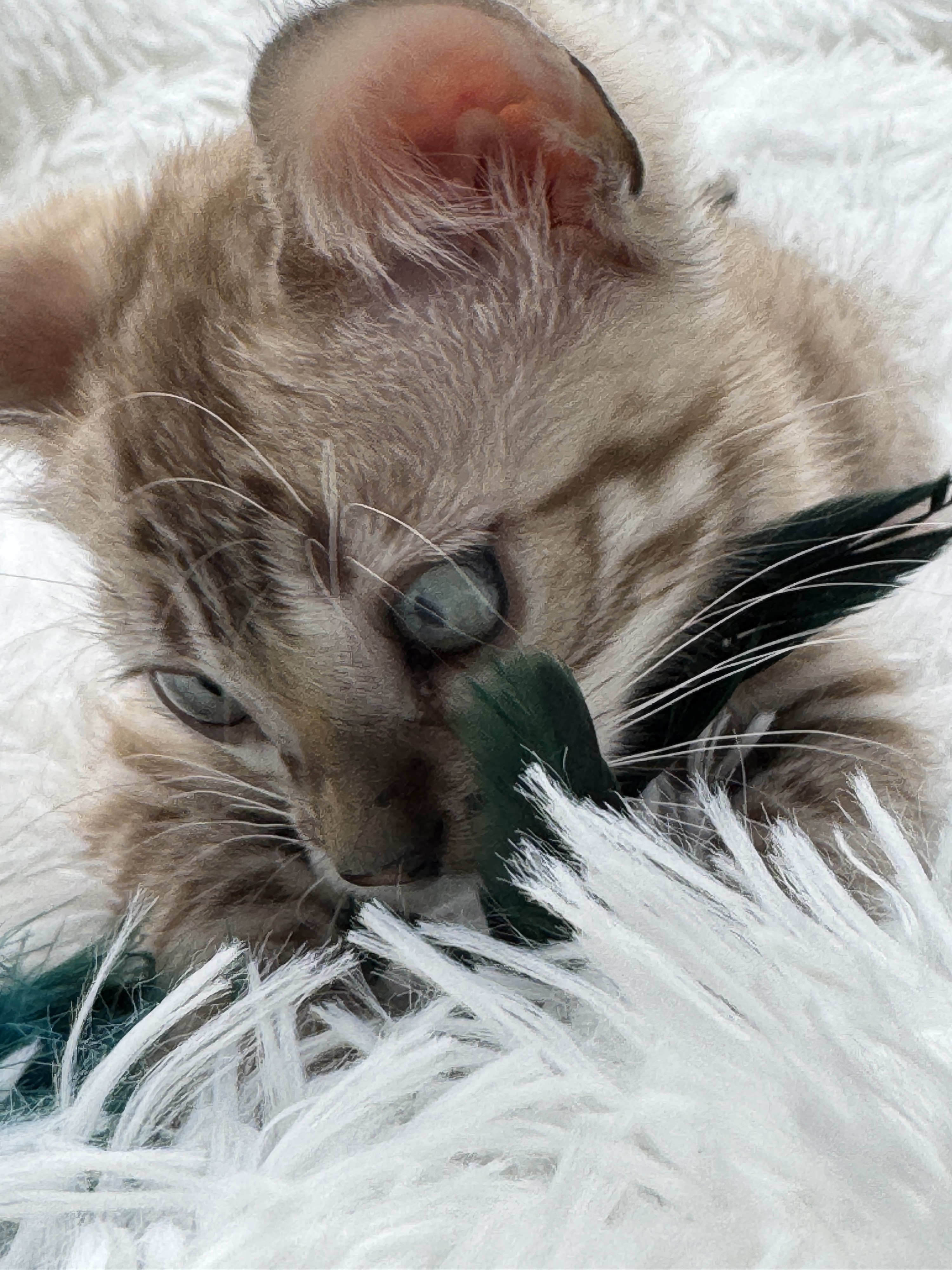
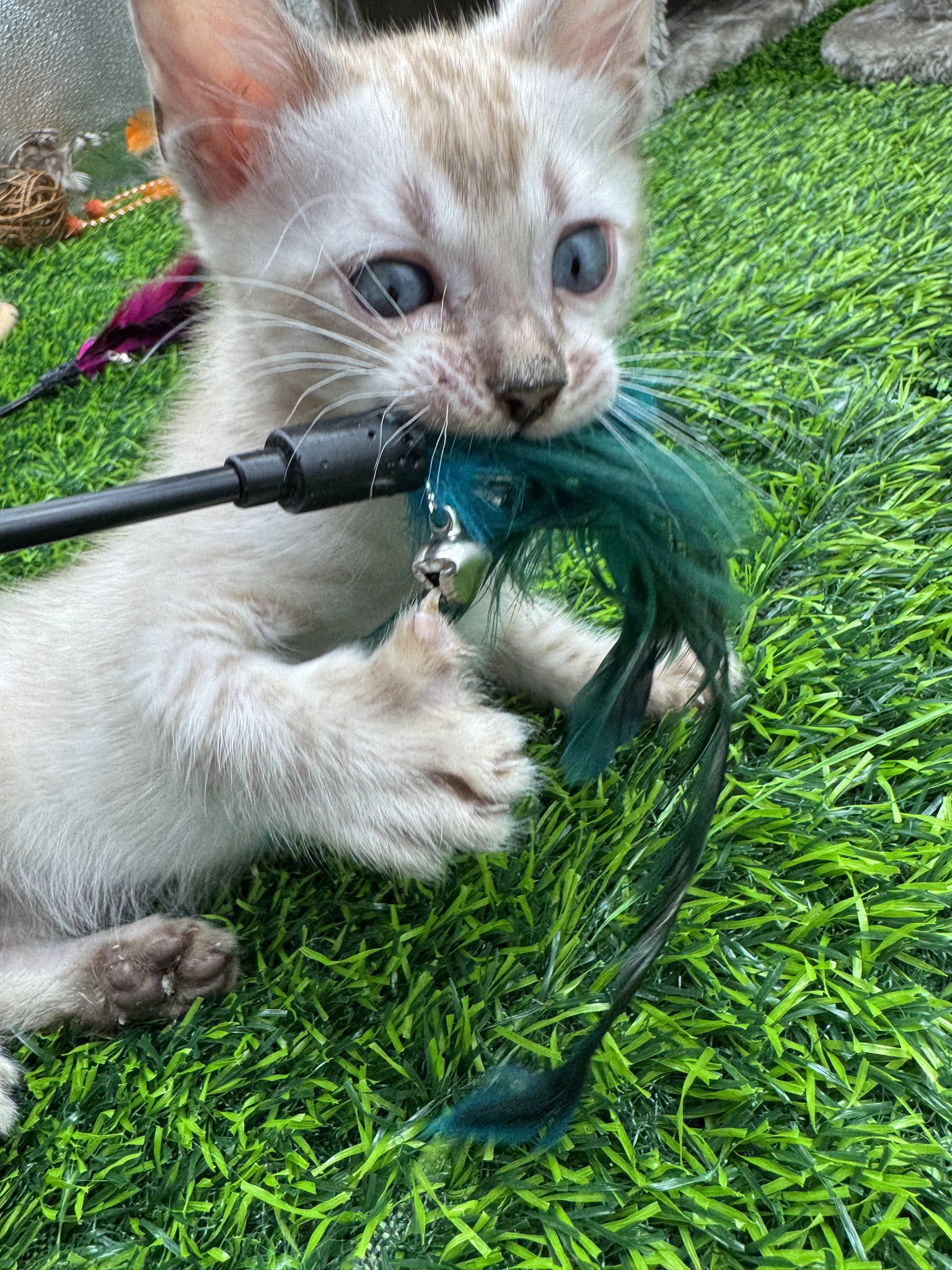
Minke
Ready Dec 1210 weeks oldMale
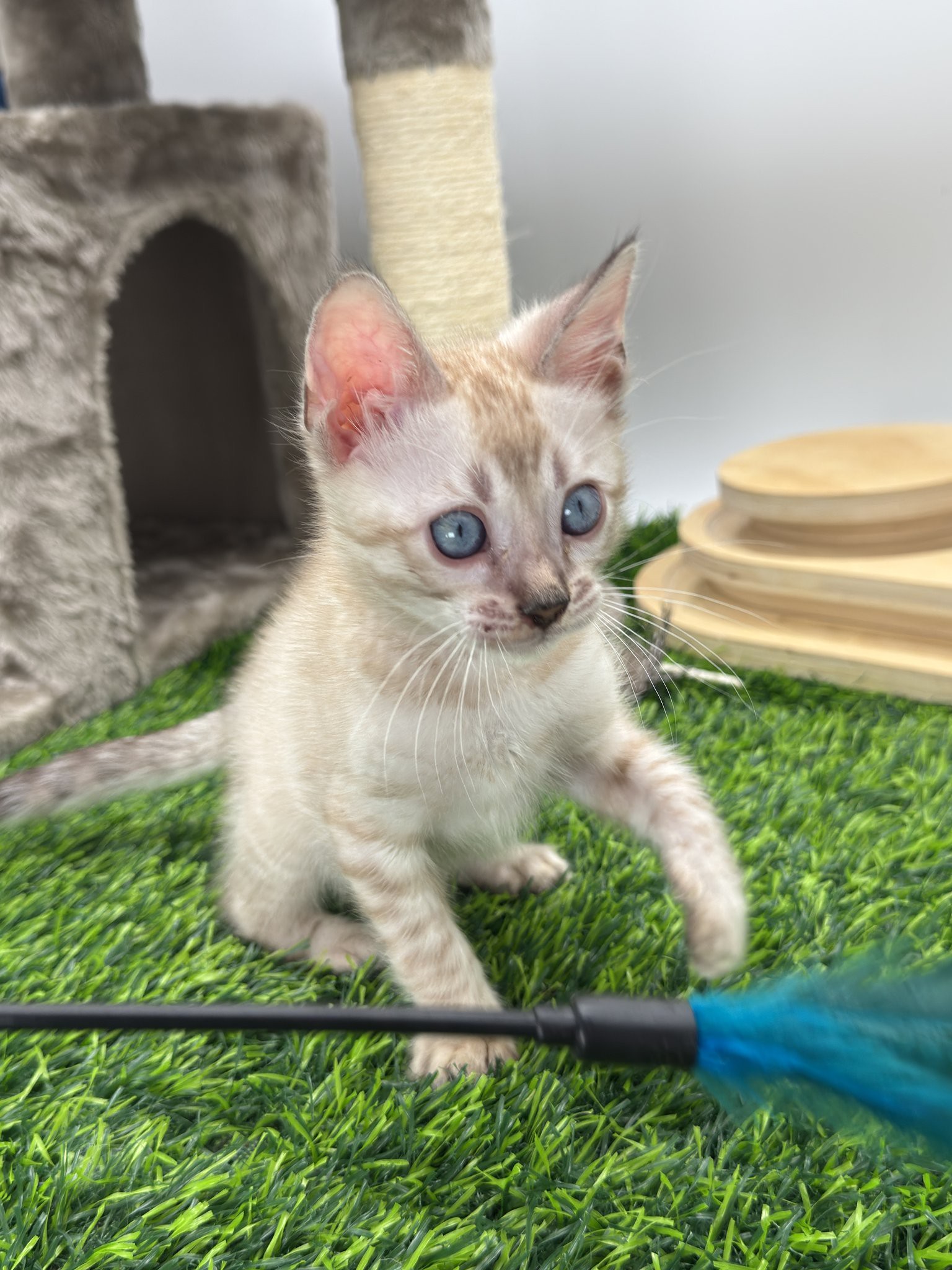
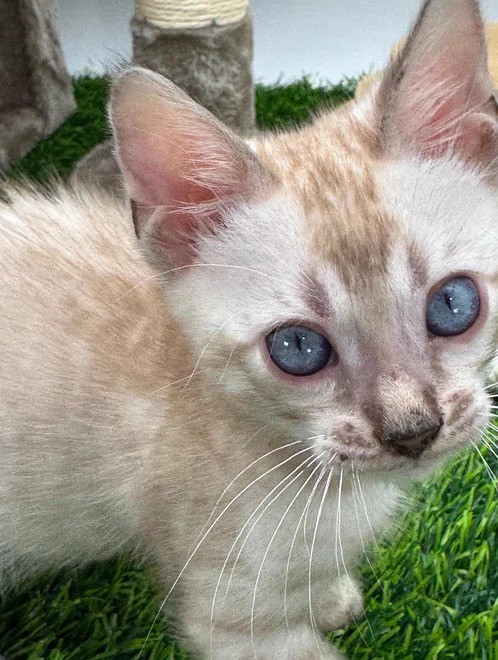
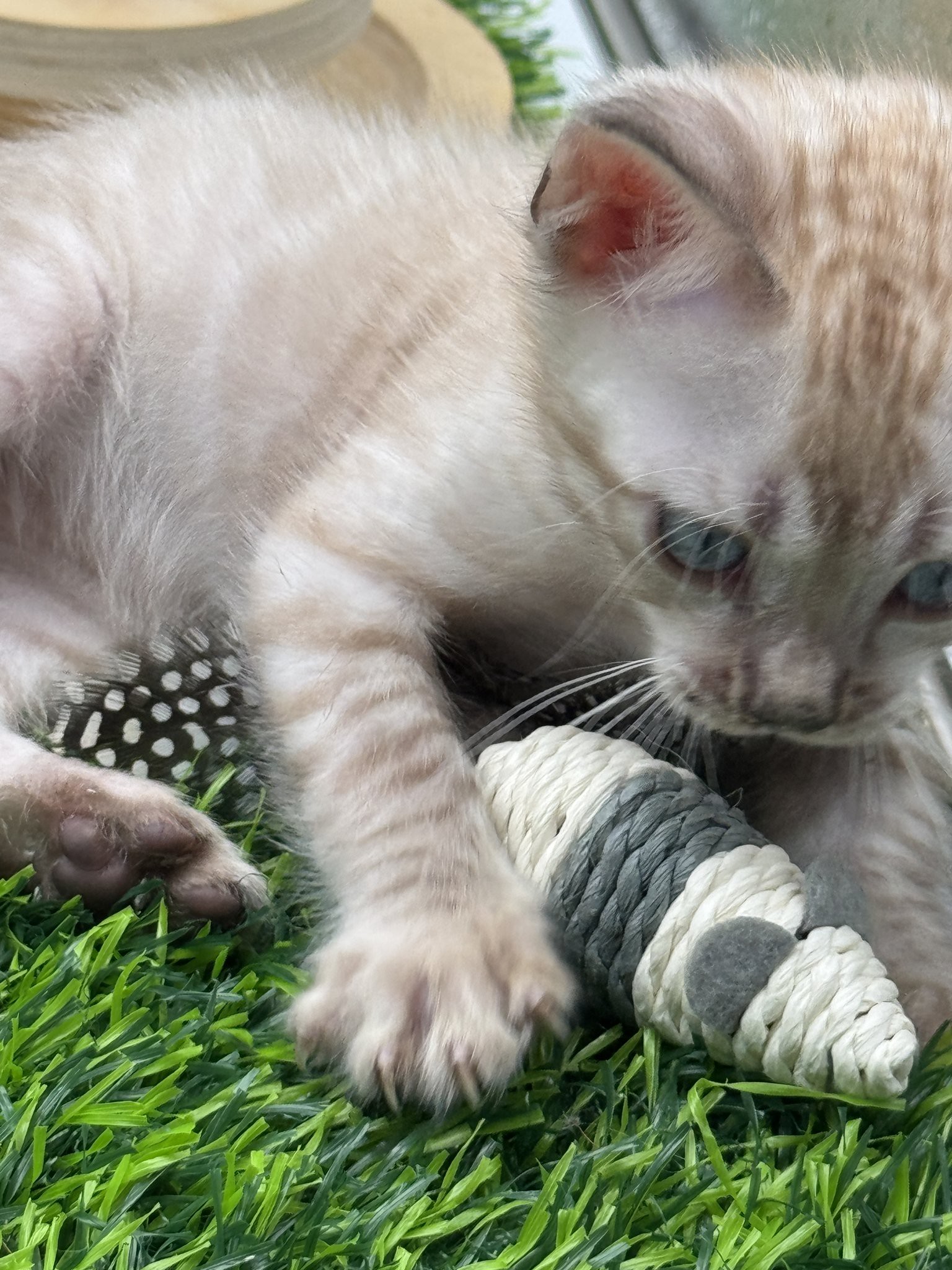
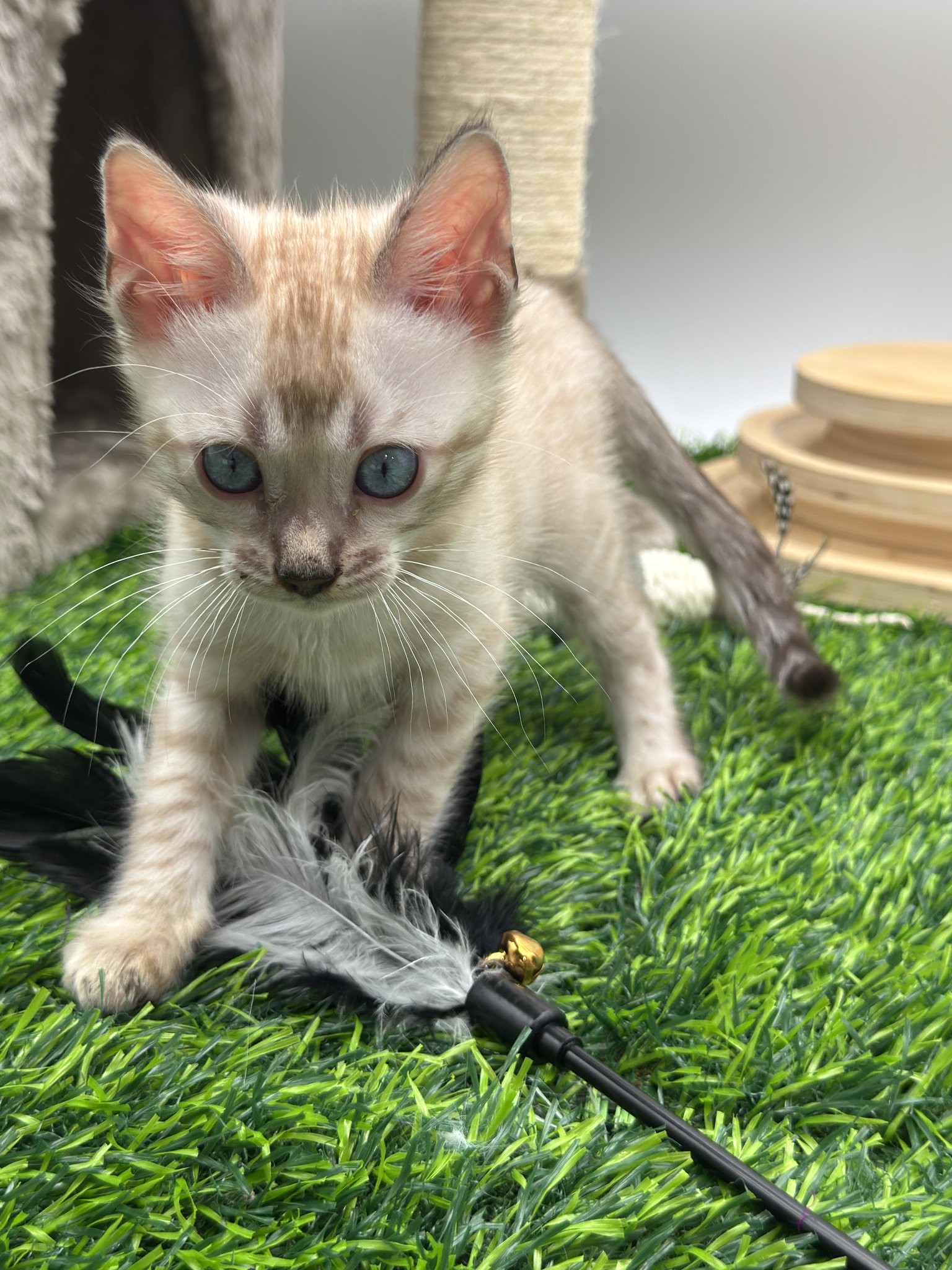
Sterling
Ready Dec 610 weeks oldMale
Quick facts
- When it beganCFA
- The first cross of a domestic cat with an Asian Leopard Cat was made in 1963 by Jean Mill.
- SizeCFATICA
- Medium to large. Not quite as large as the largest domestic breed. Males are generally larger than females.
- Coat feelCFATICA
- Short, close lying, soft and luxurious; may be glittered. Short to medium, dense, unusually soft and silky.
- WeightTICA
- Adult females weigh 6–12 lb and adult males 9–15 lb. The general range is 6–15 lb.
- LifespanTICA
- Life expectancy is 12 to 20 years.
- Fully grownTICA
- Bengals reach full size by age 2.
- CFA statusCFA
- Championship (since 2018)
- TICA statusTICA
- Championship (since 1991)
Appearance
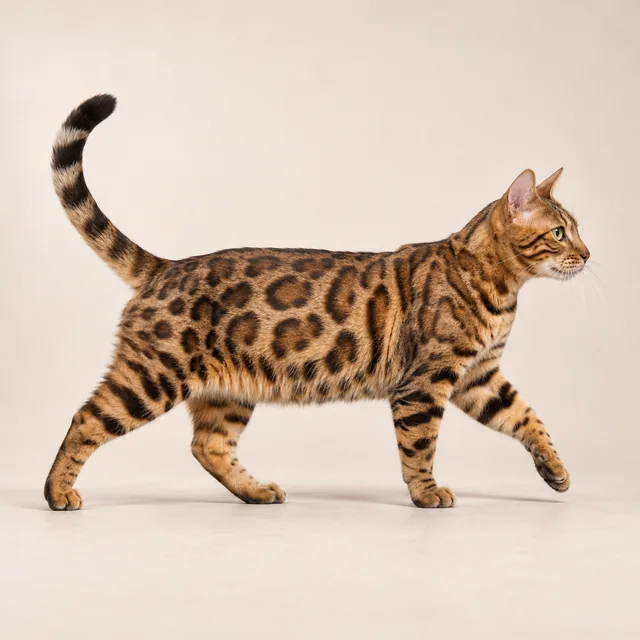
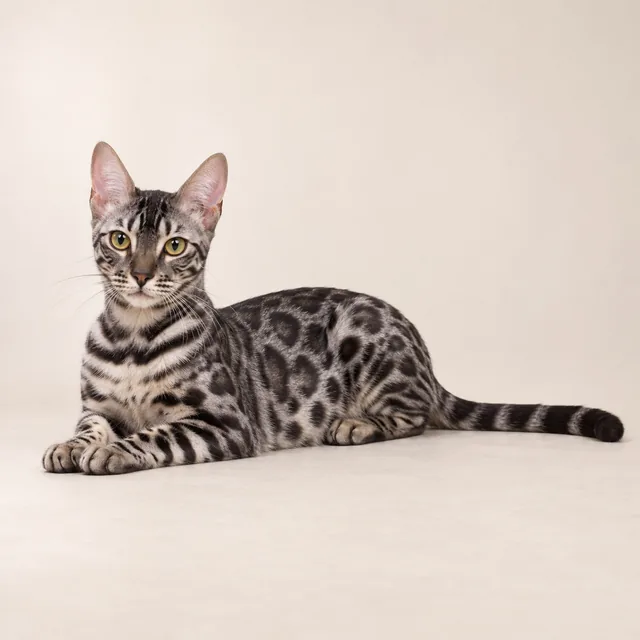
The Bengal’s muscular, powerful body is like poetry in motion.
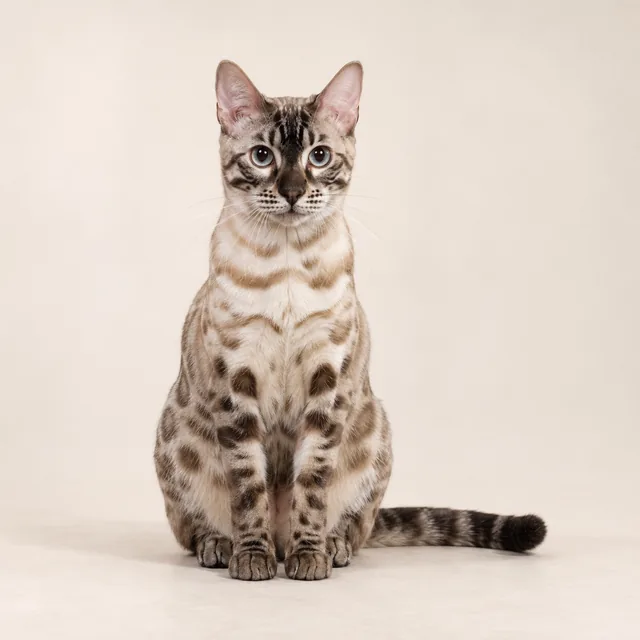
The head has bold facial markings and large, bright eyes. The nose is wide and the whisker pads stand out. Small to medium ears add to the wild look. The coat is spotted, rosetted or marbled. Some Bengals have “glitter,” a sparkle at the hair tips.
Source:CFA
Body
Long, substantial, very muscular body; sturdy, substantial boning; hindquarters slightly higher than shoulders
Colors and patterns
Spotted or rosetted, and marbled patterns, with high contrast. Charcoal versions also exist. Brown (black) spotted or rosetted tabby is the best known. One show standard lists only eight colors: brown, seal sepia, seal mink and seal lynx point tabby, and their silver versions. The other also lists blue, blue silver and blue snow colors, plus melanistic, smoke and other AOV colors.
Personality
Bengals are confident, curious and athletic.
They are very intelligent. They keep a kitten-like energy into their senior years. They are easy-going and affectionate. The show standard describes a friendly, curious, confident cat.
Voice
Bengals are often thought to be quite talkative, but this is not true of every Bengal. Some talk often. Others keep their thoughts to themselves.
Source:CFA
Living with a Bengal
Bengals enjoy being part of a family.
Source:CFA
With children
Their curious, loving nature makes Bengals a good choice for families with children.
Source:CFA
Activity
Bengals are athletic and keep kitten-like energy well into old age. Many enjoy walks on a harness and leash.
Source:CFA
Training
Bengals are quite trainable and often learn tricks. Many enjoy walking on a harness and leash.
Source:CFA
Care
Grooming once a week with a soft-bristled brush is recommended.
This conditions the coat and removes dead hair. The coat is very soft and unlikely to mat.
Source:CFA
Shedding
The coat does not shed heavily, especially compared with other shorthair breeds. It is unlikely to mat.
Source:CFA
Baths
Bathing should not be needed unless you plan to show. If you show, ask your breeder about products and how to bathe.
Source:CFA
Health
Breeders are asked to test for hypertrophic cardiomyopathy (HCM).
It is the most common heart disease in domestic cats. Genetic tests for progressive retinal atrophy (PRA) and PK deficiency (erythrocyte pyruvate kinase deficiency) are asked for too.
Source:TICA
Screening
HCM needs an echocardiogram to detect. Most breeders have a cardiologist scan breeding cats before the first litter. They repeat the scan at regular intervals. Genetic tests let breeders screen for several inherited diseases and remove carriers.
Source:CFA
Health questions to ask
Breeders are asked for HCM testing and genetic tests for PRA and PK deficiency. Most breeders scan breeding cats for heart disease before the first litter.
CFA health notes
Genetic testing lets breeders screen for heritable diseases and remove carriers. HCM, the most common heart issue in cats, needs an echocardiogram. Most breeders scan breeding cats before the first litter and at regular intervals after.
Source:CFA
This is what CFA and TICA say about the breed. It is not a health promise for any kitten. TrueKitten verifies breeder identities and documents, but that does not guarantee a kitten's health. Ask the breeder for test results and talk to your vet.
History
Two separate goals led to the Bengal.
In 1963, conservationist Jean Mill crossed a black domestic tom with a female Asian Leopard Cat. Dr. Willard Centerwall bred similar crosses, looking for a cat with the Asian Leopard Cat’s natural immunity to feline leukemia. Mill later used his cats and spotted domestic cats to develop the breed. Bengals were first accepted as a new breed in 1986 and for championship in 1991. A second registry accepted them for registration in 2016 and championship in 2018.
Recognition dates
- 1986TICA Accepted as a new breed
- 1991TICA Championship status
- 2016CFA Accepted for registration (five generations of pure domestic ancestry required)
- 2018CFA Advanced to championship status
Did you know?
- Bengals are fascinated by water and may try to join you in the shower.
- Some Bengals have “glitter,” a sparkle at the hair tips when light catches it.
- A Bengal needs five generations of pure domestic ancestry to be registered.
- Judges give special merit to features that set the Bengal apart from other domestic breeds.
For breeders
Details from the CFA and TICA show standards. Cat show judges use them. They do not rate a kitten as a pet.
What the show standards ask for
- General: medium to large, sleek and very muscular, substantial boning; hindquarters slightly higher than shoulders.
- Head: broad modified wedge with rounded contours, longer than wide, slightly small for the body, high cheekbones.
- Nose and muzzle: large, wide nose with slightly puffed leather; full, broad muzzle with prominent whisker pads.
- Profile: gently curved forehead; nose straight to very slightly concave.
- Eyes: large, oval, almost round, not bugged; a nocturnal expression.
- Ears: medium to small, wide base, rounded tips; light horizontal furnishings acceptable.
- Legs and paws: medium long, rear slightly longer; large round paws with prominent knuckles.
- Tail: thick, medium length, tapered with a rounded tip, carried low.
- Pattern: spotted/rosetted (random, horizontal flow, extreme contrast) or marbled; belly must be patterned.
- Ear furnishings: tufts and lynx tipping undesirable.
- Coat: short, close lying, soft, luxurious; glitter allowed, neither glittered nor non-glittered preferred.
Points show how much each part counts when a judge scores a cat at a show. They add up to 100.
| Part | Points |
|---|---|
| HeadSkull 5, Muzzle 6, Profile 4, Ears 6, Eyes 6, Chin 3 | 30 |
| BodyBoning 5, Musculature 5, Legs/feet 5, Tail 5 | 20 |
| Coat & ColorTexture 10, Coat Color 10, Eye Color 5 | 25 |
| PatternPattern-Specific Point Allocation 15, Contrast 10 | 25 |
Source:CFA
| Part | Points |
|---|---|
| Head | 35 |
| Body | 30 |
| Coat/Color/Pattern | 35 |
Source:TICA
TICA colors
Brown Tabby, Seal Sepia Tabby, Seal Mink Tabby, Seal Lynx Point, Black Silver Tabby, Seal Silver Sepia Tabby, Seal Silver Mink Tabby, Seal Silver Lynx Point; spotted, marbled, charcoal spotted and charcoal marbled patterns ONLY
Source:TICA
CFA colors and patterns
- Patterns: Rosetted/Spotted Tabby, Marble Tabby, Charcoal Tabby effect (in all accepted tabby patterns and colors)
- Colors rosetted spotted and marble: Brown (Black) Tabby, Black Silver Tabby, Blue Tabby, Blue Silver Tabby
- Snow colors: Seal Lynx Point, Seal Mink Tabby, Seal Sepia Tabby, Blue Lynx Point, Blue Mink Tabby, Blue Sepia Tabby, Seal Silver Lynx Point, Seal Silver Mink Tabby, Seal Silver Sepia Tabby, Blue Silver Lynx Point, Blue Silver Mink Tabby, Blue Silver Sepia Tabby
- Aov patterns: Melanistic (black, blue, seal point, seal mink, seal sepia, blue point, blue mink, blue sepia), Smoke (black, blue, seal smoke point, seal mink, seal sepia, blue smoke point, blue mink, blue sepia)
- Aov colors: Chocolate Tabby, Cinnamon Tabby, Lilac Tabby, Fawn Tabby
- Aov coat length: Longhair Bengal (Cashmere)
Source:CFA
CFA allowances
Smaller size, in balanced proportion, in females; jowls in mature males; slightly longer coat in shorthair kittens and slightly shorter coat in longhair kittens; slightly larger ears in kittens; eyes slightly almond shaped; incorrect paw pad color.
Source:CFA
TICA allowances
Smaller size in balanced proportion in females; slightly longer coat in kittens (BG) / slightly shorter coat and tail hair in kittens (BGL); jowls in adult males; eyes slightly almond shaped; mousy undercoat; paw pads not consistent with color group description.
Source:TICA
CFA penalties
Kinked or otherwise deformed tail; rosetted/spotted: rosettes or spots running together vertically into a mackerel pattern; marble: circular bull’s-eye pattern; snow: substantially darker point color than body markings; Longhair Division: excessively wooly or cottony coat, coat length or density that obscures pattern clarity or contrast, tail lacking plume.
Source:CFA
TICA penalties
Spots running together vertically into a mackerel pattern on spotted cats; circular bulls-eye pattern on marbled cats; substantially darker point color than body markings in seal sepia, mink or lynx point cats (except charcoal versions); any distinct locket.
Source:TICA
CFA disqualifications
Clearly visible tail kink or deformity; cow hocking; crossed eyes; belly not patterned (rosetted/spotted, marble, charcoal and snow patterns); any distinct locket anywhere.
Source:CFA
TICA disqualifications
Withhold all awards: belly not patterned. DQ: any sign of definite challenge in temperament; plus Show Rules Article Sixteen mandatory disqualifications. The standard lists no other breed-specific DQs.
Source:TICA
CFA breeding notes
Registration requires five generations of pure domestic ancestry. Most breeders heart-scan breeding cats before the first litter and regularly after.
Source:CFA
TICA breeding notes
Breeders should test for HCM and provide genetic testing for PRA and PK deficiency. The show standard permits no outcrosses.
Source:TICA
TICA standard version
Bengal Breed Group Standard, 05/01/2020 (also marked "Updated 04/27/20")
Source:TICA
Common questions
Adult females weigh 6–12 lb and adult males 9–15 lb. The general range is 6–15 lb.
Life expectancy is 12 to 20 years.
Their curious, loving nature makes Bengals a good choice for families with children.
Bengals are athletic and keep kitten-like energy well into old age. Many enjoy walks on a harness and leash.
Bengals are quite trainable and often learn tricks. Many enjoy walking on a harness and leash.
Bengals are often thought to be quite talkative, but this is not true of every Bengal. Some talk often. Others keep their thoughts to themselves.
Grooming once a week with a soft-bristled brush is recommended. This conditions the coat and removes dead hair. The coat is very soft and unlikely to mat.
Breeders are asked to test for hypertrophic cardiomyopathy (HCM). It is the most common heart disease in domestic cats. Genetic tests for progressive retinal atrophy (PRA) and PK deficiency (erythrocyte pyruvate kinase deficiency) are asked for too.
Two separate goals led to the Bengal. In 1963, conservationist Jean Mill crossed a black domestic tom with a female Asian Leopard Cat. Dr. Willard Centerwall bred similar crosses, looking for a cat with the Asian Leopard Cat’s natural immunity to feline leukemia. Mill later used his cats and spotted domestic cats to develop the breed. Bengals were first accepted as a new breed in 1986 and for championship in 1991. A second registry accepted them for registration in 2016 and championship in 2018.
Questions to ask a breeder
- Have both parents been screened for hypertrophic cardiomyopathy (HCM) by echocardiogram? When was the last scan?
- May I see the parents’ genetic test results for PRA and PK deficiency?
- How many generations of domestic-only ancestry does this kitten have?
- Has this kitten been around children, other cats or dogs?
- Which registry is the kitten registered with, and in what color and pattern?
Sources
Every fact on this page comes from the two cat registries, CFA and TICA.
Last updated