
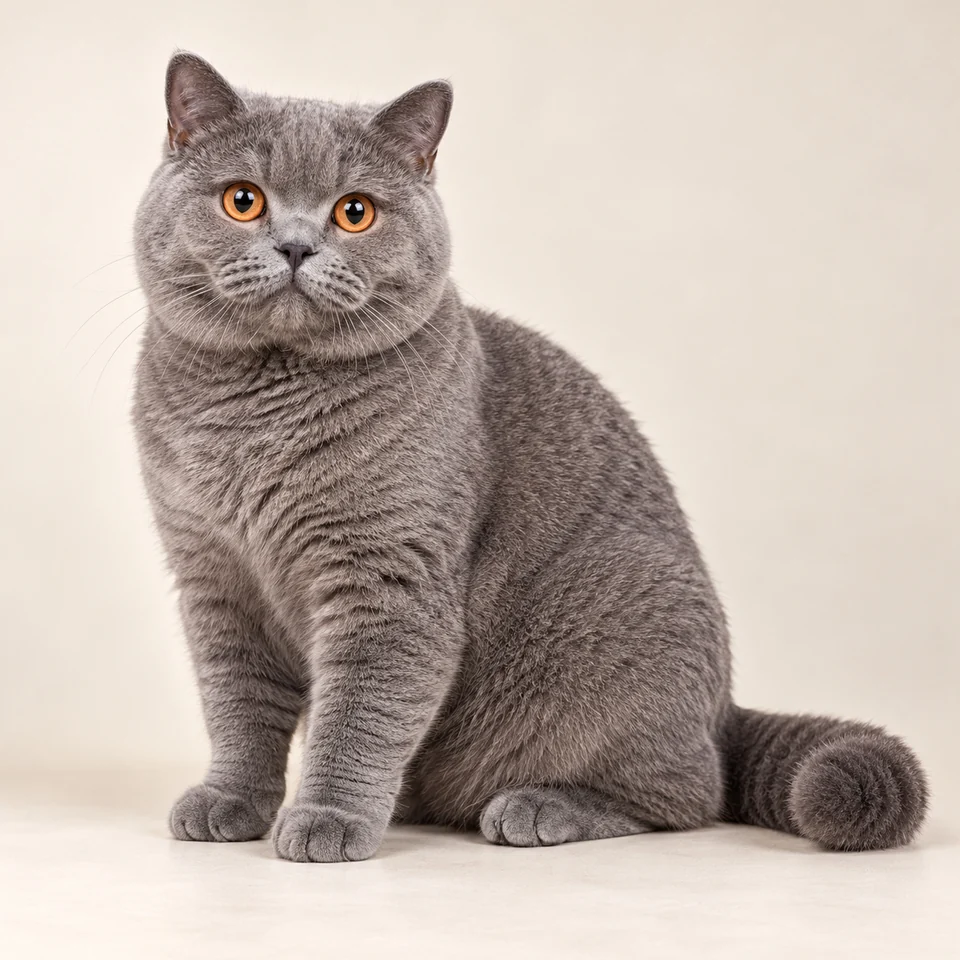
The British Shorthair is a robust, powerful cat.
Fans often compare it to a teddy bear. It is calm, loyal and affectionate with the whole family. Its short, dense coat is rich to the touch yet easy to care for. These cats like to keep all four feet on the floor.
Source:CFA
Quick facts
- Where it beganCFA
- Britain. The breed first came to public notice at cat shows at London's Crystal Palace.
- When it beganCFA
- Turn of the 20th century shows in London; the breed is called the modern embodiment of ancient Roman cats.
- Coat feelCFATICA
- Short, very dense and firm to the touch, with a crisp, resilient texture. Firm, crisp, plush, standing away from the body.
- WeightCFATICA
- Adult females weigh 8–11 pounds and adult males 10–16 pounds. The breed ranges from 9 to 18 pounds. Males may grow as large as 17 pounds, with females somewhat smaller.
- LifespanTICA
- Life expectancy is 12–20 years.
- Fully grownCFA
- The breed is slow to mature. It reaches full size at about three years. Full maturity takes 3–5 years.
Appearance
They have full, broad chests, strong legs and powerful bodies.
The head is round and sweet-faced. Medium ears are set well apart. Large round eyes and full whisker pads give the look of a smile. The breed has a round face with a sweet, open expression.
Body
Compact, powerful and semi-cobby, with a full broad chest, short to medium strong legs and a thick-based tail
Colors and patterns
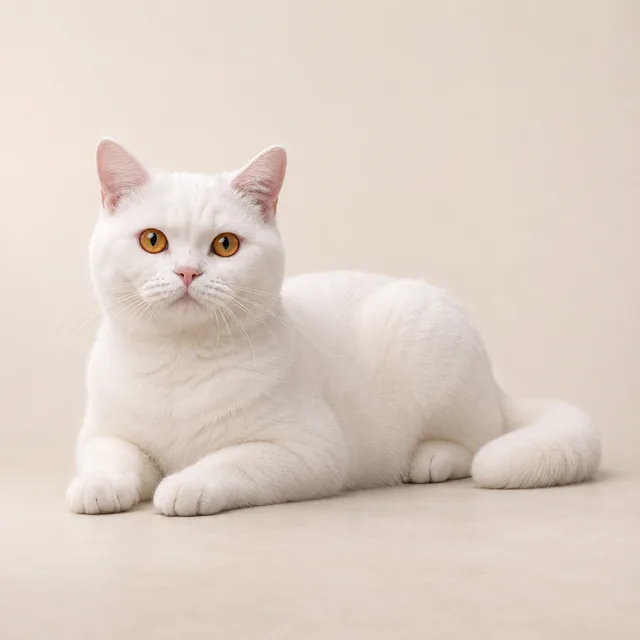
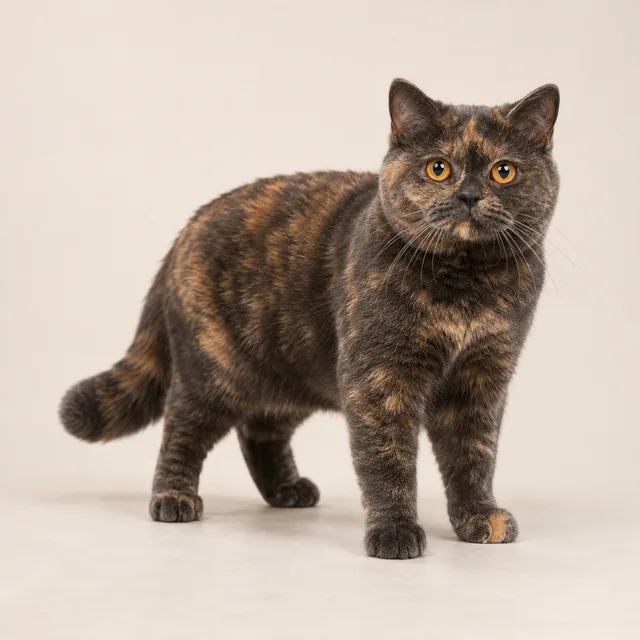
Many colors and patterns are accepted. These include solids such as white, black, blue, red, cream, chocolate, lilac, cinnamon and fawn. So are silver and golden shaded and chinchilla, smoke, tabby (classic, mackerel, spotted), tortoiseshell, blue-cream, calico and bicolor. One registry disqualifies the Himalayan (pointed) pattern and any evidence of the Corin gene. The other accepts all colors and divisions, including pointed and Corin.
Eye colors
Eye color is set by coat color. Most colors call for gold or copper. Whites may be deep sapphire blue, gold, copper or odd-eyed. Silver and golden tipped colors call for green to blue-green. Eye color conforms to coat color, with copper or green accepted in the silver division.
Personality
British Shorthairs are quiet and sedate, but intelligent.
They take an interest in what their owners do. They share affection with each family member rather than one person. They learn your routine and follow you from room to room. They are slightly reserved.
With their people
They like to supervise you from nearby rather than help hands-on. If something changes a lot, they may protest with a gentle touch of a paw.
Source:CFA
Lap time
They wait to be invited to sit beside you on the couch, instead of jumping into your lap.
Source:CFA
Being held
These cats are not fond of being carried around. They like to be handled with gentle firmness and supported when carried.
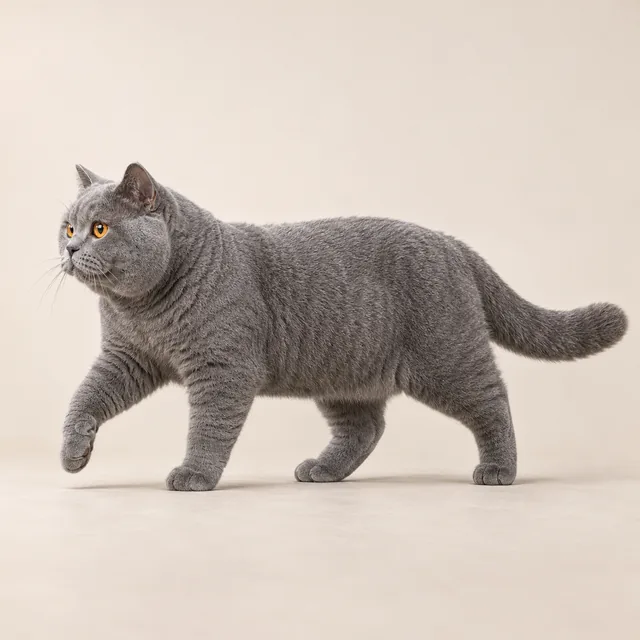
Living with a British Shorthair
They are extremely patient and do well with children.
They may withdraw during loud activity. Teaching children that these cats do not like being carried around is recommended.
Source:CFA
With other pets
A British Shorthair will easily adjust to a dog or other pet, but may become top cat.
Source:CFA
Activity
These sturdy cats prefer keeping all four feet on the floor. They are unlikely to climb onto kitchen counters.
Source:CFA
Care
The dense coat sheds some.
But the short, resilient coat is easy to groom. A quick weekly comb or brush is usually enough. Add regular claw clipping and an occasional ear cleaning.
Source:CFA
Undercoat
The coat is not double coated or woolly. At shows, a lack of or poor undercoat is a fault.
Nails, ears, eyes and teeth
Regular claw clipping and an occasional ear cleaning are recommended.
Source:CFA
Health
There are no breed-specific health issues of concern.
The breed's diverse genetic background gives it strength. Many British Shorthair lines carry blood type B. All cats are at risk for HCM (hypertrophic cardiomyopathy). HCM is the most common heart disease in cats.
Screening
Screening by echocardiogram, done by a veterinary cardiologist, is of paramount importance.
Source:TICA
Health questions to ask
Knowing your cat's blood type, in case it ever needs a transfusion are recommended.
Source:CFA
CFA health notes
There are no breed-specific health issues of concern. Cats have two well-known blood types, A and B; type A is most common. Many British Shorthair lines carry type B. It recommends knowing your cat's blood type.
Source:CFA
This is what CFA and TICA say about the breed. It is not a health promise for any kitten. TrueKitten verifies breeder identities and documents, but that does not guarantee a kitten's health. Ask the breeder for test results and talk to your vet.
History
The British Shorthair is the modern form of ancient Roman cats.
The breed first drew notice at London's Crystal Palace shows around 1900. Both World Wars hurt the gene pool. Breeders crossed to Persians and "moggies" to keep and improve the type. By the 1950s, British breeders' work had paid off. A blue male named Brynbuboo Little Monarch was the first Grand Champion of any breed in the U.K.'s GCCF. The breed reached the U.S. in the early 1900s as "British Blues." Today it comes in many colors.
Source:CFA
Did you know?
- The coat has more hairs per square inch than any other breed.
- Lewis Carroll's Cheshire Cat is presumed to be a tabby British Shorthair.
- Most British Shorthairs today trace back to one stud, Brynbuboo Little Monarch.
- The breed was first registered in the U.S. as "British Blues."
Source:CFA
For breeders
Details from the CFA and TICA show standards. Cat show judges use them. They do not rate a kitten as a pet.
What the show standards ask for
- General: compact, well-balanced and powerful; no feature exaggerated; powerful, semi-cobby, wide and firm.
- Head: round and massive with round cheeks; a series of three circles: muzzle, head and chubby cheeks.
- Nose: medium, broad, gentle dip with no stop or break. Short straight snub nose with a stop.
- Muzzle: well-developed with a definite stop beyond large, round whisker pads.
- Ears: medium, broad at base, rounded tips, set far apart; small to medium.
- Eyes: large, round, well opened, set wide apart and level.
- Body: medium to large, level back, deep broad chest; semi-cobby, broad flat shoulders.
- Legs and tail: legs short to medium, well-boned; tail thick at base tapering to a rounded tip; tail two-thirds body length.
- Coat: short, very dense, crisp, resilient and plush, standing away from the body; not double coated or woolly.
Points show how much each part counts when a judge scores a cat at a show. They add up to 100.
TICA colors
All, including Corin in the Tabby, Tabby and White, Silver/Smoke, and Silver/Smoke and white divisions
Source:TICA
CFA colors and patterns
Solids (white, black, blue, red, cream, chocolate, lilac, cinnamon, fawn); shaded and chinchilla silver and golden; smoke; classic, mackerel and spotted tabby including silver, patched and dilute versions; tortoiseshell, chocolate tortoiseshell, blue-cream, lilac-cream; calico and dilute calico (including van); bi-colors; smoke and white; tabby and white; patched tabby and white.
Source:CFA
CFA allowances
Partial: no allowances section. Color clauses allow shadow tabby markings in kittens of several colors, tabby markings in cream cats under five years, and some tabby markings in the red/cream patches of calicos.
Source:CFA
TICA allowances
Seasonal changes in coat density, length and texture; slightly softer texture in colors other than blue; brindling allowed in torties.
Source:TICA
CFA penalties
General: overlong or fluffy coat; soft coat lacking resiliency; rangy body; foreshortened legs; weak or over-prominent chin; foreshortened head in profile. Partial: color sections add further penalties (e.g. brindling in tabbies, heavy tabby markings in cream).
Source:CFA
TICA penalties
Almond-shaped or slanted eyes; lack of muscle tone; cow hocks; lack of or poor undercoat, coat not standing away from the body; (BS) long or soft coat; (BL) short or silky coat, or long flowing Persian-like coat; light, delicate boning.
Source:TICA
CFA disqualifications
General: definite nose stop/break; incorrect eye color, green rims in adults needing gold or copper eyes; eyes set on the bias; any tail defects; droopy whisker pads; incorrect toe count; locket or button; improper nose leather or paw pad color; any evidence of illness or poor health; wry jaw, poor dentition or malocclusion, or foreshortened head that narrows the nares; Himalayan pattern from hybridization; any evidence of the Corin gene or DBE (dominant blue eye). Partial: color sections add more (e.g. white anywhere in tabbies).
Source:CFA
TICA disqualifications
Withhold all awards: lockets. Disqualify: crossed eyes; any sign of definite challenge in temperament; plus the Show Rules Article Sixteen mandatory disqualifications listed in the standard (e.g. biting, intent to deceive, missing testicles in adult whole males, tail missing, extra toes, total blindness, markedly smaller size, sternum depression).
Source:TICA
CFA breeding notes
Combining blood types A and B needs special care, and new breeders should be carefully mentored. The reference text lists no allowable outcross breeds.
Source:CFA
Common questions
Adult females weigh 8–11 pounds and adult males 10–16 pounds. The breed ranges from 9 to 18 pounds. Males may grow as large as 17 pounds, with females somewhat smaller.
Life expectancy is 12–20 years.
The breed is slow to mature. It reaches full size at about three years. Full maturity takes 3–5 years.
They wait to be invited to sit beside you on the couch, instead of jumping into your lap.
These cats are not fond of being carried around. They like to be handled with gentle firmness and supported when carried.
They are extremely patient and do well with children. They may withdraw during loud activity. Teaching children that these cats do not like being carried around is recommended.
The dense coat sheds some. But the short, resilient coat is easy to groom. A quick weekly comb or brush is usually enough. Add regular claw clipping and an occasional ear cleaning.
There are no breed-specific health issues of concern. The breed's diverse genetic background gives it strength. Many British Shorthair lines carry blood type B. All cats are at risk for HCM (hypertrophic cardiomyopathy). HCM is the most common heart disease in cats.
Many colors and patterns are accepted. These include solids such as white, black, blue, red, cream, chocolate, lilac, cinnamon and fawn. So are silver and golden shaded and chinchilla, smoke, tabby (classic, mackerel, spotted), tortoiseshell, blue-cream, calico and bicolor. One registry disqualifies the Himalayan (pointed) pattern and any evidence of the Corin gene. The other accepts all colors and divisions, including pointed and Corin.
Questions to ask a breeder
- Do you know this kitten's blood type, and the parents' blood types?
- Can I see health records for both parents?
- Which registry is this kitten registered with, and is its color accepted there?
- How do you introduce kittens to children and handling?
- How do you comb or brush this coat?
Sources
Every fact on this page comes from the two cat registries, CFA and TICA.
Last updated