
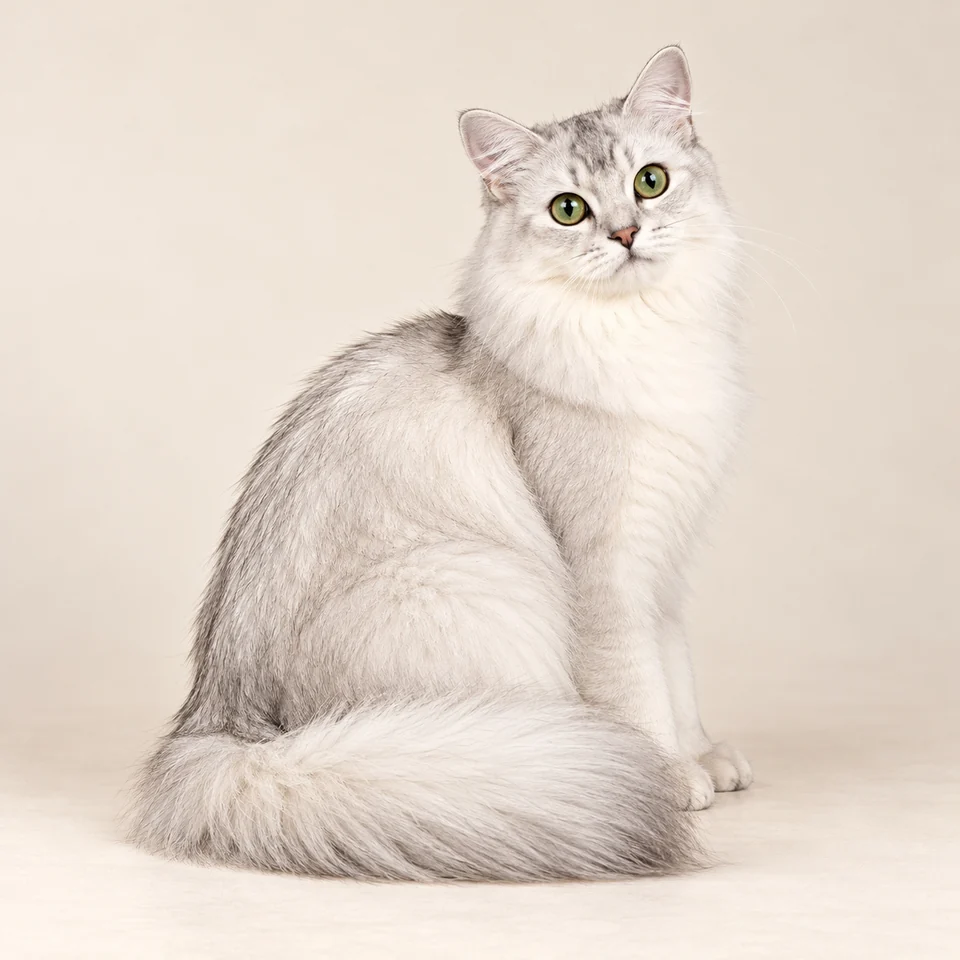
The Burmilla Longhair is the semi-longhaired form of the Burmilla.
The longhair has an easy-care single coat. Like the shorthair, it has a shimmering tipped coat and dark "make up" lines. Burmillas are friendly, curious and easy-going. They love to play and stay kitten-like all their lives.
Source:CFA
Quick facts
- Where it beganTICA
- United Kingdom.
- SizeCFA
- Medium
- Coat feelCFATICA
- Fine and silky; medium long except over the shoulders. Fine silky coat with feathering to the underside, britches, plume and bib.
- WeightCFA
- A mature male often reaches or exceeds 10 pounds. Females are usually smaller.
- CFA statusCFA
- Championship (since 2014; covers longhair and shorthair)
Appearance
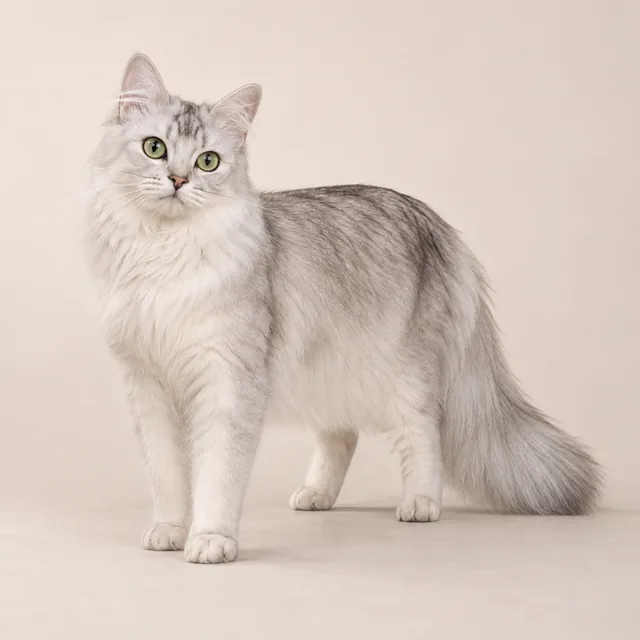
This is a medium-sized cat with a muscular yet elegant body.
The eyes can be any shade of green. The coat is pale at the roots and tipped with color. The longhair has feathering on the underside, britches, a plume tail and a bib. Ear tufts, furnishings and a full tail plume are preferred.
Body
Medium length and size; muscular yet elegant; foreign type, neither cobby nor oriental
Source:CFA
Colors and patterns
The coat is pale at the roots and tipped with color, in shaded or chinchilla (tipped) patterns. Silver and golden versions come in many colors, including black, seal sepia, blue, chocolate, lilac, caramel, cream, red and torties. Shaded and chinchilla are the only patterns.
Eye colors
Any shade of green, luminous and expressive, outlined with the basic color. A yellow tinge is acceptable in kittens and young cats under two.
Source:CFA
About this variety
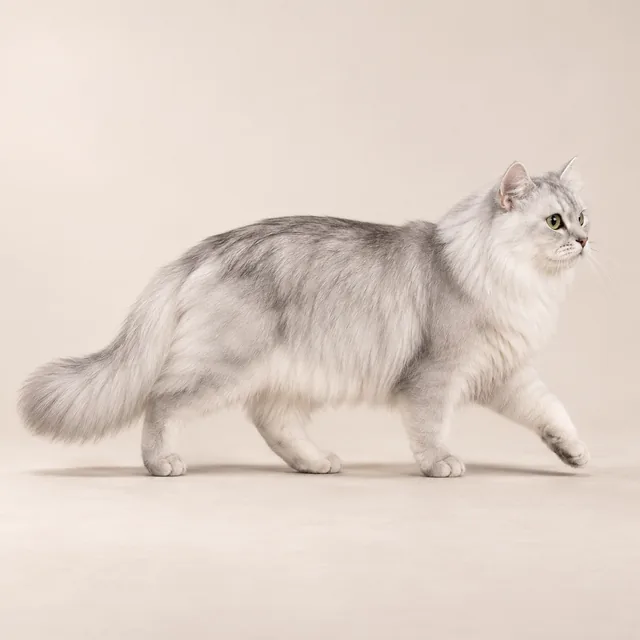
The coat should be fine, silky and medium-long, shorter over the shoulders, without a woolly undercoat. Ear tufts, furnishings and a full tail plume are preferred. Too much undercoat is a show fault in longhairs. The longhair coat should lie flat over the spine and should not need intensive grooming. It should not look like a pet-quality Chinchilla.
Personality
The Burmilla mixes the outgoing, mischievous Burmese with the mellow Chinchilla Persian.
The result is a charming cat that is not extreme in any way. It is impish and lively, but also quiet and gentle. It is people oriented and loving without being needy. The breed is sociable, playful and affectionate.
With their people
Burmillas are quite gregarious but enjoy some independence. They can be left alone during your work day.
Source:CFA
Living with a Burmilla Longhair
Burmillas can get along with dogs, other cats and children.
Even strangers are quickly welcomed.
Source:CFA
Activity
Burmillas are energetic but not hyperactive. They have bursts of spirited play, then long naps on the couch. They keep a kitten-like quality all their lives. They are intelligent and thrive when they can play and climb. Toys, things to climb and perches are recommended.
Source:CFA
Care
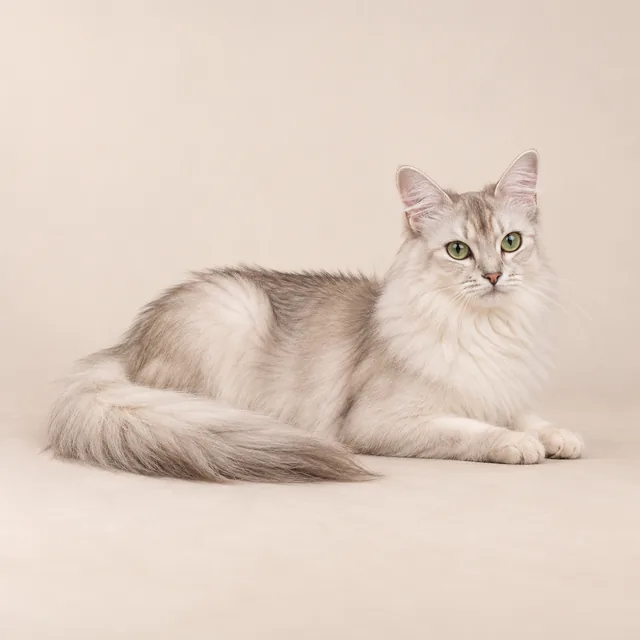
Grooming is fairly simple, even for the long coat.
Groom at least once a week with a stainless-steel comb or a small slicker brush. These cats should not need intensive grooming.
Undercoat
No woolly undercoat; it is an easy-care single coat, and too much undercoat is a show fault in longhairs.
Source:CFA
Baths
Most Burmillas do not need regular baths. An occasional bath can add to the coat's beauty. Ask your breeder which products to use.
Source:CFA
Nails, ears, eyes and teeth
Burmillas need regular nail trims, ear cleaning and dental care.
Source:CFA
Health
Burmillas are typically healthy.
They may have some health issues found in their parent breeds. No specific conditions are named.
Source:CFA
Screening
Responsible breeders test breeding cats to prevent passing on genetic diseases. Genetic screening has helped reduce inherited health issues.
Source:CFA
CFA health notes
Typically healthy; may share health issues of parent breeds; genetic testing of breeding cats helps minimize heritable issues.
Source:CFA
This is what CFA says about the breed. It is not a health promise for any kitten. TrueKitten verifies breeder identities and documents, but that does not guarantee a kitten's health. Ask the breeder for test results and talk to your vet.
History
The Burmilla began with an accidental breeding in 1981.
Baroness Miranda Von Kirchberg had a Chinchilla Persian male. Before he was neutered, he met a lilac European Burmese female. They had four shorthaired female kittens, all black shaded silver. The kittens were so lovely that a breeding program began. This happened in the UK. Because of the Persian ancestry, both longhair and shorthair kittens were produced. Both were accepted for registration in 2011 and for championship in 2014.
Recognition dates
- 2011CFA Accepted for registration (longhair and shorthair)
- 2014CFA Championship status
Source:CFA
For breeders
Details from the CFA and TICA show standards. Cat show judges use them. They do not rate a kitten as a pet.
What the show standards ask for
- General: elegant cat of foreign type, medium size.
- Head: gently rounded top, wide at the cheekbones, tapering to a blunt wedge.
- Nose and chin: profile shows a gentle dip; nose tip and chin in line; firm chin with good depth.
- Ears: medium to large, broad base, slightly rounded tips, slight forward tilt.
- Eyes: large, well apart, slightly oblique; curved upper line, fuller lower line; any shade of green.
- Body: medium length and size, rounded chest, straight back.
- Legs and feet: slender legs with strong bones; hind legs slightly longer; neat oval paws.
- Tail: medium to long, tapering slightly to a rounded tip.
- Coat: shorthair short and silky with slight lift; longhair fine, silky, medium long without woolly undercoat.
- Color: pure silver white (or golden) ground, shaded or tipped; shaded and chinchilla patterns only.
Points show how much each part counts when a judge scores a cat at a show. They add up to 100.
| Part | Points |
|---|---|
| HEAD: shape, nose, chin | 20 |
| EARS: shape and placement | 10 |
| EYES: placement, shape and color | 20 |
| BODY: shape and structure; legs and paws; tail, shape and length | 25 |
| COAT: texture, length | 10 |
| COAT: evenness of shading/tipping | 15 |
Source:CFA
| Part | Points |
|---|---|
| Head | 40 |
| Body | 35 |
| Coat/Color/Pattern | 25 |
Source:TICA
CFA colors and patterns
Chinchilla and shaded patterns in silver and golden. Silver colors: black, seal sepia, blue, chocolate, lilac, caramel, cream, red, and black/seal sepia/blue/chocolate/lilac tortie. Golden colors: black, seal sepia, blue, chocolate, lilac, and golden tortie. Plus "any other Burmilla colors" possible from the original outcross.
Source:CFA
TICA allowed outcrosses
Asian Breed Group, Burmese Breed Group, European Burmese, Persian Breed Group
Source:TICA
CFA allowed outcrosses
Silver and Golden Division Persians, Exotic (shorthair and longhair) in chinchilla silver, shaded silver, chinchilla golden and shaded golden, and European Burmese until 12/31/2028; Asian. (Reference text, not an official part of the show standard.)
Source:CFA
CFA allowances
Partial: no allowances section. The eye-color clause accepts a yellow tinge in kittens and young cats under two years.
Source:CFA
CFA penalties
Weak chin; tabby marks in tipping; solid colored hairs; uneven tipping; brown or yellow tinge in coat; on Tipped, any color on the hocks.
Source:CFA
CFA disqualifications
Incorrect eye color in adults; cobby or oriental body; coat too shaggy in Shorthair or excessive undercoat in Longhair.
Source:CFA
CFA breeding notes
The Burmilla gene pool is small. Responsible breeders keep adding unrelated cats through new lines, outcrosses and imports.
Source:CFA
Common questions
The Burmilla Longhair is the semi-longhaired form of the Burmilla. The longhair has an easy-care single coat. Like the shorthair, it has a shimmering tipped coat and dark "make up" lines. Burmillas are friendly, curious and easy-going. They love to play and stay kitten-like all their lives.
The coat should be fine, silky and medium-long, shorter over the shoulders, without a woolly undercoat. Ear tufts, furnishings and a full tail plume are preferred. Too much undercoat is a show fault in longhairs. The longhair coat should lie flat over the spine and should not need intensive grooming. It should not look like a pet-quality Chinchilla.
Grooming is fairly simple, even for the long coat. Groom at least once a week with a stainless-steel comb or a small slicker brush. These cats should not need intensive grooming.
A mature male often reaches or exceeds 10 pounds. Females are usually smaller.
The Burmilla mixes the outgoing, mischievous Burmese with the mellow Chinchilla Persian. The result is a charming cat that is not extreme in any way. It is impish and lively, but also quiet and gentle. It is people oriented and loving without being needy. The breed is sociable, playful and affectionate.
Burmillas can get along with dogs, other cats and children. Even strangers are quickly welcomed.
Burmillas are typically healthy. They may have some health issues found in their parent breeds. No specific conditions are named.
The coat is pale at the roots and tipped with color, in shaded or chinchilla (tipped) patterns. Silver and golden versions come in many colors, including black, seal sepia, blue, chocolate, lilac, caramel, cream, red and torties. Shaded and chinchilla are the only patterns.
Questions to ask a breeder
- Which genetic tests have the parents had?
- Can I see health records for both parents?
- How do you manage the small gene pool in your lines?
- How do you groom this coat, and how often?
- Is this kitten registered as a longhair, and with which registry?
Sources
Every fact on this page comes from the two cat registries, CFA and TICA.
Last updated