
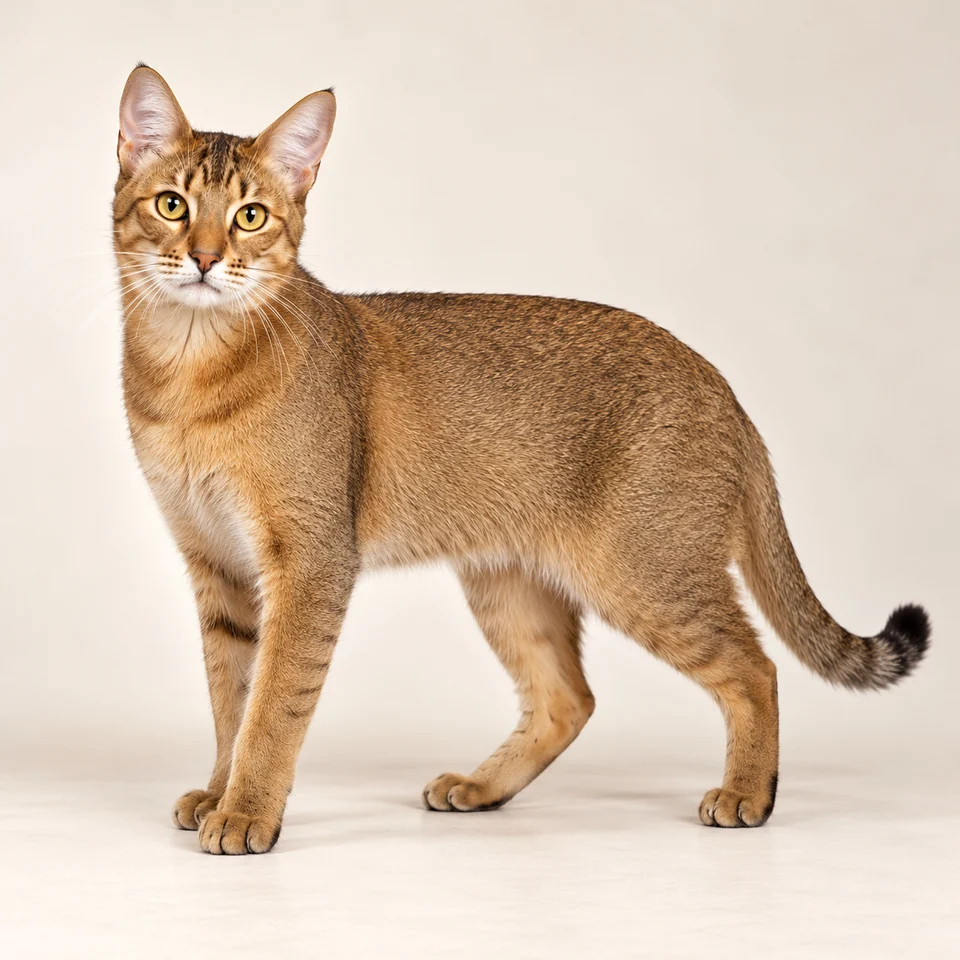
The Chausie is a tall, long-legged, lean cat.
It should look like its wild ancestor, the Jungle Cat (Felis chaus). Its temperament is predominantly domestic. Chausies are active and playful. They suit adults and families without young children.
Source:TICA
Quick facts
- SizeTICA
- Medium to large
- Coat lengthTICA
- Shorthair (short to medium coat)
- Coat feelTICA
- The breed has a dense, soft undercoat. Black grizzled cats may feel coarser. How coarse depends on how much grizzling they have.
- WeightTICA
- The Chausie is medium to large. An adult male weighs about 15 lbs. Females are 15 percent smaller.
- LifespanTICA
- Life expectancy is 12-18+ years.
- TICA statusTICA
- Championship (since May 1, 2013)
Appearance
The Chausie should resemble the Jungle Cat (Felis chaus).
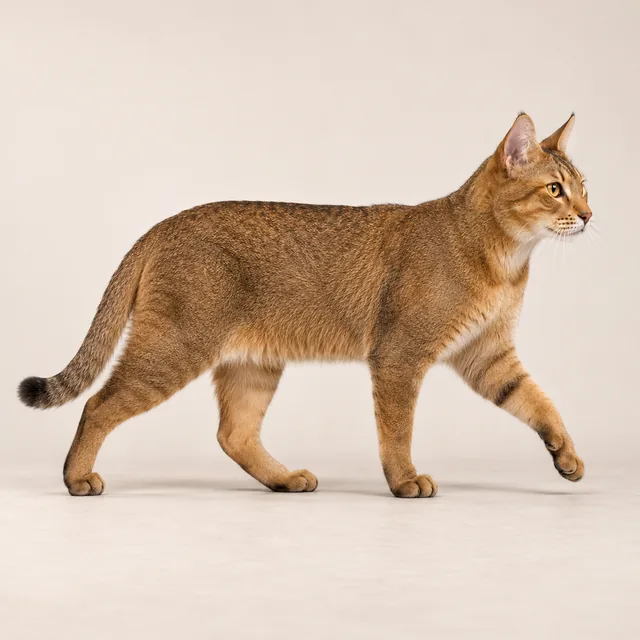
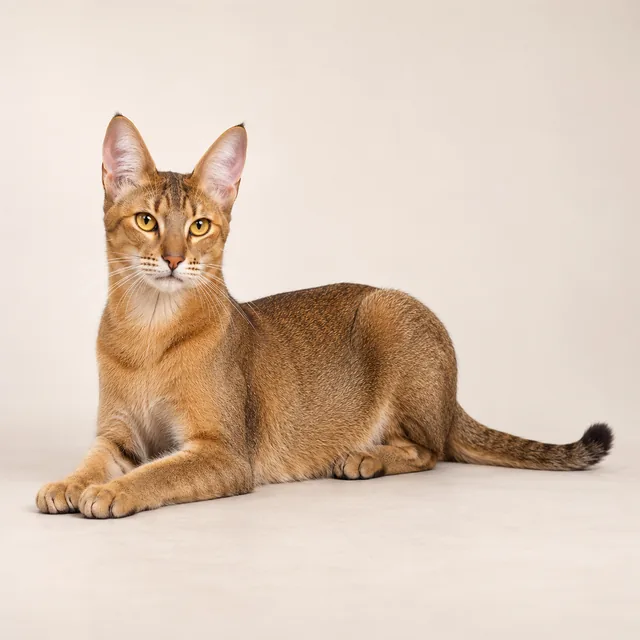
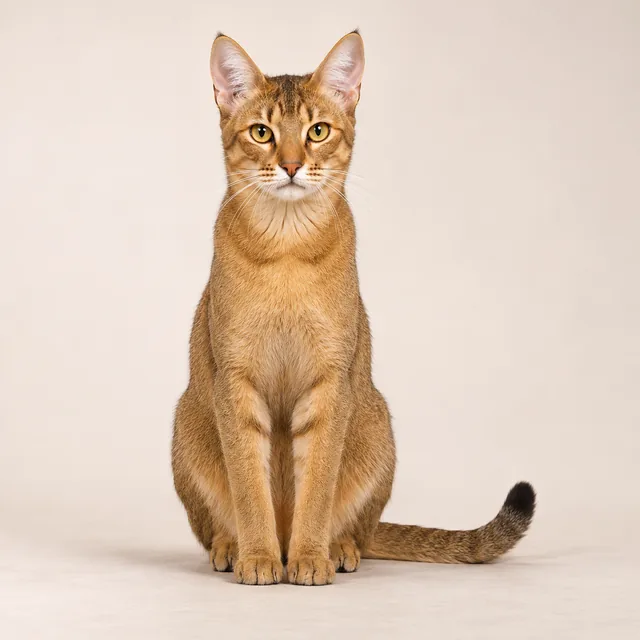
It is a tall, long-legged, lean and supple cat. Ear tufts are preferred, but a cat without them is not penalized. A tail a little shorter than normal is preferred. The tail may range from 3/4 to full length.
Source:TICA
Body
Tall, long-legged, lean and supple. Long legs with medium boning; deep-chested torso of medium width.
Source:TICA
Colors and patterns
Three colors are accepted: black, brown ticked tabby and black grizzled ticked tabby. Grizzling is a banded hair pattern linked to the Jungle Cat ancestor.
Source:TICA
Personality
The Chausie's temperament is predominantly domestic.
Living with a Chausie
Chausies are best suited for adults and families without young children.
Source:TICA
Care
Health
Most consider the Chausie an overall healthy breed.
Source:TICA
This is what TICA says about the breed. It is not a health promise for any kitten. TrueKitten verifies breeder identities and documents, but that does not guarantee a kitten's health. Ask the breeder for test results and talk to your vet.
History
The Chausie comes from the Jungle Cat (Felis chaus) and domestic cats.
The first recorded Jungle Cat and domestic cat breeding was in 1990. The Chausie is the first such breeding to be officially recorded. The breed gained foundation registry status in 1995. It moved through the New Breed Class from May 2001 to April 2013. It became a Championship breed on May 1, 2013.
Source:TICA
Recognition dates
- 1995TICA Foundation registry status
- 2001TICA New Breed Class, May 2001 to April 2013
- 2013TICA Championship breed as of May 1, 2013
Source:TICA
For breeders
Details from the TICA show standard. Cat show judges use it. It does not rate a kitten as a pet.
Points show how much each part counts when a judge scores a cat at a show. They add up to 100.
| Part | Points |
|---|---|
| Head | 40 |
| Body | 40 |
| Coat/Color/Pattern | 20 |
Source:TICA
TICA allowances
Partial: tail may range from 3/4 to full length, with slightly shorter than normal length preferred; lack of ear tufts not a penalty.
Source:TICA
TICA disqualifications
- Tail too short, resulting from a mutated gene.
- Tail kinked or lacking flexibility.
- White lockets.
- Plus the general show-rule disqualifications (e.g. any sign of definite challenge).
Source:TICA
Common questions
The Chausie is medium to large. An adult male weighs about 15 lbs. Females are 15 percent smaller.
Life expectancy is 12-18+ years.
The Chausie comes from the Jungle Cat (Felis chaus) and domestic cats. The first recorded Jungle Cat and domestic cat breeding was in 1990. The Chausie is the first such breeding to be officially recorded. The breed gained foundation registry status in 1995. It moved through the New Breed Class from May 2001 to April 2013. It became a Championship breed on May 1, 2013.
The Chausie's temperament is predominantly domestic. It is active, playful and outgoing. It is a curious cat that needs stimulation and company.
Chausies are best suited for adults and families without young children.
Chausies need stimulation and time with their owners. Without it, they may not do well if left alone for long periods.
Occasional combing is enough.
Questions to ask a breeder
- Which generation is this kitten, and what does its pedigree show?
- How do you keep the kitten busy and give it play time each day?
- Has the kitten met children or other pets?
- What vaccinations and parasite treatments has the kitten had?
- May I see the registration papers for both parents?
Sources
Every fact on this page comes from the cat registry TICA.
Last updated