
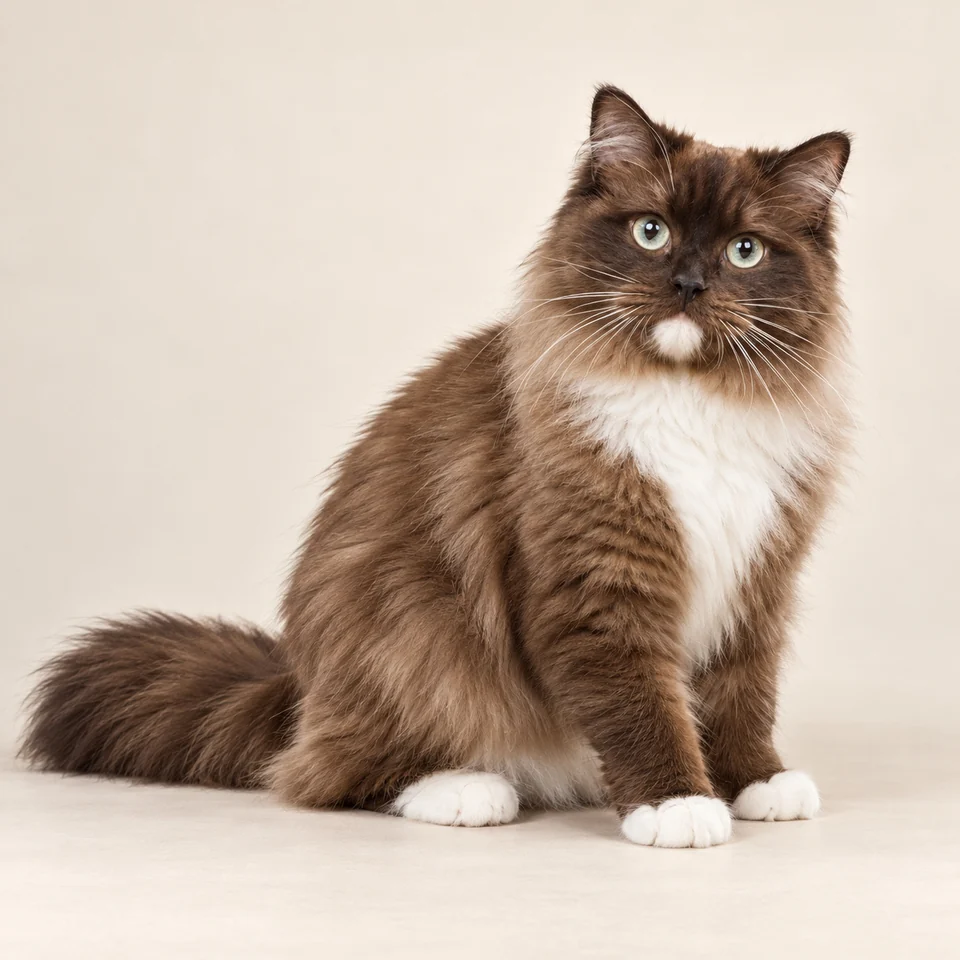
The Cherubim is the non-pointed member of the Ragdoll breed group.
This is a large, semi-longhaired cat of moderate type. It comes in mink, sepia or traditional colors. Cats in this group have a sweet personality.
Source:TICA
Quick facts
- When it beganTICA
- Established as a separate breed in the Ragdoll breed group; Championship-eligible from May 1, 2025.
- SizeTICA
- Large; females may be smaller than males
- Coat lengthTICA
- Semi-longhair
- Coat feelTICA
- Silky soft; not wooly or cottony; falls smoothly
- WeightTICA
- Adult females weigh approximately 10-15 lbs. Adult males weigh 15-20 lbs. The overall range is 12-18 lbs.
- LifespanTICA
- Life expectancy is 10+ years. Many Cherubim live to their mid- or high teens. Genetics and care make a difference.
- Fully grownTICA
- Kittens mature slowly. They do not fully develop until 3-4 years of age. The breed group is slow to mature. It may not reach full weight and size for four years. Full color is not reached until three years.
- TICA statusTICA
- Championship (eligible from May 1, 2025)
Appearance
The head is a broad, modified wedge with a flat plane between the ears.
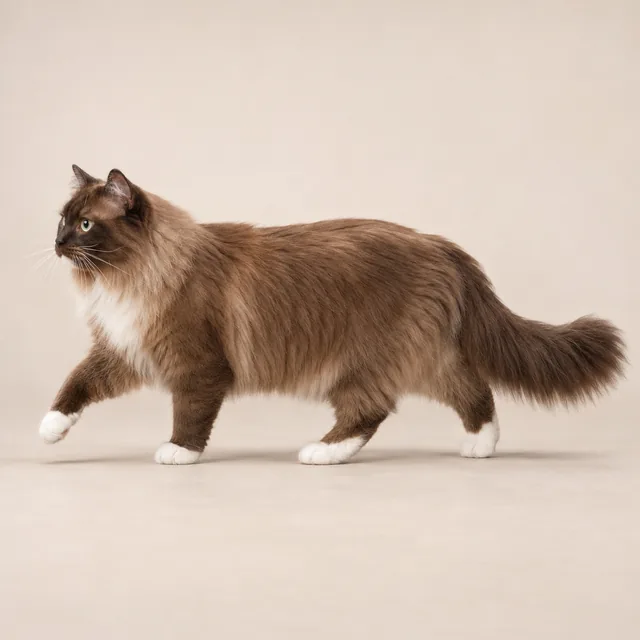
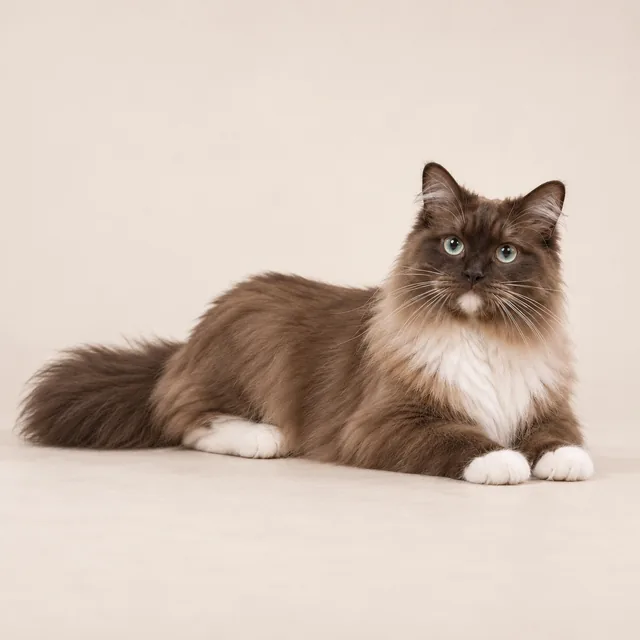
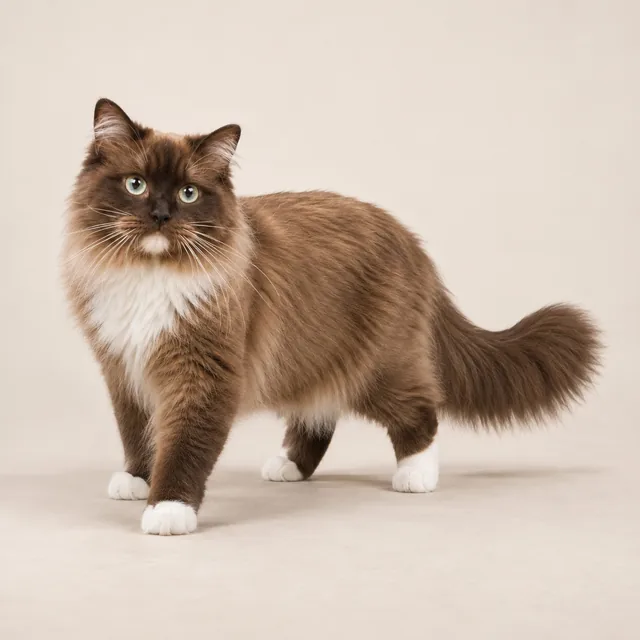
Eyes are large ovals. The body is medium-long to long and substantial, with a broad chest. The tail is as long as the body. Feet are large and round, with tufts desirable. The coat is semi-long and silky soft.
Source:TICA
Body
Medium-long to long, substantial torso with a broad chest; substantial boning; well-muscled with solid weight; lower-abdomen fat pad acceptable
Source:TICA
Colors and patterns
The Cherubim comes in mink, sepia and traditional colors, not the pointed colors of the Ragdoll. All mink, sepia and traditional colors are accepted except solid white. Patterns include solid, tortie and tabby, and these with white in mitted and bicolor patterns only.
Source:TICA
Eye colors
Depends on color category: mink — blue-green to green-blue (aqua); sepia — gold, gold-green (chartreuse) or green; traditional — bronze, copper, gold, yellow green or hazel. Deeper tones preferred.
Source:TICA
About this variety
The Cherubim shares the Ragdoll's head, body and coat standard. The difference is color. The Ragdoll is pointed with blue eyes. The Cherubim is mink, sepia or traditional colored. Its eye color follows its color category. Mink cats show contrast between body and points. Sepia cats show less contrast. Traditional solid-colored cats have an even solid color.
Source:TICA
Personality
Cats in the Ragdoll breed group have a sweet personality.
Source:TICA
Living with a Cherubim
The Cherubim gets along well with children and other pets, including dogs.
Source:TICA
Activity
Adult Cherubim need plenty of interactive play. This helps them avoid gaining too much weight. Feather wands and other interactive toys work well. They are good for play, exercise and family bonding.
Source:TICA
Care
Minimal undercoat that gives the coat body
Source:TICA
History
The Cherubim grew out of the Ragdoll.
In 2024, a board agenda proposed a Ragdoll breed group. It would create a separate breed, the Cherubim, for mink, sepia and solid Ragdolls. This would let them compete in the Championship class. The Cherubim became eligible for Championship on May 1, 2025. Today the show standard lists Cherubim in mink, sepia and traditional colors.
Source:TICA
Recognition dates
- 2024TICA 2024 board agenda item proposing a Ragdoll breed group with a separate breed, Cherubim, so mink, sepia and solid Ragdolls could compete in Championship
- 2025TICA Eligible for Championship competition
Source:TICA
For breeders
Details from the TICA show standard. Cat show judges use it. It does not rate a kitten as a pet.
What the show standards ask for
- General: large semi-longhair of moderate type, no extremes; slow to mature.
- Head: broad modified wedge with slightly rounded contours; flat plane between the ears; medium skull.
- Ears: medium, broad base, rounded tip, slightly tilted forward.
- Eyes: large oval, level set, moderately wide; color by category (mink aqua; sepia gold/chartreuse/green; traditional bronze to hazel).
- Profile: straight nose to bridge, concave curve to brow, convex curve to forehead.
- Body: medium-long to long, substantial, broad chest; lower-abdomen fat pad acceptable.
- Legs and feet: substantial boning, hind legs slightly longer; large round feet, tufting desirable.
- Tail: equal to body length, thicker at base with slight taper.
- Coat: semi-long, silky soft, minimal undercoat, not wooly or cottony; texture matters more than length.
Source:TICA
Points show how much each part counts when a judge scores a cat at a show. They add up to 100.
| Part | Points |
|---|---|
| HEAD | 40 |
| BODY | 35 |
| COAT/COLOR/PATTERN | 25 |
Source:TICA
TICA divisions
CB – Solid Division; Tortie Division; Tabby Division; Solid & White, Tortie & White, Tabby & White Divisions (mitted and bicolor patterns ONLY)
Source:TICA
TICA allowances
Seasonal changes in coat length; shorter coats on unaltered adults and kittens; females may be smaller than males. Mitted and bicolor only: small spots of point color in white areas; spots of point color on paw pads or colored paw pads. Color clauses also allow darker body color in older cats and undeveloped color in young cats.
Source:TICA
TICA penalties
Very small ears; any eye shape other than oval; Roman nose; straight profile; cobby body; short legs; short tail; wooly/cottony coat. Mitted: no white belly stripe; white on ears and/or tail. Bicolor: white beyond the outer edge of the eye; white on ears and/or tail.
Source:TICA
TICA disqualifications
Withhold all awards: doming; CB mink: any eye color other than blue-green to green-blue (aqua); sepia: other than gold, gold-green (chartreuse) or green; traditional: other than bronze, copper, gold, yellow, green or hazel. Mitted: lack of white chin. Bicolor: any dark markings inside the white "V", including the chin. Disqualify: crossed eyes; visible or severe tail faults; severe cow hocks; any sign of definite challenge in temperament; plus the Show Rules Article Sixteen mandatory disqualifications listed in the standard.
Source:TICA
Common questions
The Cherubim shares the Ragdoll's head, body and coat standard. The difference is color. The Ragdoll is pointed with blue eyes. The Cherubim is mink, sepia or traditional colored. Its eye color follows its color category. Mink cats show contrast between body and points. Sepia cats show less contrast. Traditional solid-colored cats have an even solid color.
The Cherubim comes in mink, sepia and traditional colors, not the pointed colors of the Ragdoll. All mink, sepia and traditional colors are accepted except solid white. Patterns include solid, tortie and tabby, and these with white in mitted and bicolor patterns only.
Depends on color category: mink — blue-green to green-blue (aqua); sepia — gold, gold-green (chartreuse) or green; traditional — bronze, copper, gold, yellow green or hazel. Deeper tones preferred.
Kittens mature slowly. They do not fully develop until 3-4 years of age. The breed group is slow to mature. It may not reach full weight and size for four years. Full color is not reached until three years.
Large; females may be smaller than males
Silky soft; not wooly or cottony; falls smoothly
Adult females weigh approximately 10-15 lbs. Adult males weigh 15-20 lbs. The overall range is 12-18 lbs.
Life expectancy is 10+ years. Many Cherubim live to their mid- or high teens. Genetics and care make a difference.
The Cherubim gets along well with children and other pets, including dogs.
Adult Cherubim need plenty of interactive play. This helps them avoid gaining too much weight. Feather wands and other interactive toys work well. They are good for play, exercise and family bonding.
The Cherubim grew out of the Ragdoll. In 2024, a board agenda proposed a Ragdoll breed group. It would create a separate breed, the Cherubim, for mink, sepia and solid Ragdolls. This would let them compete in the Championship class. The Cherubim became eligible for Championship on May 1, 2025. Today the show standard lists Cherubim in mink, sepia and traditional colors.
Questions to ask a breeder
- Is this kitten mink, sepia or traditional, and what eye color should I expect?
- Can I see health records for both parents?
- Is this kitten registered as a Cherubim?
- How do you groom the semi-long coat?
- How much interactive play does this kitten get each day?
- How big are the parents as adults?
Sources
Every fact on this page comes from the cat registry TICA.
Last updated