
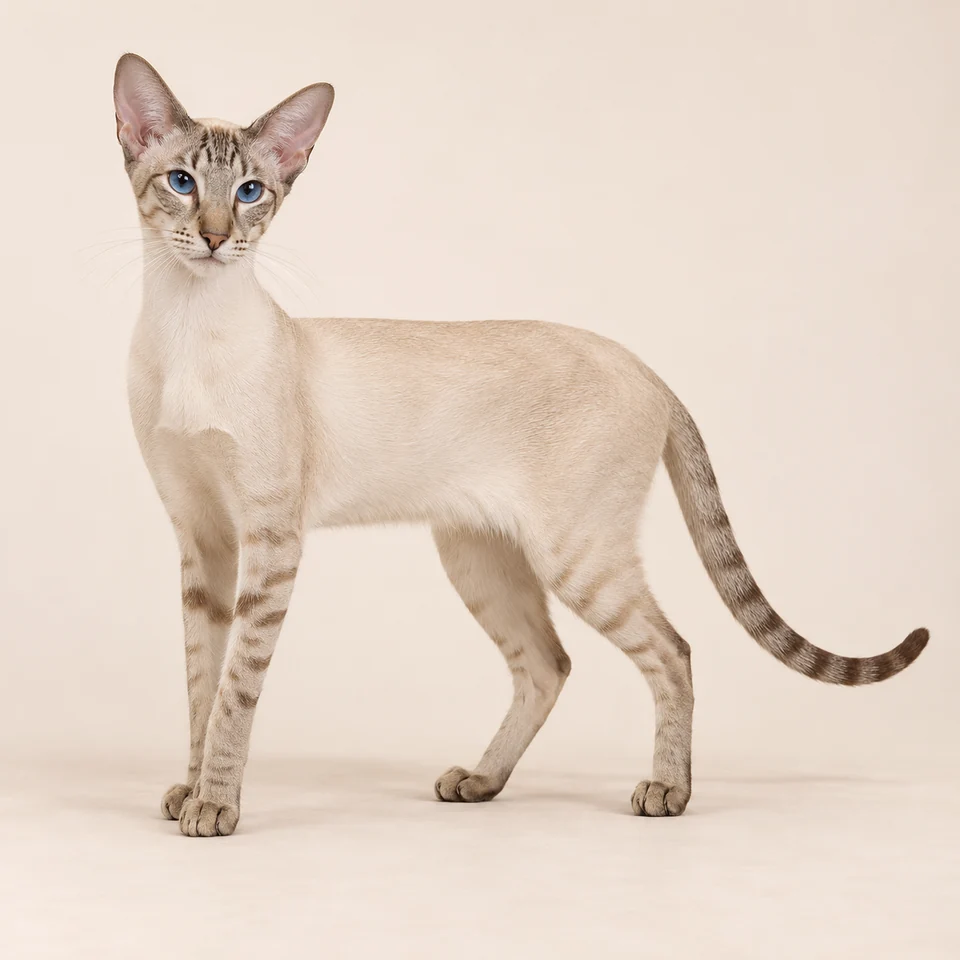
The Colorpoint Shorthair is built just like the Siamese.
It is structurally identical to the Siamese. The difference is color. Breeders added red to the Siamese in the 1950s. Today there are 16 colors and color combinations.
Source:CFA
Quick facts
- When it beganCFA
- Mid-1950s. Breeders then began mixing the red gene into the four traditional Siamese colors.
- SizeCFA
- Medium; males may be proportionately larger
- Coat lengthCFA
- Shorthair
- Coat feelCFA
- Short, fine textured, glossy; lies close to the body. The hair is short and silky.
- CFA statusCFA
- Championship (since 1964)
Appearance
This fine-boned, long-limbed cat defines the word “svelte.”
It has a long, flat profile and a long neck. The body is long and muscular. The tail is whippy and the legs are long. The head is a wedge with large ears. The eyes are bright blue and almond-shaped.
Source:CFA
Body
Long, svelte, tubular body; fine bones with firm muscles; type identical to the Siamese
Source:CFA
Colors and patterns
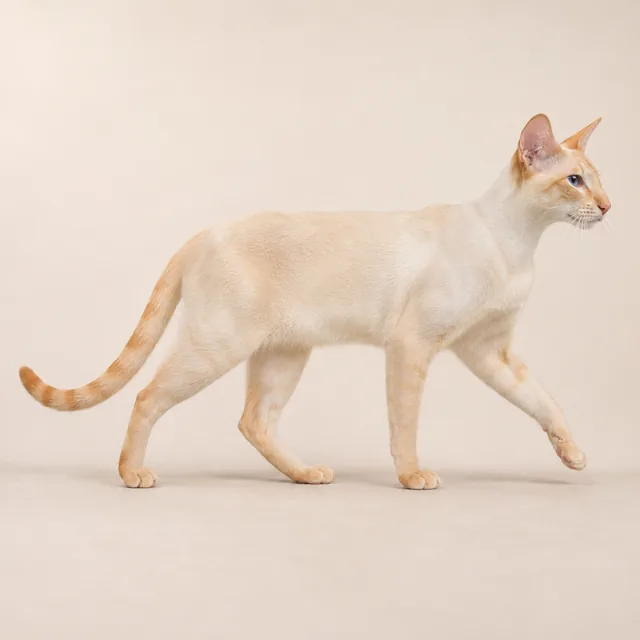
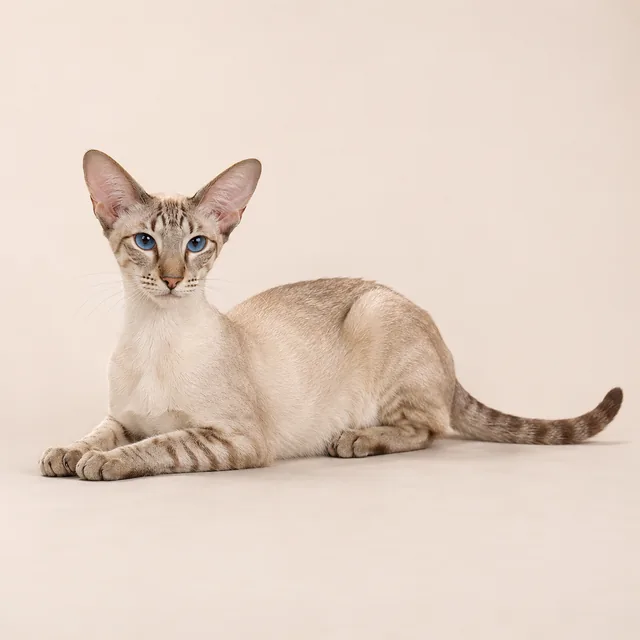
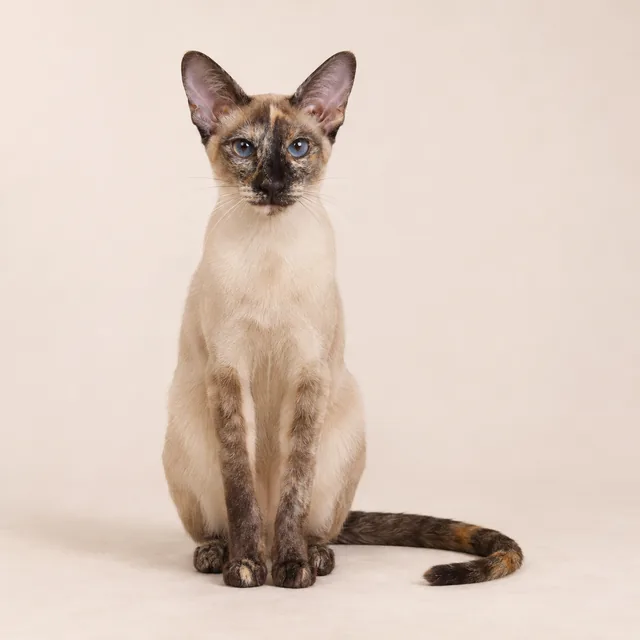
Pointed cats in non-traditional point colors. There are 16 colors in three classes. Solid points are red and cream. Lynx points have tabby markings on the points. Parti-color points are tortie and blue-cream or lilac-cream. The four traditional Siamese colors are not shown as Colorpoint Shorthairs.
Source:CFA
About this variety
The Colorpoint Shorthair is its own breed. Its type is the same as the Siamese, but its colors differ. The point color is sensitive to temperature. It shows on the cooler parts of the body. Some lynx points look like they wear eyeliner.
Source:CFA
Personality
Colorpoints share the Siamese gift for talking with people.
They are also very intelligent. Owners are always told what the cat wants. The breed is vocal, affectionate and active. It can be insistent.
Source:CFA
With their people
Expect your Colorpoint to demand attention and devotion. It gives this back many times over. It wants to be with you, on you, or involved in what you do.
Source:CFA
Living with a Colorpoint Shorthair
Care
The short, silky coat needs only light grooming to control shedding.
Some breeders use a rubber brush. Others stroke the cat firmly with wet hands. By the time your hands are dry, a fair amount of dead hair is gone.
Source:CFA
Health
Colorpoint Shorthairs are generally healthy.
They can be prone to some health conditions. Some are minor, such as crossed eyes or tail kinks. Others need genetic or physical testing to check.
Source:CFA
Screening
Most breeders now use genetic screening. They remove carrier cats from their breeding programs.
Source:CFA
CFA health notes
Generally healthy but can be predisposed to some conditions. Minor ones include crossed eyes and tail kinks. Others need genetic or physical testing. Most breeders now screen genetically to remove carriers.
Source:CFA
This is what CFA says about the breed. It is not a health promise for any kitten. TrueKitten verifies breeder identities and documents, but that does not guarantee a kitten's health. Ask the breeder for test results and talk to your vet.
History
The breed began in the mid-1950s.
Breeders mixed the red gene into Siamese colors. Red, cream and tortie points came first. They were accepted for registration in the late 1950s. They reached championship status in 1964. English “tabby points” later came to America and were renamed “lynx points.” A number of top Siamese catteries now work with the breed.
Source:CFA
Recognition dates
- late 1950sCFA Accepted for registration (red, cream and tortie points)
- 1964CFA Championship status
Source:CFA
Did you know?
- Lynx points were first called “tabby points” in England.
- Some lynx points look like they wear eyeliner.
- Point color may get darker with age or if the cat lives somewhere not comfortably warm.
- Colorpoint litters sometimes have kittens in the four traditional Siamese colors. These kittens cannot be shown.
Source:CFA
For breeders
Details from the CFA show standard. Cat show judges use it. It does not rate a kitten as a pet.
What the show standards ask for
- General: medium sized, svelte, refined, long tapering lines; type identical to the Siamese, with its own colors.
- Head: long tapering wedge with no break at the whiskers; flat skull; long straight profile, no bulge over eyes, no dip in nose.
- Ears: strikingly large, pointed, wide at base, continuing the wedge.
- Eyes: almond shaped, medium size, slanted toward the nose, uncrossed; vivid blue only.
- Body: medium sized, long and svelte, tubular; fine bones and firm muscles; hips never wider than shoulders.
- Legs and paws: long and slim, hind legs higher than front; small oval paws, five toes in front and four behind.
- Tail: long, thin, tapering to a fine point.
- Coat: short, fine textured, glossy, lying close.
- Color: definite contrast between body and points; points dense and of one shade; no white hairs in points (lynx points may have tabby-pattern white).
Source:CFA
Points show how much each part counts when a judge scores a cat at a show. They add up to 100.
| Part | Points |
|---|---|
| HeadLong flat profile 6, Wedge, fine muzzle, size 5, Ears 4, Chin 3, Width between eyes 2 | 20 |
| EyesShape, size, slant, and placement 10 | 10 |
| BodyStructure and size, including Neck 12, Muscle tone 10, Legs and feet 5, Tail 3 | 30 |
| Coat | 10 |
| ColorBody color 10, Point color (matching points of dense color, proper foot pads and nose leather) 10, Eye color 10 | 30 |
Source:CFA
CFA colors and patterns
- Solid color point: Red point, Cream point
- Lynx point: Seal lynx point, Chocolate lynx point, Blue lynx point, Lilac lynx point, Red lynx point, Cream lynx point, Seal-tortie lynx point, Chocolate-tortie lynx point, Blue-cream lynx point, Lilac-cream lynx point
- Parti color point: Seal-tortie point, Chocolate-tortie point, Blue-cream point, Lilac-cream point
Source:CFA
CFA allowed outcrosses
Colorpoint Shorthair or Siamese (reference note, not part of the official show standard)
Source:CFA
CFA allowances
No separate ALLOWANCES section. In-text allowances: jowls in the stud cat; darker color in older cats (definite body/point contrast still required); lynx points may have tabby-pattern white around eyes and nostrils, on whisker pads, chin, upper throat and under the tail base.
Source:CFA
CFA penalties
Nose leather and/or paw pad pigmentation not consistent with the color description; palpable and/or visible protrusion of the cartilage at the end of the sternum.
Source:CFA
CFA disqualifications
Any evidence of illness or poor health; weak hind legs; mouth breathing due to nasal obstruction or poor occlusion; emaciation; visible kink; eyes other than blue; white toes and/or feet, white spots or markings except as appropriate for the tabby pattern on lynx points; clearly-defined white undercoat in the points; incorrect number of toes; malocclusion with undershot or overshot chin.
Source:CFA
CFA breeding notes
The Colorpoint Shorthair or Siamese are allowable outcross breeds (reference note, not part of the standard). For litters born after June 15, 2010, Oriental (shorthair division) litters from a pointed Oriental bred to a Siamese, a Colorpoint Shorthair or another pointed Oriental cannot be registered. Most breeders now practice genetic screening.
Source:CFA
Common questions
The Colorpoint Shorthair is its own breed. Its type is the same as the Siamese, but its colors differ. The point color is sensitive to temperature. It shows on the cooler parts of the body. Some lynx points look like they wear eyeliner.
Pointed cats in non-traditional point colors. There are 16 colors in three classes. Solid points are red and cream. Lynx points have tabby markings on the points. Parti-color points are tortie and blue-cream or lilac-cream. The four traditional Siamese colors are not shown as Colorpoint Shorthairs.
Colorpoints share the Siamese gift for talking with people. They are also very intelligent. Owners are always told what the cat wants. The breed is vocal, affectionate and active. It can be insistent.
Many Colorpoints make close friends with dogs and other pets. They seem fondest of other cats. They may curl up together in a pile.
“Vocal” is among the breed’s traits. Expect loud protests if you need time alone.
The short, silky coat needs only light grooming to control shedding. Some breeders use a rubber brush. Others stroke the cat firmly with wet hands. By the time your hands are dry, a fair amount of dead hair is gone.
Colorpoint Shorthairs are generally healthy. They can be prone to some health conditions. Some are minor, such as crossed eyes or tail kinks. Others need genetic or physical testing to check.
The breed began in the mid-1950s. Breeders mixed the red gene into Siamese colors. Red, cream and tortie points came first. They were accepted for registration in the late 1950s. They reached championship status in 1964. English “tabby points” later came to America and were renamed “lynx points.” A number of top Siamese catteries now work with the breed.
Questions to ask a breeder
- What genetic screening do you do on your breeding cats? May I see the results?
- Have crossed eyes or tail kinks appeared in this kitten’s lines?
- What color is this kitten registered as?
- Has this kitten lived with other cats, dogs or pets?
- How much daily time does this kitten spend with people?
Sources
Every fact on this page comes from the cat registry CFA.
Last updated