
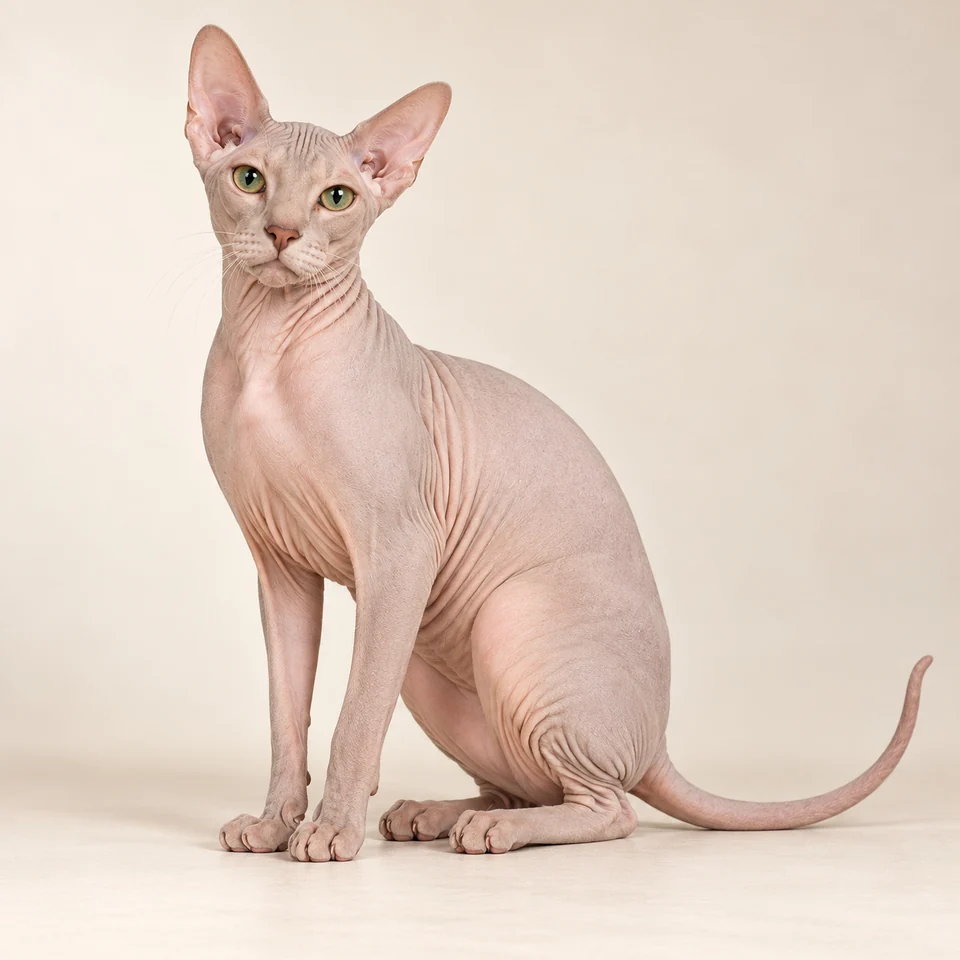
The Donskoy comes from Rostov-on-Don, Russia.
It began with a spontaneous mutation in 1987. There are four coat types. All but one usually end in hairlessness. The breed is very active, extremely friendly and highly intelligent.
Source:TICA
Quick facts
- Where it beganTICA
- Rostov-on-Don, Russia
- When it beganTICA
- 1987 (spontaneous mutation)
- SizeTICA
- Medium-sized
- Coat lengthTICA
- Hairless or partly coated (four coat types; all but one usually ends in hairlessness)
- WeightTICA
- Males as a rule are generally larger than females.
- LifespanTICA
- Life expectancy is 12–15+ years.
Appearance
The breed has four coat types.
Most tend to lose their hair.
Source:TICA
About this variety
There are four coat types: Rubber Bald, Flocked, Velour and Brush. The Rubber Bald is born bald and stays that way all its life. A Flock coat can disappear, and the cat can become bald. Velour kittens often have a bald spot, or "Monk's cap," on top of the head. A Brush cat loses only part of its coat over time.
Source:TICA
Personality
Living with a Donskoy
Care
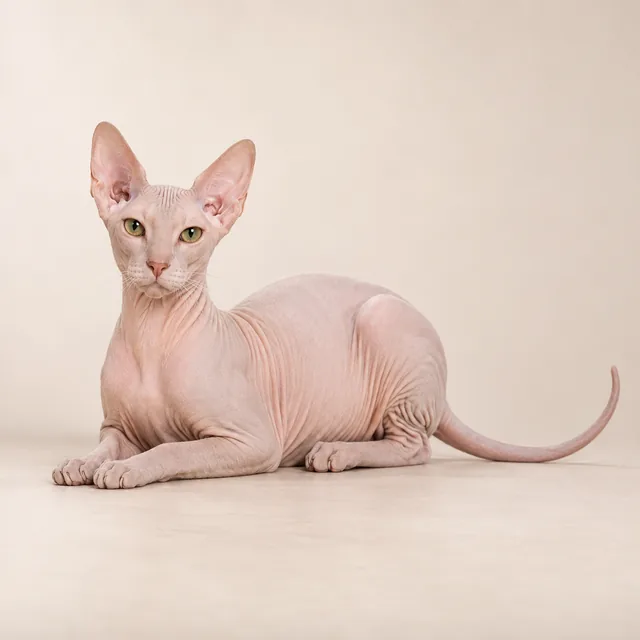
For hairless Donskoys, a daily wipe-down removes skin oils.
They should be bathed once a week or twice a month.
Source:TICA
Skin care
Hairless Donskoys should be wiped down daily. This removes the oils their skin makes.
Source:TICA
Nails, ears, eyes and teeth
Keep nails trimmed, ears cleaned and teeth brushed regularly with a vet-approved pet toothpaste.
Source:TICA
History
Did you know?
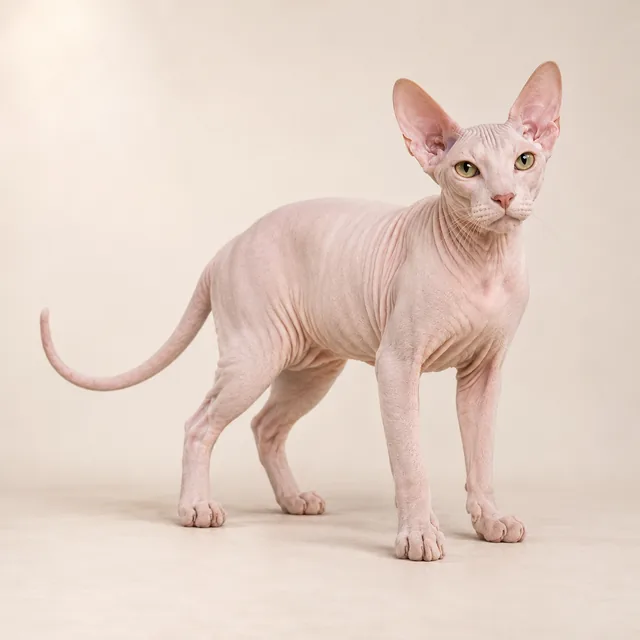
- The "Don" in the breed's name comes from the river where the founding cat Varvara was found.
- The Rubber Bald coat type is born bald and stays bald for life.
- Velour kittens often have a bald spot called a "Monk's cap."
Source:TICA
For breeders
Details from the TICA show standard. Cat show judges use it. It does not rate a kitten as a pet.
Common questions
There are four coat types: Rubber Bald, Flocked, Velour and Brush. The Rubber Bald is born bald and stays that way all its life. A Flock coat can disappear, and the cat can become bald. Velour kittens often have a bald spot, or "Monk's cap," on top of the head. A Brush cat loses only part of its coat over time.
Hairless Donskoys should be bathed once a week or twice a month.
Hairless Donskoys should be wiped down daily. This removes the oils their skin makes.
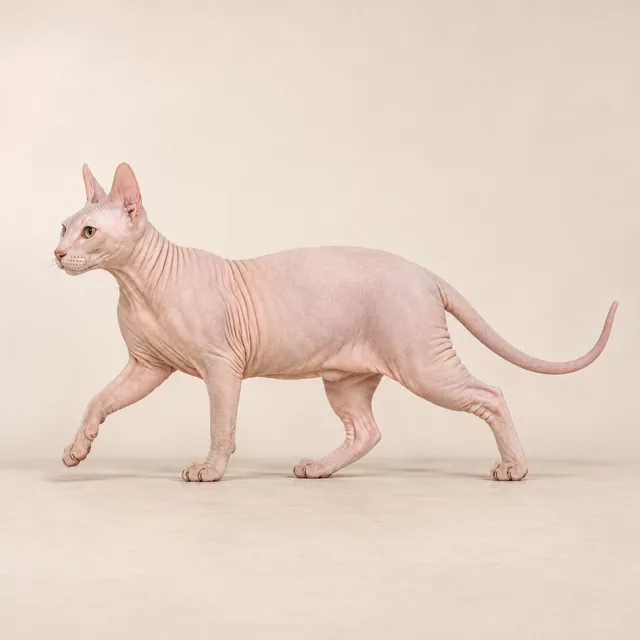
The Donskoy is very active, extremely friendly and highly intelligent. The breed is very loving and amiable.
Donskoys are friendly and social cats. They do well with young children and with other pets that keep them company.
Donskoys need company. They should not be without a companion pet.
Life expectancy is 12–15+ years.
Questions to ask a breeder
- Which coat type is this kitten (Rubber Bald, Flocked, Velour or Brush), and how do you expect its coat to change?
- What skin-care and bathing routine is this kitten used to?
- What health testing or vet checks have the parents had, and may I see the records?
- Does this kitten live with other cats or pets now?
- Is this kitten registered, and are you willing to share the pedigree?
Sources
Every fact on this page comes from the cat registry TICA.
Last updated