
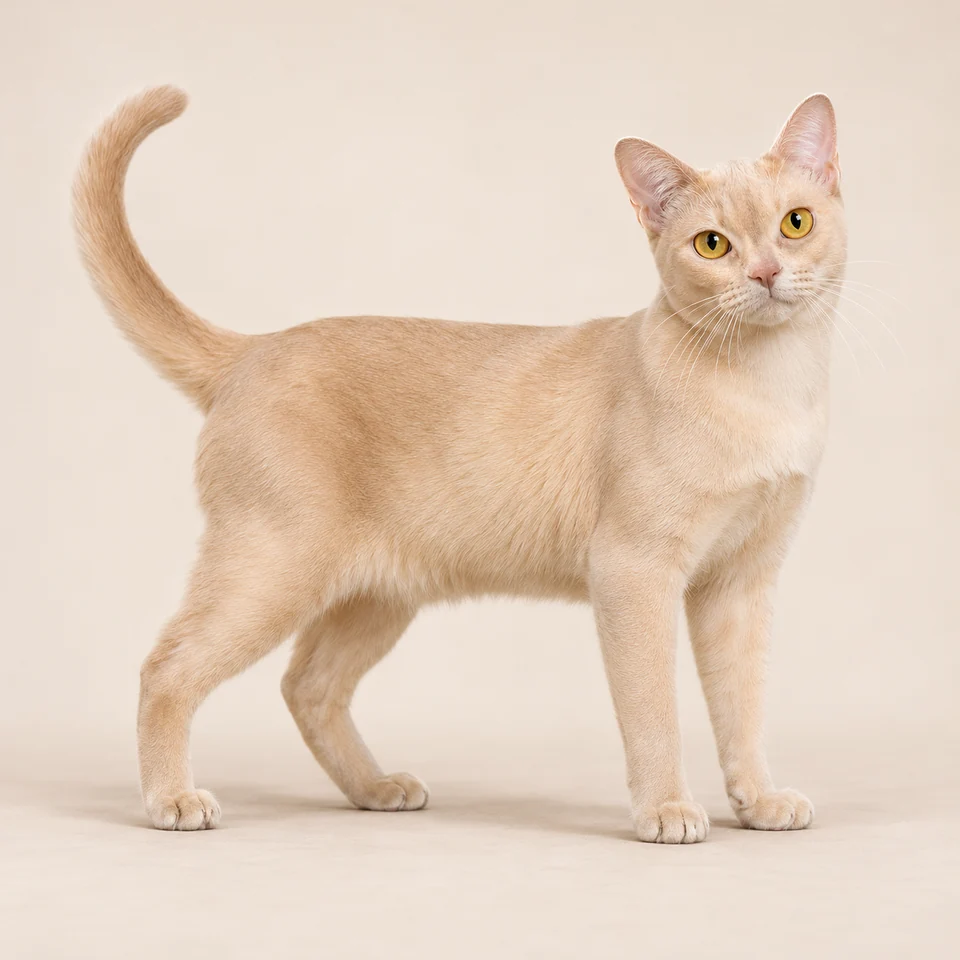
The European Burmese shares its roots with the Burmese.
The two breeds differ in color and build. Burmese come in four colors; European Burmese come in ten. Burmese are compact and round, while European Burmese are more moderate. Many people choose this breed for its large, glowing eyes.
Source:CFA
Quick facts
- Where it beganCFA
- Developed in England from American-bred Burmese, then spread through Europe, Africa, Australia and New Zealand. It is a breed "of far eastern origin."
- When it beganCFA
- From 1949, when American-bred Burmese were exported to England; brown cats gained championship in England in 1952.
- SizeCFA
- Medium
- Coat lengthCFA
- Shorthair
- Coat feelCFA
- Short, fine and close-lying; very glossy; satin-like
- LifespanCFA
- European Burmese are generally healthy and can live long lives with proper care. No year range is given.
- CFA statusCFA
- Championship (since 2002)
Appearance
The European Burmese is solid and muscular, but not extreme.
The body is medium length and heavier than it looks. The head is a short, blunt wedge with wide cheekbones and a strong chin. The large eyes have a slightly curved top edge and a more rounded bottom edge. The coat is short, close-lying and glossy.
Source:CFA
Body
Medium length and size; hard and muscular; heavier than it looks; moderate type, neither oriental nor cobby
Source:CFA
Colors and patterns
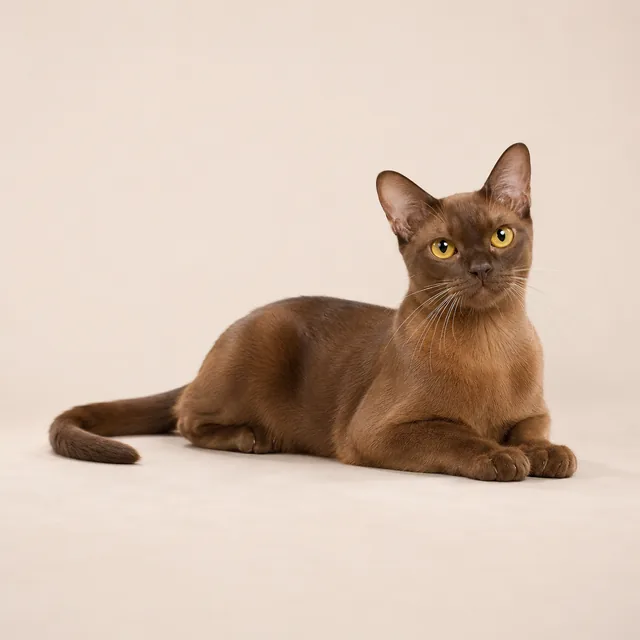
Ten colors are accepted. Six are solid: brown, blue, chocolate, lilac, red and cream. Four are tortoiseshells: brown tortie, chocolate tortie, blue-cream and lilac-cream. The coat shades slightly paler on the underparts. Adults other than red or cream should have no tabby markings.
Source:CFA
Personality
European Burmese are curious, playful and highly intelligent.
They thrive on human company. They are energetic and interactive, but not overly active. They are so friendly and trusting they may greet visitors at the door.
Source:CFA
With their people
A European Burmese will become your closest companion. It follows you from room to room and "helps" with daily tasks. One person may become a favorite, but others are not left out.
Source:CFA
Lap time
They will happily go from one lap to the next. At nap time they like to snuggle close to you.
Source:CFA
Living with an European Burmese
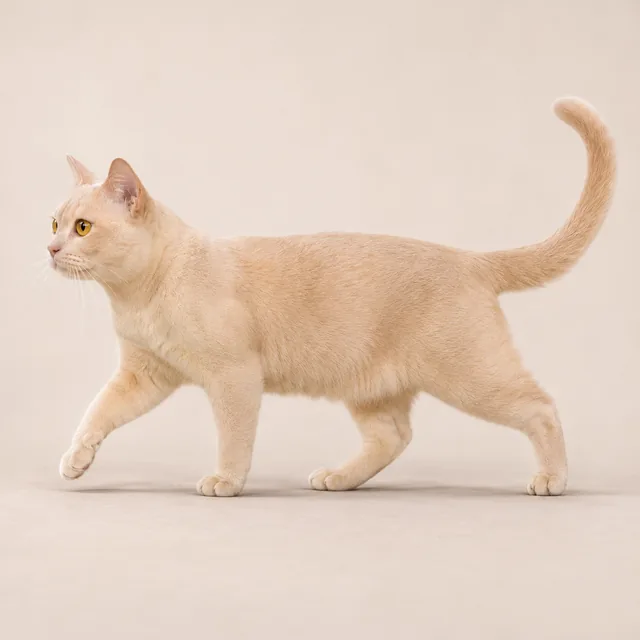
European Burmese are very adaptable.
Care
This is one of the easiest breeds to care for.
Health
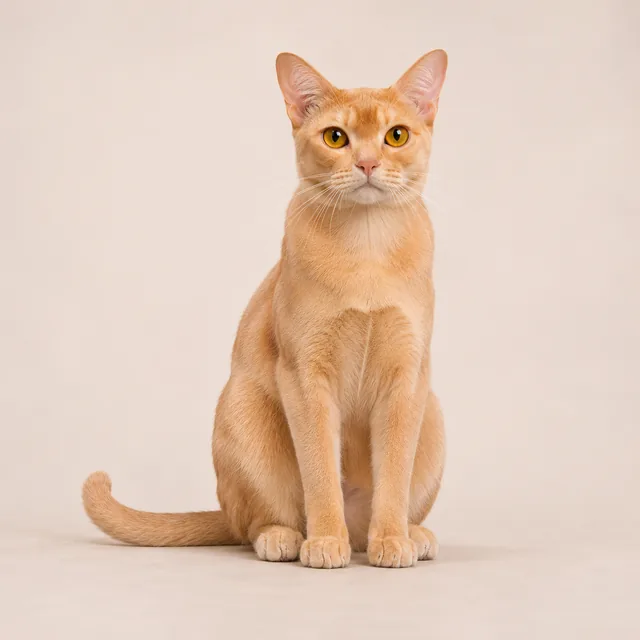
European Burmese are generally healthy.
They may have some inherited health issues. The main one named is hypokalaemic myopathy, which causes muscle weakness. It is treatable with potassium supplements. Older cats may be prone to diabetes, but the research is not conclusive.
Source:CFA
Screening
Hypokalaemic myopathy is recessive and can be found by genetic testing. This lets breeders remove carriers from breeding programs.
Source:CFA
Health questions to ask
Asking about any diabetes in the breeder's lines is recommended. As your cat ages, keep up regular checkups and watch carbohydrate intake.
Source:CFA
CFA health notes
European Burmese are generally healthy. Hypokalaemic myopathy is recessive. It can be found by genetic testing and is treatable with potassium supplements. Older cats may have a genetic predisposition to diabetes. Research on whether it is inherited is not yet conclusive.
Source:CFA
This is what CFA says about the breed. It is not a health promise for any kitten. TrueKitten verifies breeder identities and documents, but that does not guarantee a kitten's health. Ask the breeder for test results and talk to your vet.
History
The European Burmese and the Burmese share one ancestor, Wong Mau.
Dr. Joseph Thompson brought her to the West in 1930. From 1949, American-bred Burmese were sent to England. There the European Burmese began to develop. Brown cats won championship status in England in 1952. Blue, red, cream, chocolate and lilac followed. These made four tortoiseshell colors possible, which completed the ten colors. The breed returned to the U.S. with registration in 1993 and championship in 2002.
Source:CFA
Did you know?
- European Burmese come in ten colors, compared with four for the Burmese.
- A European Burmese is more likely to purr for attention than to meow.
- They may even welcome visitors at the door.
Source:CFA
For breeders
Details from the CFA show standard. Cat show judges use it. It does not rate a kitten as a pet.
What the show standards ask for
- General: moderate type with gently rounded contours; oriental elongation or excessive cobbiness is a fault.
- Head: top slightly rounded; wide cheekbones tapering to a short blunt wedge.
- Ears: medium, set well apart, slight forward tilt, broad base, slightly rounded tips.
- Muzzle and profile: wide jaw, strong lower jaw and chin; visible nose stop.
- Eyes: large, alert, set well apart; top line slightly curved with oriental slant, lower line rounded; yellow gold to amber.
- Body: medium length and size; hard, muscular, heavier than it looks; straight back.
- Legs and feet: legs rather slender; hind legs slightly longer; feet small and oval.
- Tail: medium length, not thick at the base, tapering slightly to a rounded tip.
- Coat: short, fine, close-lying, very glossy, satin-like, almost without undercoat.
Source:CFA
Points show how much each part counts when a judge scores a cat at a show. They add up to 100.
| Part | Points |
|---|---|
| HEAD, EARS, MUZZLE and PROFILE | 25 |
| EYES and EYE COLORShape 15, Color 10 | 25 |
| BODY, LEGS, FEET and TAIL | 20 |
| COAT and COAT COLOR | 30 |
Source:CFA
CFA colors and patterns
- Brown
- Blue
- Chocolate
- Lilac
- Red
- Cream
- Brown Tortoiseshell
- Chocolate Tortoiseshell
- Blue-Cream
- Lilac-Cream
Source:CFA
CFA allowances
Partial: no separate allowances section. The color section permits faint tabby markings and lighter color in kittens and adolescents, slight facial tabby markings in red and cream, and some contrast on the points.
Source:CFA
CFA penalties
Pronounced muzzle pinch (top view); oriental eye shape; round eyes; green eyes. Also, the General section says oriental elongation or excessive cobbiness is a fault.
Source:CFA
CFA disqualifications
White patches; noticeable numbers of white hairs; visible tail kink; excessive tabby markings.
Source:CFA
CFA breeding notes
Genetic testing for hypokalaemic myopathy lets breeders remove carriers from breeding programs. The reference text lists no allowable outcross breeds.
Source:CFA
Common questions
The European Burmese shares its roots with the Burmese. The two breeds differ in color and build. Burmese come in four colors; European Burmese come in ten. Burmese are compact and round, while European Burmese are more moderate. Many people choose this breed for its large, glowing eyes.
Ten colors are accepted. Six are solid: brown, blue, chocolate, lilac, red and cream. Four are tortoiseshells: brown tortie, chocolate tortie, blue-cream and lilac-cream. The coat shades slightly paler on the underparts. Adults other than red or cream should have no tabby markings.
A European Burmese will become your closest companion. It follows you from room to room and "helps" with daily tasks. One person may become a favorite, but others are not left out.
European Burmese are very adaptable. Their human family can range from infants to senior citizens.
This is one of the easiest breeds to care for. It needs only occasional brushing. A rubber brush is recommended. Shedding is already minimal.
They keep themselves very clean. They do not need regular baths unless shown. For show cats, ask your breeder about products. Not to use human shampoos on cats.
European Burmese are generally healthy. They may have some inherited health issues. The main one named is hypokalaemic myopathy, which causes muscle weakness. It is treatable with potassium supplements. Older cats may be prone to diabetes, but the research is not conclusive.
European Burmese are generally healthy and can live long lives with proper care. No year range is given.
Questions to ask a breeder
- Have the parents been genetically tested for hypokalaemic myopathy?
- Has diabetes occurred in your breeding lines?
- Can I see health records for both parents?
- Do you have any retired show cats available?
- What grooming products do you recommend for this coat?
Sources
Every fact on this page comes from the cat registry CFA.
Last updated