
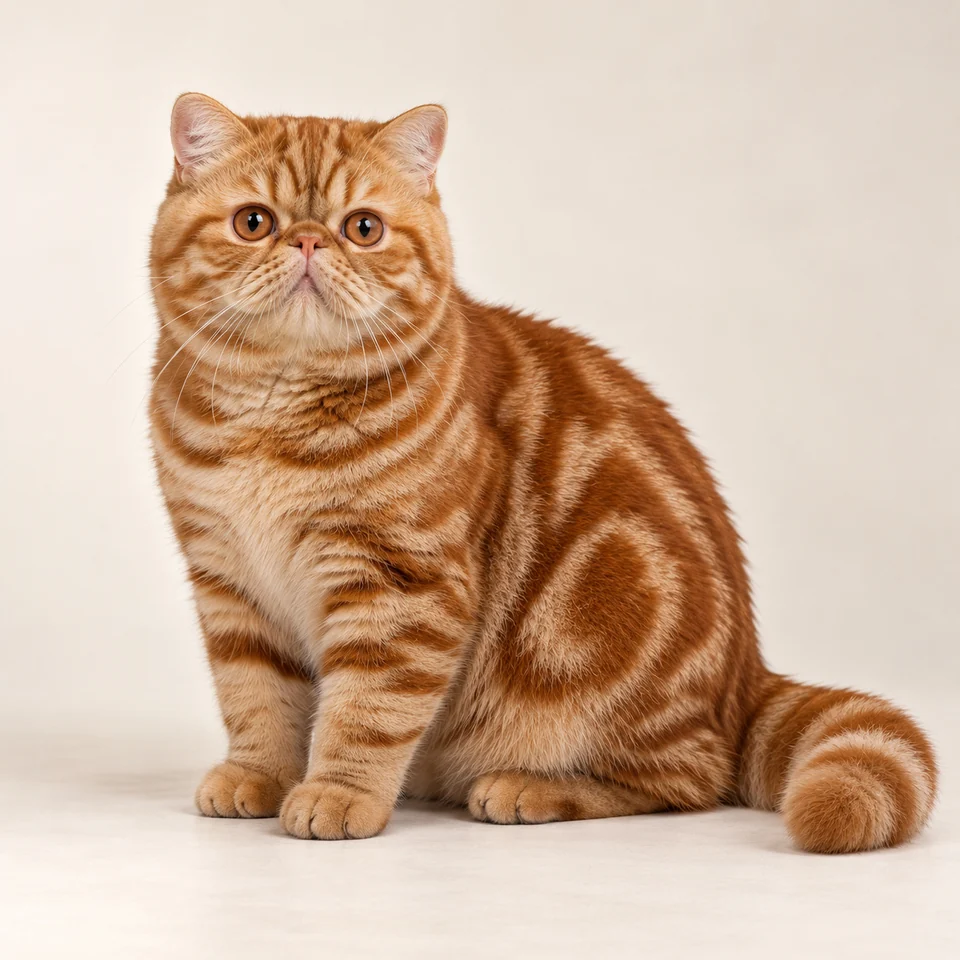
The Exotic has everything that makes a Persian appealing, without the long-coat work.
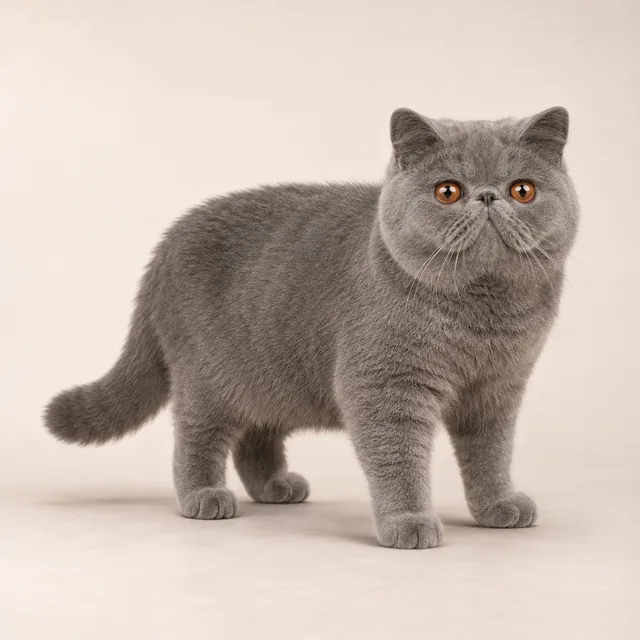
Its dense, medium-length coat stands off the body. Gives it the look of a fluffy teddy bear. Exotics are quiet, loyal companions. They are devoted but not pushy.
Source:CFA
Exotic Shorthair kittens you can meet
See all Exotic Shorthair kittens
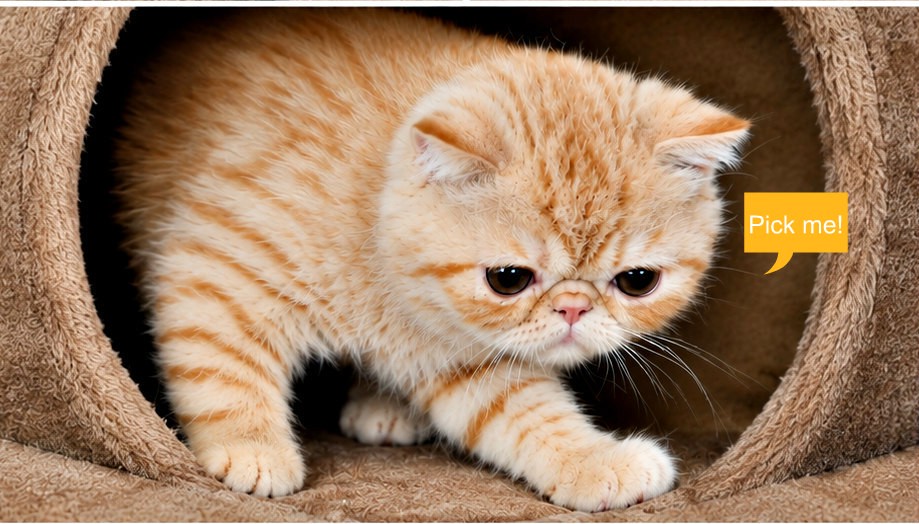
Drew
Ready now5 months oldMale
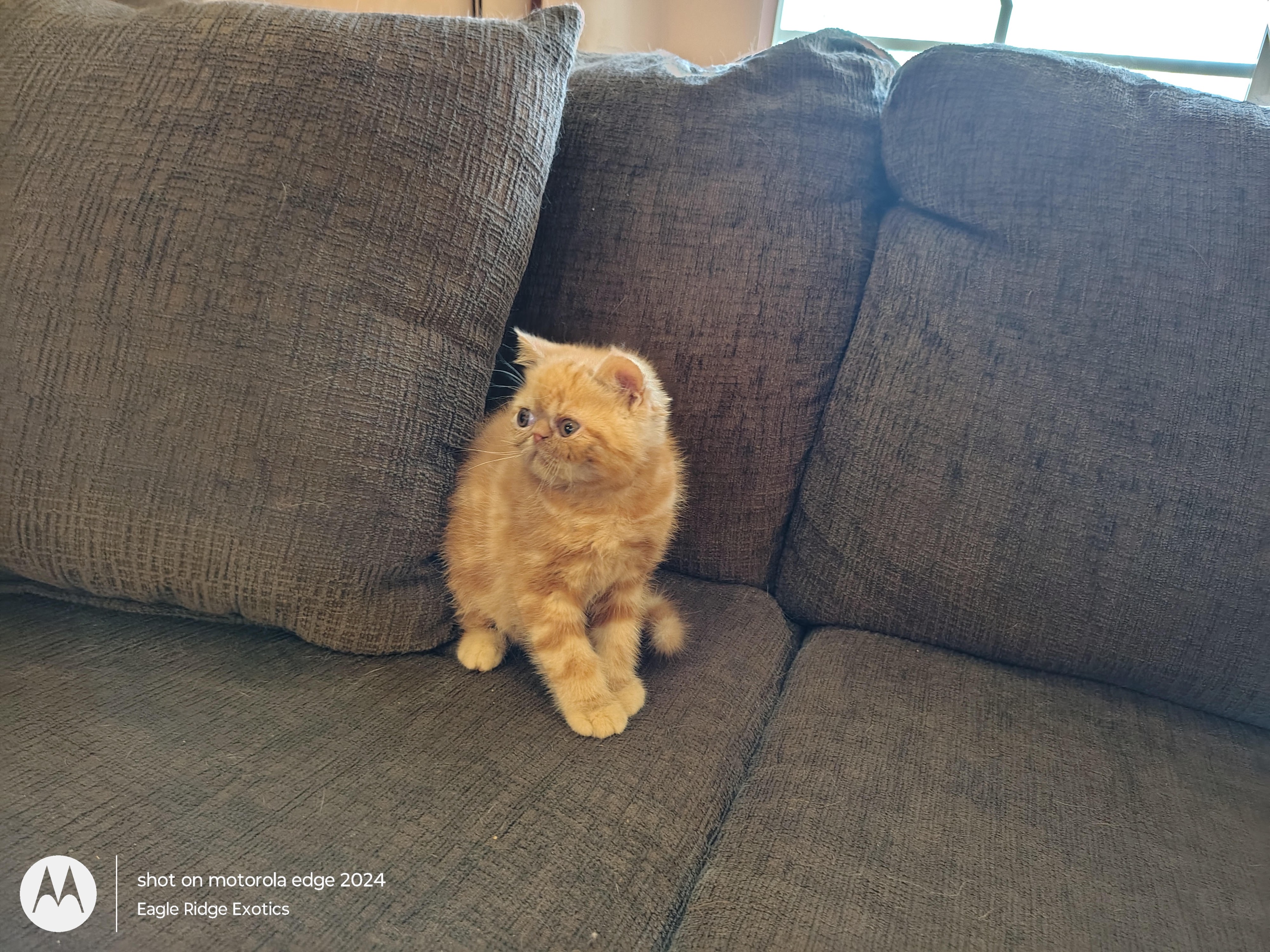
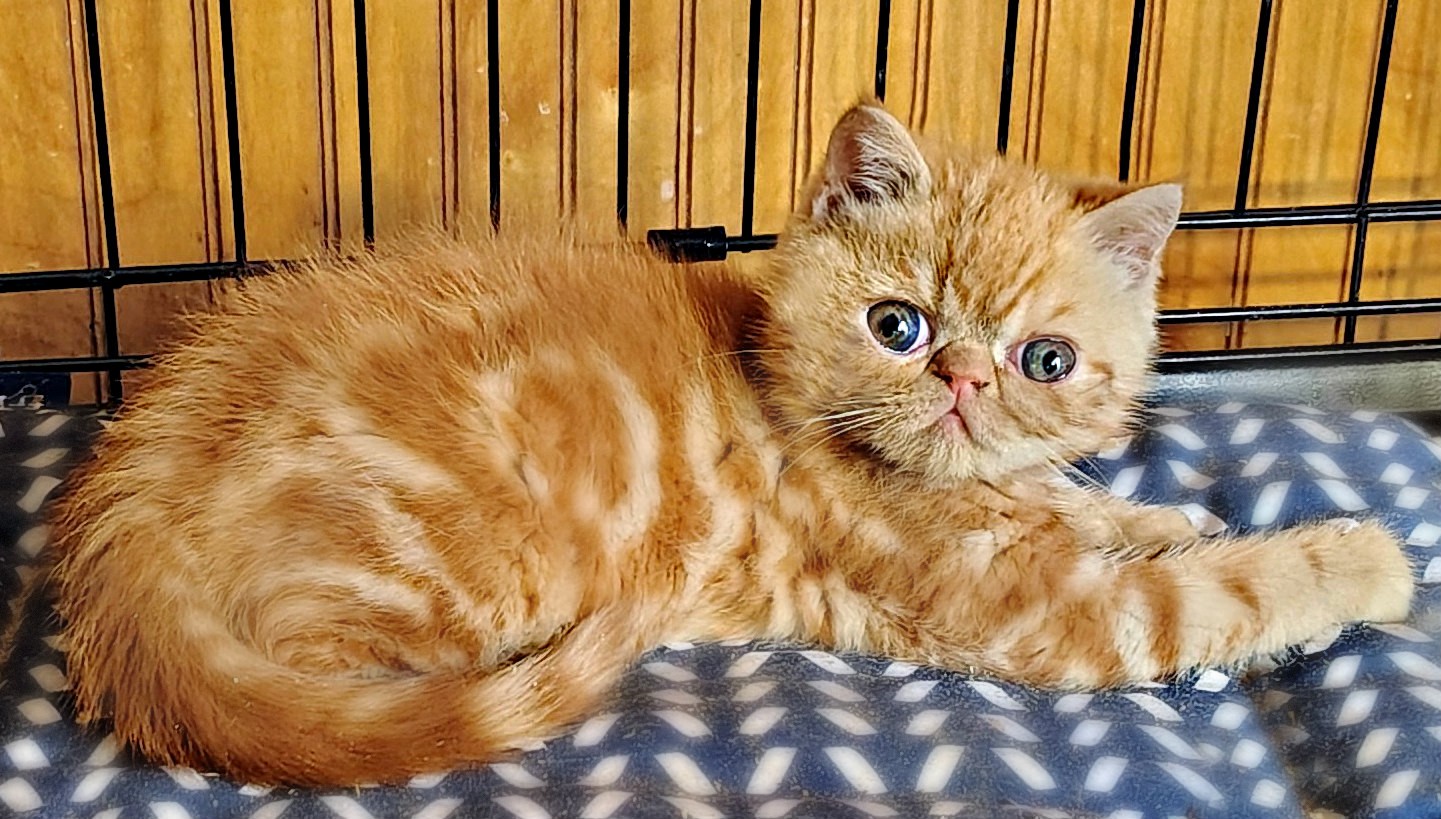
Nutmeg
Ready now14 weeks oldMale
Quick facts
- Where it beganCFA
- United States (West Coast Persian breeders)
- When it beganCFA
- 1950s crosses; established as a breed in 1966
- SizeCFA
- Medium to large; quality matters more than size
- Coat lengthCFA
- Shorthair (medium-length plush coat); Exotics are grouped with longhair cats at some shows because they are structurally identical to Persians.
- Coat feelCFATICA
- Dense, plush, soft and full of life; medium length; stands out from the body. Short, but slightly longer than other shorthairs.
- WeightCFATICA
- The show standard calls for a medium to large cat, with quality more important than size. Females will generally be smaller than males of the same age.
- LifespanTICA
- They can be expected to live 8-11 years.
Appearance
The Exotic standard matches the Persian's except for the coat.
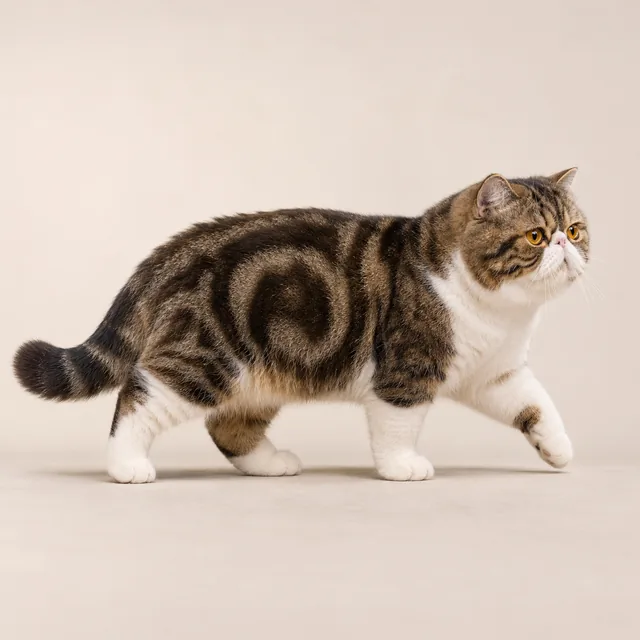
Exotics have short, substantial, muscular bodies. Their heads are round and massive. They have short, snub noses with a deep break between the eyes. The plush, dense coat is even in length. A thick undercoat helps it stand off the body.
Source:CFA
Body
Cobby, like the Persian: low on the legs, broad and deep chest, massive shoulders and rump, level back; short, thick, strong legs; short tail.
Source:CFA
Colors and patterns
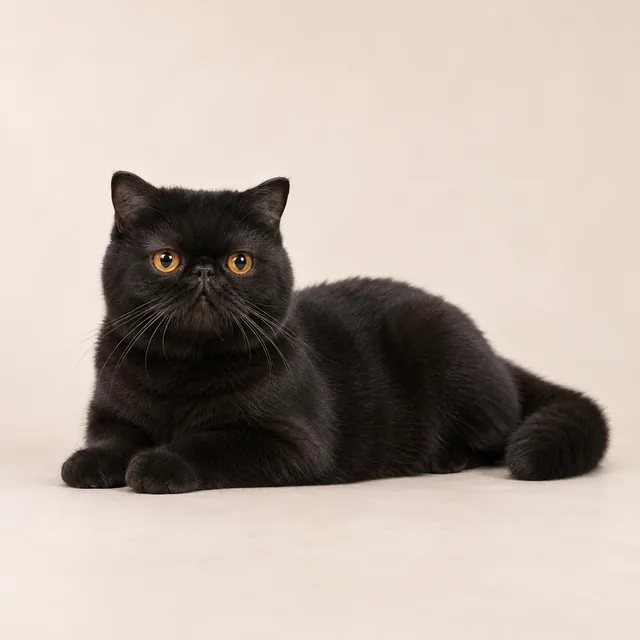
Same colors and patterns as the Persian. Exotics are shown in seven divisions: solids, tabbies, silver and golden, parti-color, shaded and smoke, calico and bi-color, and pointed.
Source:CFA
Eye colors
Brilliant in color, large, round and full. Color depends on coat: e.g. brilliant copper for most solids; deep blue, brilliant copper or odd-eyed for whites; deep vivid blue for pointed colors. Pointed cats must have blue eyes.
About this variety
The Exotic coat length is listed as "Longhair and Shorthair." Longhair Exotics that meet Persian color descriptions may compete in Persian color classes. The Exotic Shorthair (ES) can share one standard with the Persian and Himalayan, with a distinct short, plush, stand-away coat. ES is shown in both Traditional and Pointed categories. The homozygous ES coat is shorter and will not stand away from the body as much.
Personality
Exotics are close to Persians in personality and intelligence.
Some people think Exotics are a bit more active and playful. They are endearing and easygoing. They are quiet, loyal companions. Exotics have the quiet manners of the Persian but are livelier and more inquisitive.
With their people
Exotics are devoted but not intrusive. They like to stay close to you without needing to join in everything you do.
Source:CFA
Voice
Exotics "speak" with their large eyes more than their voices. You may hear purrs, but meows will be rare.
Source:CFA
Living with an Exotic Shorthair
Care
Exotics shed more than Persians, mostly by season.
They need regular grooming, but it does not take much time. Combing with a steel or Teflon-coated comb manages shedding. For most of the year, a weekly combing is enough. Mats are uncommon but may form if the coat is neglected. Grooming is easy: simple combing removes loose dead hair, plus a wipe of the eyes.
Undercoat
A rich, thick undercoat makes the coat stand out from the body; acceptable coat length depends on proper undercoat.
Source:CFA
Baths
Exotics need regular bathing and grooming. In shedding season, a bath may be needed to remove loose undercoat. Exotics tend to be patient with grooming and bathing.
Source:CFA
Health
No specific conditions are named for the Exotic.
Owners of Persians, Himalayans and Exotic Shorthairs should check with their breeder and veterinarian. The cat should have been checked for polycystic kidney disease (PKD) and respiratory problems. It should also be checked for eye problems such as progressive retinal atrophy (PRA), and for hypertrophic cardiomyopathy.
Source:TICA
Screening
Genetic screening remains very important to check the health of cats used for breeding. Most breeders are diligent about it. The show standard asks for open nostrils. Owners of Persians, Himalayans and Exotic Shorthairs should check with their breeder and veterinarian. They should make sure the cat has been checked for PKD, respiratory problems, eye problems such as progressive retinal atrophy (PRA), and hypertrophic cardiomyopathy. A cat that cannot breathe normally with its mouth closed is disqualified.
CFA health notes
"Breed Future": even with a large gene pool, genetic screening remains of paramount importance for breeding cats, and most breeders are diligent about it. No specific conditions are named on the Exotic page.
Source:CFA
This is what CFA and TICA say about the breed. It is not a health promise for any kitten. TrueKitten verifies breeder identities and documents, but that does not guarantee a kitten's health. Ask the breeder for test results and talk to your vet.
History
In the 1950s, several West Coast Persian breeders crossed their cats with American Shorthairs.
Short hair is dominant over long hair. So the crosses made shorthaired kittens with Persian-style round heads, round eyes and cobby bodies. These hybrids were controversial at first. But they became so popular that they were made a breed in 1966. Many early cats were shaded silver or chinchilla, colors then unknown in shorthair breeds. So the breed was named the Exotic Shorthair. "Shorthair" caused confusion and was later dropped.
Source:CFA
Did you know?
- The Exotic looks like a fluffy feline teddy bear.
- The breed was first called the Exotic Shorthair; "Shorthair" was later dropped at some shows.
- Slightly more Exotics than Persians are now registered each year.
- Meows from an Exotic will be rare.
Source:CFA
For breeders
Details from the CFA and TICA show standards. Cat show judges use them. They do not rate a kitten as a pet.
What the show standards ask for
- Identical to the Persian standard except for coat; heavily boned, well balanced, sweet expression, soft round lines.
- Head: round and massive with great breadth of skull; short, thick neck; forehead, nose and chin aligned in profile.
- Nose: short, snub and broad, with open nostrils and a break centered between the eyes.
- Ears: small, round-tipped, tilted forward, set far apart and low.
- Eyes: brilliant in color, large, round, full, set level and far apart.
- Body: cobby, low on the legs, broad deep chest, level back; medium to large.
- Coat: dense, plush, soft, medium length, standing out from the body due to a rich, thick undercoat.
- Show rules: one Persian Breed Group standard; points Head 40, Body 35, Coat/Color/Pattern 25; no outcrosses; withhold all awards for audible or heavy breathing or pinched nostrils.
Points show how much each part counts when a judge scores a cat at a show. They add up to 100.
TICA category
ES (Exotic Shorthair): Traditional and Pointed (group standard: PS Traditional; HI Pointed; ES Traditional and Pointed)
Source:TICA
CFA colors and patterns
Seven divisions, as for the Persian: Solid; Silver and Golden; Smoke and Shaded; Tabby; Parti-Color; Calico and Bi-Color; Pointed (Himalayan point and lynx point colors). Longhair Exotics meeting Persian color descriptions may compete in Persian color classes.
Source:CFA
CFA allowed outcrosses
Persian (reference information, not an official part of the show standard)
Source:CFA
CFA allowances
Partial: tabby-division color points split 10 markings / 10 color; bi-color division 10 "with white" pattern / 10 color. Pointed Division: subtle body shading allowed and allowance for darker color in older cats with definite point contrast.
Source:CFA
TICA allowances
Partial: females will generally be smaller than males of the same age; seasonal variation in coat length and fullness.
Source:TICA
CFA penalties
Partial: no general PENALIZE section. Calico and Bi-Color: less than the preferred minimum white or color is penalized proportionately.
Source:CFA
TICA penalties
Partial (withhold all awards): audible or heavy breathing; pinched or very narrow nostrils; very small or incorrectly formed nose leather; overall lack of merit; poor overall condition; eye color other than blue in HI and pointed ES. (Penalize items were not shown verbatim.)
Source:TICA
CFA disqualifications
Applies to all Exotics: locket or button; kinked or abnormal tail; incorrect number of toes; any apparent weakness in the hind quarters; any apparent deformity of the spine; skull deformity causing an asymmetrical face and/or head; crossed eyes; break level with or higher than the top of a fully opened eye. More color-specific DQs under Colors (e.g. pointed colors: white toes, eye color other than blue).
Source:CFA
TICA disqualifications
Partial: inability to breathe normally with a closed mouth must be disqualified.
Source:TICA
CFA breeding notes
Allowable outcross breeds: Persian (reference information, not an official part of the show standard). After the original cross, Exotics were consistently bred back to Persians.
Source:CFA
TICA standard version
Persian Breed Group Standard, revised 05/01/2025 (Persian.pdf, uploaded 2025/04)
Source:TICA
Common questions
The Exotic standard matches the Persian's except for the coat. Exotics have short, substantial, muscular bodies. Their heads are round and massive. They have short, snub noses with a deep break between the eyes. The plush, dense coat is even in length. A thick undercoat helps it stand off the body.
Exotics shed more than Persians, mostly by season.
Exotics shed more than Persians, mostly by season. They need regular grooming, but it does not take much time. Combing with a steel or Teflon-coated comb manages shedding. For most of the year, a weekly combing is enough. Mats are uncommon but may form if the coat is neglected. Grooming is easy: simple combing removes loose dead hair, plus a wipe of the eyes.
Exotics need regular bathing and grooming. In shedding season, a bath may be needed to remove loose undercoat. Exotics tend to be patient with grooming and bathing.
The Exotic is an excellent choice as a pet for young children.
The Exotic is adaptable and can fit into a new home at any age.
Exotics "speak" with their large eyes more than their voices. You may hear purrs, but meows will be rare.
In the 1950s, several West Coast Persian breeders crossed their cats with American Shorthairs. Short hair is dominant over long hair. So the crosses made shorthaired kittens with Persian-style round heads, round eyes and cobby bodies. These hybrids were controversial at first. But they became so popular that they were made a breed in 1966. Many early cats were shaded silver or chinchilla, colors then unknown in shorthair breeds. So the breed was named the Exotic Shorthair. "Shorthair" caused confusion and was later dropped.
They can be expected to live 8-11 years.
No specific conditions are named for the Exotic. Owners of Persians, Himalayans and Exotic Shorthairs should check with their breeder and veterinarian. The cat should have been checked for polycystic kidney disease (PKD) and respiratory problems. It should also be checked for eye problems such as progressive retinal atrophy (PRA), and for hypertrophic cardiomyopathy.
Questions to ask a breeder
- What genetic screening have the parents had, and may I see the results?
- Does this kitten have open nostrils and breathe easily?
- Is this kitten shorthaired or longhaired, and how is it registered?
- What combing and bathing routine is this kitten used to?
- Has this kitten met dogs or other cats?
Sources
Every fact on this page comes from the two cat registries, CFA and TICA.
Last updated