
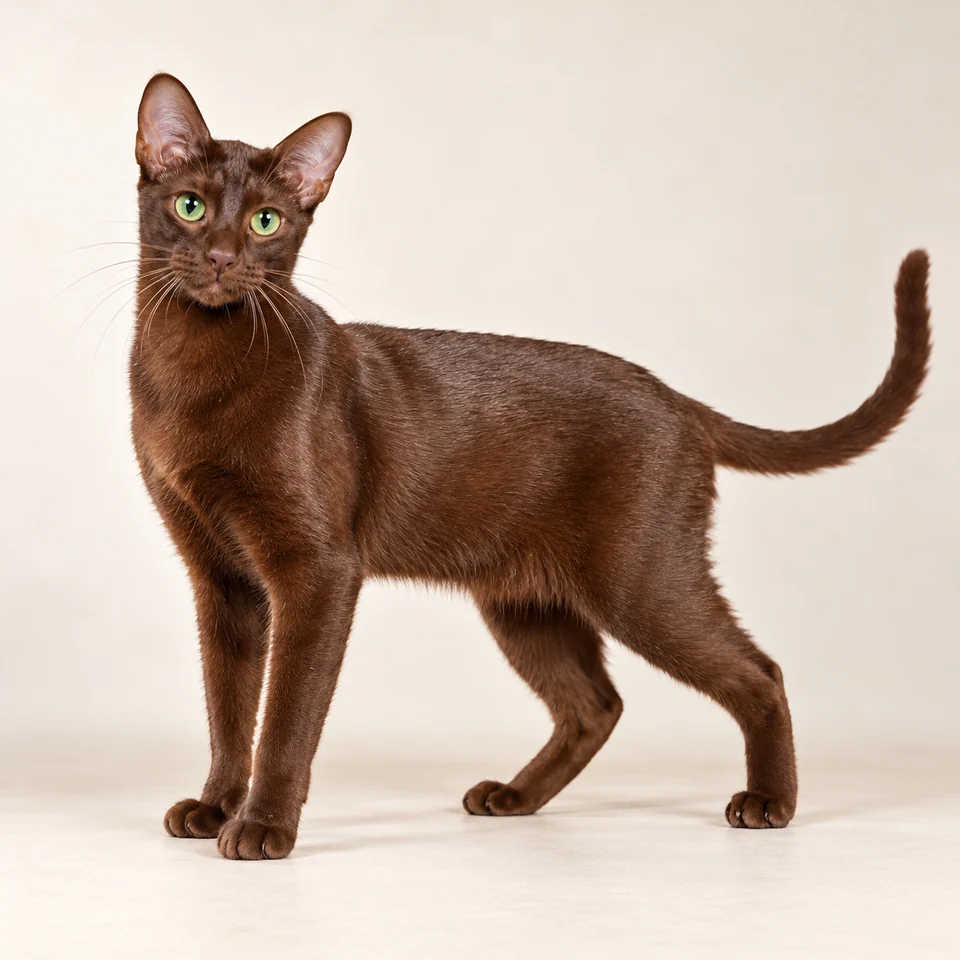
The Havana is known for its rich brown coat and brilliant green eyes.
A lilac color is also accepted at some shows. Havana Browns are intelligent, affectionate and social. Breeders nickname them "Brownies." They are gentle, playful and curious. They also like family time and lap time.
Quick facts
Appearance
The Havana is a medium-sized cat with a muscular body.
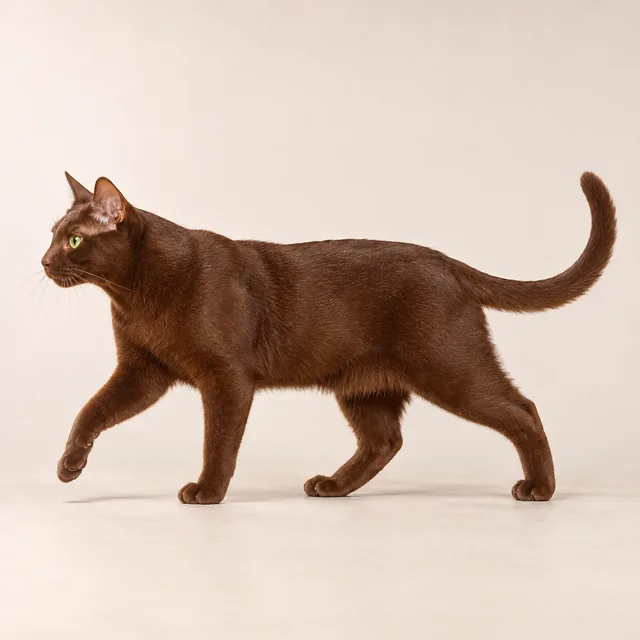
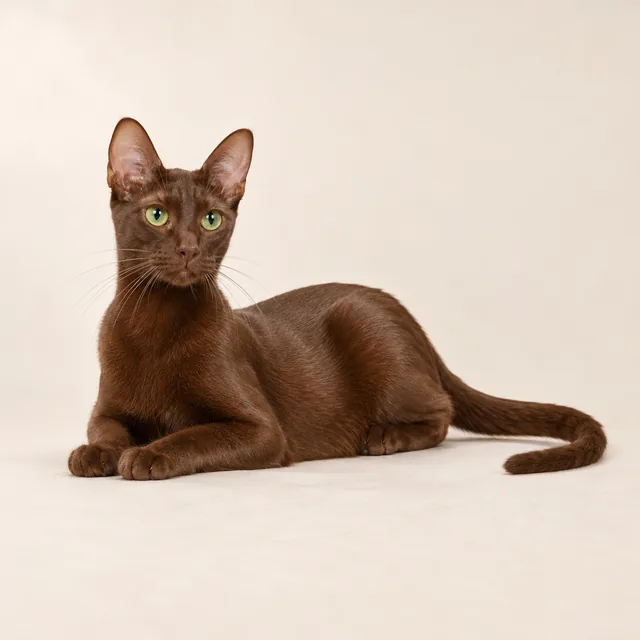
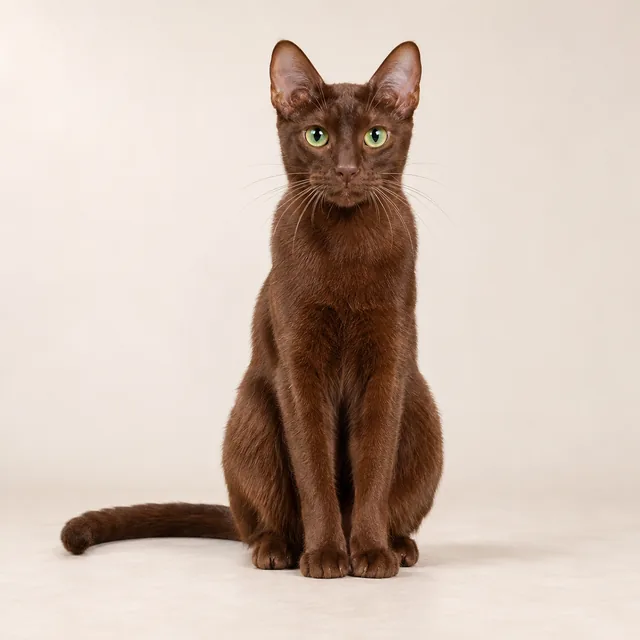
Its coat is a glossy, mahogany brown. Even the whiskers are brown. The eyes are oval and rich green. The head is the most unusual feature. It is often compared to "a corncob stuck into an orange." The muzzle is narrow and rounded, with a clear break behind the whisker pads. The large ears tilt forward.
Source:CFA
Colors and patterns
One registry accepts one color: an even, rich, warm brown (chocolate). The other describes two colors: mahogany red-brown and lilac (pinkish grey). Whiskers match the coat.
Personality
Havanas are smart, curious and inquisitive, but not pushy.
A Havana will often wait and watch while you open a cupboard. Many touch their people with a paw to show affection. Personalities vary. Some are shy and bond with one person. Others are very outgoing.
Source:CFA
With their people
Havanas are people-oriented and "helpful." They enjoy family time and "chatting" with their owner in a soft voice.
Living with a Havana
It may make sense to get two Havanas.
If you get just one, breeders often suggest a female.
Source:CFA
With other pets
Havanas get along with other family pets. They may sleep in a pile with another cat or even a dog. They get along well with other pets.
Care
A soft boar-bristle brush for daily grooming is recommended.
Two or three times a month, give a rubdown with a soft rubber brush. Then buff with a chamois or silk scarf for shine. Weekly brushing or combing is enough.
Health
Genetic testing of all breeding cats has become essential under its outcross program.
Source:CFA
This is what CFA says about the breed. It is not a health promise for any kitten. TrueKitten verifies breeder identities and documents, but that does not guarantee a kitten's health. Ask the breeder for test results and talk to your vet.
History
Solid brown cats of Siamese type lived in the UK and Europe in the late 1800s.
They faded as pointed Siamese became popular. After World War II, English breeders crossed Siamese with black domestic shorthairs to get a brown cat. Breeders used chocolate point and seal point Siamese, solid black domestic shorthairs and a dash of Russian Blue. Some cats went to the United States. The Havana Brown was accepted for registration in 1959 and for championship in 1964. In 1983, a second registry accepted lilac and renamed the breed Havana.
Recognition dates
- 1959CFA Accepted for registration
- 1964CFA Championship status
- 1983TICA Lilac accepted for championship; name changed from Havana Brown to Havana
Did you know?
- Breeders nickname Havanas "Brownies." This fits, because a "Brownie" is a helpful household spirit in Scottish folklore.
- Even the whiskers are brown.
- The head is often described as "a corncob stuck into an orange" or "a lightbulb."
- There are two stories for the name: a rabbit breed of the same color, or the color of a Havana cigar.
For breeders
Details from the CFA and TICA show standards. Cat show judges use them. They do not rate a kitten as a pet.
What the show standards ask for
- Head: longer than wide, narrowing to a rounded muzzle with a pronounced whisker break; distinct stop at the eyes in profile.
- Muzzle/chin: muzzle end appears almost square; well-developed chin; nose tip and chin form an almost perpendicular line.
- Ears: large, round-tipped, cupped at the base, wide-set, tilted forward.
- Eyes: oval aperture, medium, wide apart; any vivid, level shade of green.
- Body: torso medium in length, firm and muscular; mid-range conformation.
- Legs: relatively high on legs; hind legs slightly longer; oval, compact paws.
- Tail: medium, slender, tapering; not too broad at base.
- Coat/color: short to medium, smooth, lustrous, no undercoat; even rich warm brown, brown whiskers.
Source:CFA
Points show how much each part counts when a judge scores a cat at a show. They add up to 100.
CFA colors and patterns
Brown only: any even shade of rich, warm brown (chocolate-bb), sound to the roots. Nose leather brown with a rosy flush; paw pads rosy; whiskers brown.
Source:CFA
CFA allowed outcrosses
Certain limited outcrossing is permissible; contact the registry's Central Office for details. The 2019 program allows certain colors of Oriental Shorthair, seal point or chocolate point Siamese, or unregistered black or blue domestic shorthairs.
Source:CFA
CFA allowances
- Somewhat broader heads and stud jowls in the adult male.
- Sparse hair on chin, directly below lower lip.
- Ghost tabby markings in kittens and young adults.
Source:CFA
CFA disqualifications
- Kinked tail.
- Locket or button.
- Incorrect number of toes.
- Any eye color other than green.
- Incorrect color of whiskers, nose leather or paw pads.
Source:CFA
CFA breeding notes
In 2019, a regulated outcross program began to widen the gene pool. Pure Havanas may be bred to certain colors of Oriental Shorthair, seal point or chocolate point Siamese, or unregistered black or blue domestic shorthairs. Offspring bred back to pure Havanas that meet the standard may be registered as Havanas. Genetic testing of all breeding cats has become essential.
Source:CFA
Common questions
Females weigh 6–8 lb and males 8–10 lb.
Life expectancy is 8 to 13+ years.
One registry accepts one color: an even, rich, warm brown (chocolate). The other describes two colors: mahogany red-brown and lilac (pinkish grey). Whiskers match the coat.
Havanas are smart, curious and inquisitive, but not pushy. A Havana will often wait and watch while you open a cupboard. Many touch their people with a paw to show affection. Personalities vary. Some are shy and bond with one person. Others are very outgoing.
A Havana can be a good friend to a child.
Havanas get along with other family pets. They may sleep in a pile with another cat or even a dog. They get along well with other pets.
A soft boar-bristle brush for daily grooming is recommended. Two or three times a month, give a rubdown with a soft rubber brush. Then buff with a chamois or silk scarf for shine. Weekly brushing or combing is enough.
The short, silky coat is not prone to heavy shedding.
Solid brown cats of Siamese type lived in the UK and Europe in the late 1800s. They faded as pointed Siamese became popular. After World War II, English breeders crossed Siamese with black domestic shorthairs to get a brown cat. Breeders used chocolate point and seal point Siamese, solid black domestic shorthairs and a dash of Russian Blue. Some cats went to the United States. The Havana Brown was accepted for registration in 1959 and for championship in 1964. In 1983, a second registry accepted lilac and renamed the breed Havana.
Questions to ask a breeder
- Are the parents genetically tested, and may I see the results?
- Is this kitten from an outcross line? Which breeds are in the pedigree?
- Is this kitten registered, and with which registry?
- How shy or outgoing is this kitten with new people?
- Has this kitten lived with other cats or dogs?
- What brushing routine is this kitten used to?
Sources
Every fact on this page comes from the two cat registries, CFA and TICA.
Last updated