
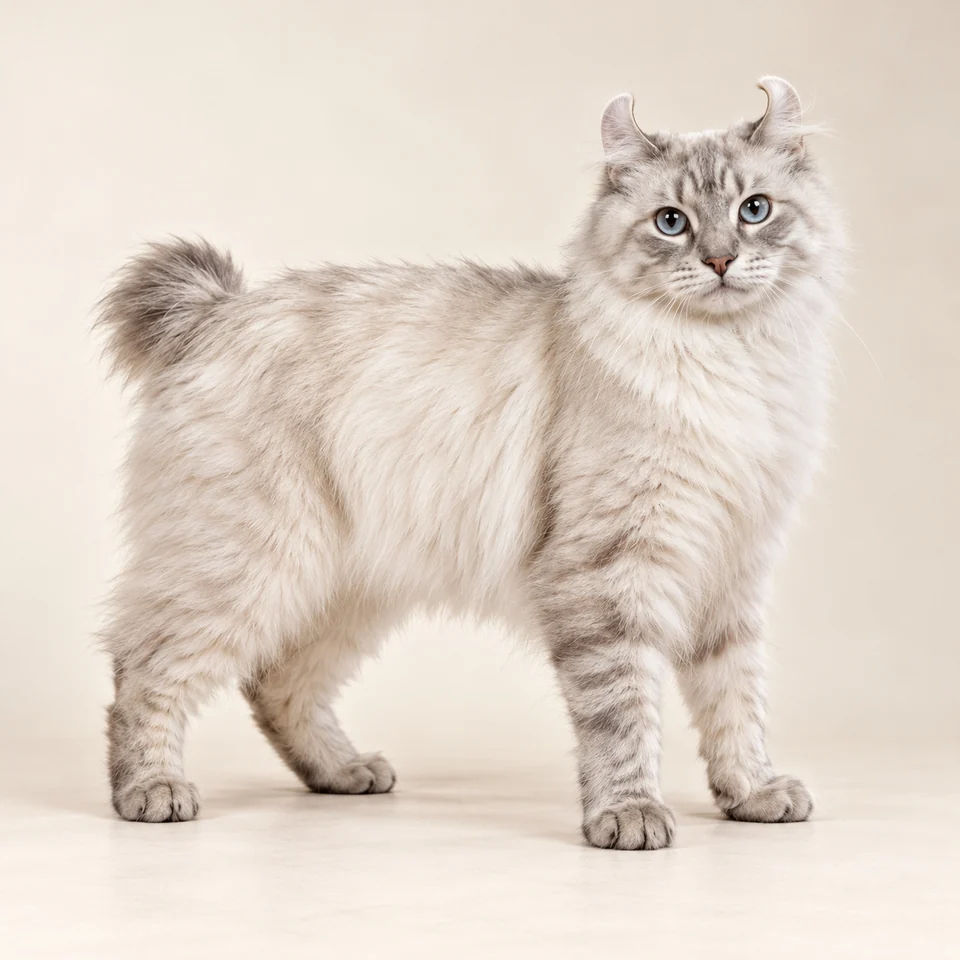
The Highlander has a "big cat" look.
It has a loose, relaxed curl to its ears. Highlanders are "the clowns of the cat fancy." They love to play and chase. They are relatively quiet, but physically they are high-energy cats.
Source:TICA
Quick facts
Appearance
Highlanders are medium to large, muscular and athletic.
The head is a wide, inverted pear shape. The muzzle is full and wide. The ears are wide at the base. Their tips curl back in a loose curl. The tail is short and thick. It may have kinks or curls. Males are larger than females.
Source:TICA
Body
Muscular, athletic; medium, rectangular torso with noticeable depth; hips higher than shoulders; moderately heavy boning.
Source:TICA
Colors and patterns
One registry accepts all colors. Divisions are solid, tortie, tabby and silver/smoke. All tabby patterns are allowed.
Source:TICA
Eye colors
Eye color is independent of coat color except in the pointed and mink categories.
Source:TICA
About this variety
This is the longhaired Highlander. The show standard asks for hair up to 2½ inches long. The belly hair is shaggy and longer than the rest. Longhairs must have toe tufts. The show standard calls this coat the Highlander Longhair (HG).
Source:TICA
Personality
Despite their "big cat" look, Highlanders are the clowns of the cat fancy.
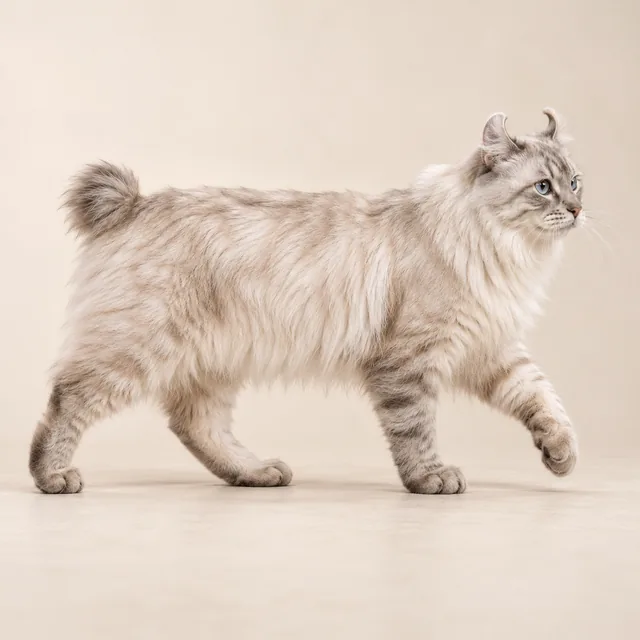
Living with a Highlander
Highlanders are physically high-energy cats.
Source:TICA
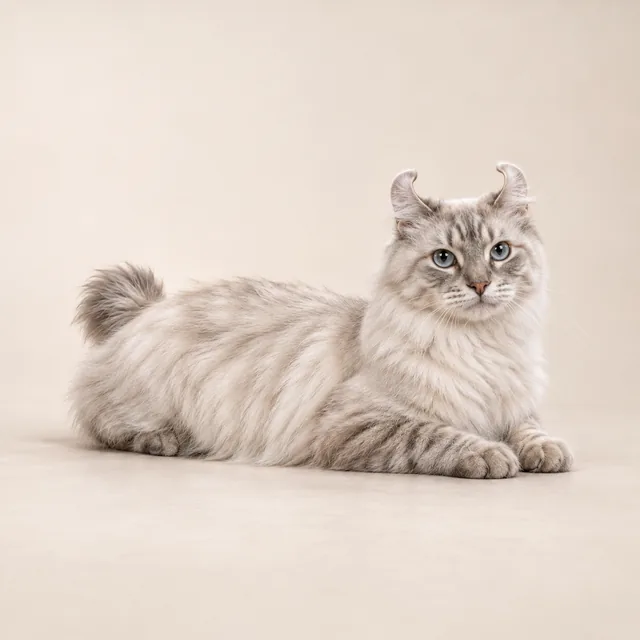
History
Work on the Highlander began in 2004.
Breeders wanted a domestic cat with a powerful "big cat" look. They chose cats from the domestic gene pool, not from any recognized breed. The Highlander was accepted into its Preliminary New Breed class on May 1, 2008. It is shown as an Advanced New Breed.
Source:TICA
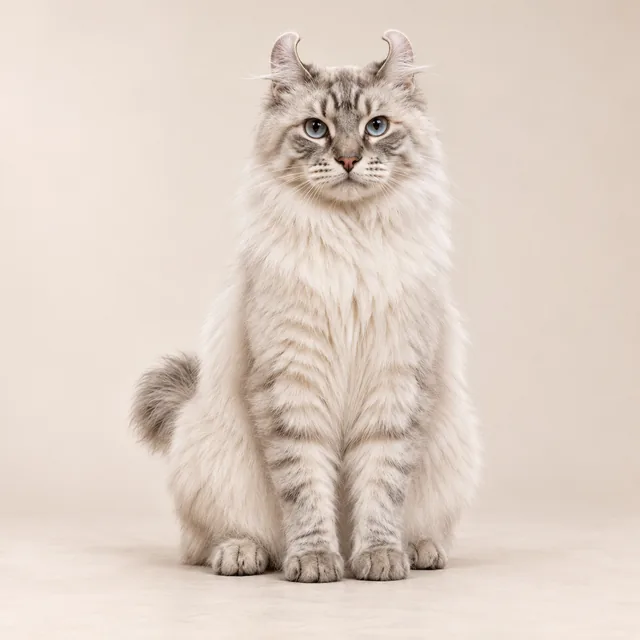
Did you know?
- Highlanders are "the clowns of the cat fancy."
- Highlander kittens may have more ear curl than adults. The curl loosens as they grow.
- A Highlander tail may have kinks or curls.
Source:TICA
For breeders
Details from the TICA show standard. Cat show judges use it. It does not rate a kitten as a pet.
What the show standards ask for
- Head: wide, inverted pear shape with substantial width to the muzzle; rounded back skull, straight to slightly rounded forehead.
- Profile: change of direction at the eye ridge; nose, muzzle and chin form a straight line; blunt look.
- Ears: small to medium, wide at the base, as erect as possible; firm base with flexible tips curled back in a loose, relaxed curl; tufts desired, not required.
- Eyes: medium to large, set far apart on a slight bias; slightly flattened or hooded oval.
- Body: medium, rectangular torso with depth; hips higher than shoulders; moderately heavy boning; well-muscled.
- Legs/feet: legs medium, back legs longer than front; feet medium to large, rounded, large knuckles.
- Tail: shortened and thick; bone at least two inches in adults; not past the hock; kinks and curls allowed.
- Coat: HGS short, dense, lying loosely; HG up to 2½ inches with shaggy belly hair and required toe tufts.
Source:TICA
Points show how much each part counts when a judge scores a cat at a show. They add up to 100.
| Part | Points |
|---|---|
| Head | 40 |
| Body | 40 |
| Coat/Color/Pattern | 20 |
Source:TICA
TICA allowances
- Tarnishing in silvers.
- Kittens may have a greater degree of ear curl than adults; the curl loosens with maturity.
- Lockets: withhold all awards (separate rule).
Source:TICA
TICA penalties
- Ears that are not open or wide based; ears too small or low set.
- Tail too long or too short.
- Excessive dip in the nose.
Source:TICA
TICA disqualifications
- Ears not erect.
- No tail or docked tail.
- Full length tail.
- Polydactyl.
- Plus the Show Rules Article Sixteen general disqualifications (e.g. biting, any sign of definite challenge).
Source:TICA
Common questions
Highlanders are medium to large, muscular and athletic. The head is a wide, inverted pear shape. The muzzle is full and wide. The ears are wide at the base. Their tips curl back in a loose curl. The tail is short and thick. It may have kinks or curls. Males are larger than females.
Despite their "big cat" look, Highlanders are the clowns of the cat fancy. They love to play and chase. They love human company. They may greet you at the door or show off to visitors.
Highlanders are physically high-energy cats.
Highlanders are relatively quiet.
One registry accepts all colors. Divisions are solid, tortie, tabby and silver/smoke. All tabby patterns are allowed.
Medium to large
Work on the Highlander began in 2004. Breeders wanted a domestic cat with a powerful "big cat" look. They chose cats from the domestic gene pool, not from any recognized breed. The Highlander was accepted into its Preliminary New Breed class on May 1, 2008. It is shown as an Advanced New Breed.
Advanced New Breed
Questions to ask a breeder
- Is this kitten registered?
- How much ear curl does this kitten have now?
- How long is this kitten's tail, and does it have kinks?
- What health checks have the parents had?
- How does this kitten act with visitors?
- How much play does this kitten need each day?
Sources
Every fact on this page comes from the cat registry TICA.
Last updated