
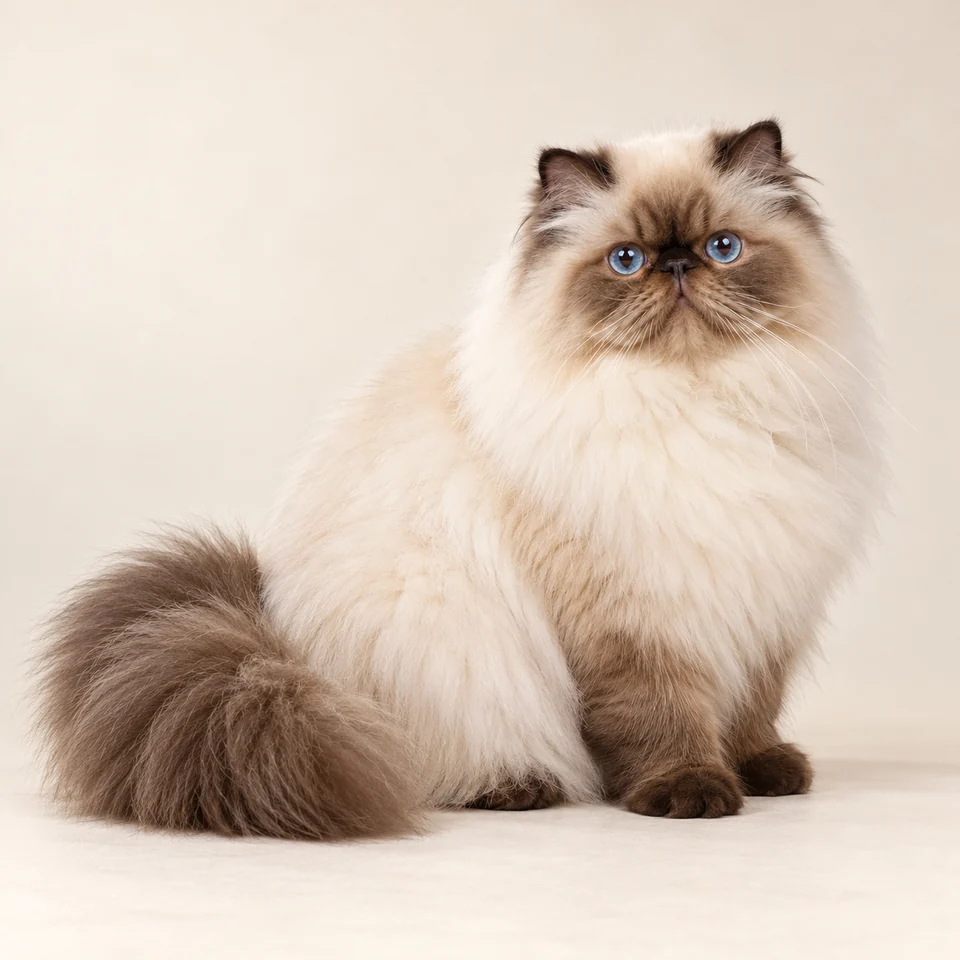
At some shows the Himalayan is a Persian with the pointed pattern.
There it is shown in the Persian breed's Himalayan Division. It has the Persian's round head, cobby body and long, thick coat. Darker points color the ears, legs, feet, tail and mask. The show standard calls for deep vivid blue eyes in every color. Persians are playful yet placid, easygoing and mellow.
Source:CFA
Quick facts
- Where it beganCFATICA
- Persian side: presumed to be Persia, as the breed name suggests. The first Himalayan kitten came from a 1931 breeding program.
- When it beganCFATICA
- Himalayan breeding program began in 1931; American associations recognized it in 1957. Persian roots: by 1626, with first U.S. imports in the late 1880s.
- SizeCFA
- Medium to large; quality matters more than size
- Coat lengthCFA
- Longhair
- Coat feelCFA
- Long and thick, standing off from the body; fine texture, glossy and full of life; immense ruff and a very full tail.
- WeightCFATICA
- The Persian standard calls for a medium to large cat, with quality more important than size. Females will generally be smaller than males of the same age.
- LifespanTICA
- It is a very healthy breed that can be expected to live 8-11 years.
Appearance
Himalayans have the Persian build: solid and cobby, with short, heavy legs and a short, plumed tail.
The ears are small and the eyes large and round. The body should be a clear color, with subtle shading allowed. Older cats may be darker, but the points must clearly contrast with the body. The ideal mask covers the face from above the eyes through the chin.
Source:CFA
Body
Cobby: low on the legs, broad and deep through the chest, equally massive across shoulders and rump, well-rounded midsection, level back; heavily boned with short, thick legs and a short tail.
Source:CFA
Colors and patterns
Pointed pattern only. Himalayan Division colors: chocolate, seal, lilac, blue, flame (red), cream, tortie, blue-cream, chocolate-tortie and lilac-cream point, plus lynx (tabby) point versions. The points (ears, legs, feet, tail and mask) show the basic color; the body should be clear with a definite contrast.
Source:CFA
Eye colors
Deep vivid blue for all Himalayan colors. Eye color other than blue disqualifies.
About this variety
There are solid-point Himalayans and lynx-point Himalayans. A lynx point has a mask lined with dark tabby stripes and an "M" on the forehead. It has barred legs, a barred tail and no striping on the body.
Source:CFA
Personality
Persians are playful yet placid.
They are easygoing and mellow. They can be coaxed to chase a toy. But they are happier getting attention and affection from their people. They have a calm, even-tempered personality and lasting devotion to their humans. They are poised, loving and sweet. They love to be petted but do not demand attention like some breeds.
With their people
Persians are happiest receiving attention and affection from their people. They show lasting devotion to their human companions.
Source:CFA
Living with a Himalayan
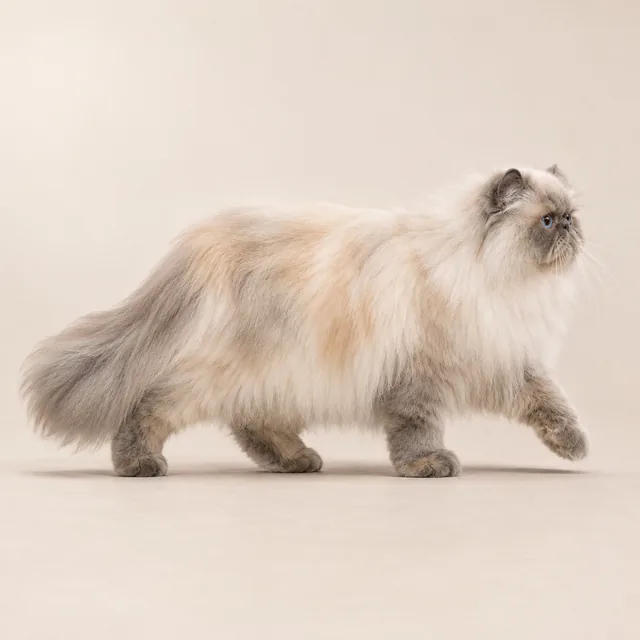
This is not a cat likely to jump on kitchen counters or climb drapes.
Persians prefer to keep their feet on the ground.
Source:CFA
Activity
Persians can be persuaded to chase a toy. They are happier just getting attention. They prefer to keep their feet on the ground.
Source:CFA
Training
Kittens must be trained early to accept grooming. That is why the breed is considered one of the easiest to train. Persians quickly learn the word "no." Many also learn their names.
Source:CFA
Care
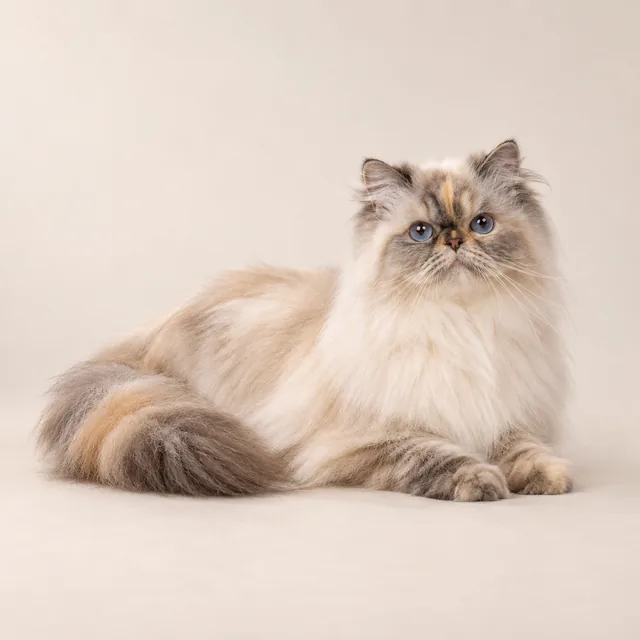
Owning one calls for a serious commitment to regular grooming, and to regular vacuuming.
A steel or Teflon-coated comb with long, coarse and fine teeth is essential. It keeps the coat free of mats and tangles. Many pet owners use professional groomers. The long coat requires constant grooming. The undercoat will mat if it is not groomed.
Baths
Occasional baths keep the coat clean, healthy and beautiful. Bathe only after a thorough combing and nail clipping.
Source:CFA
Health
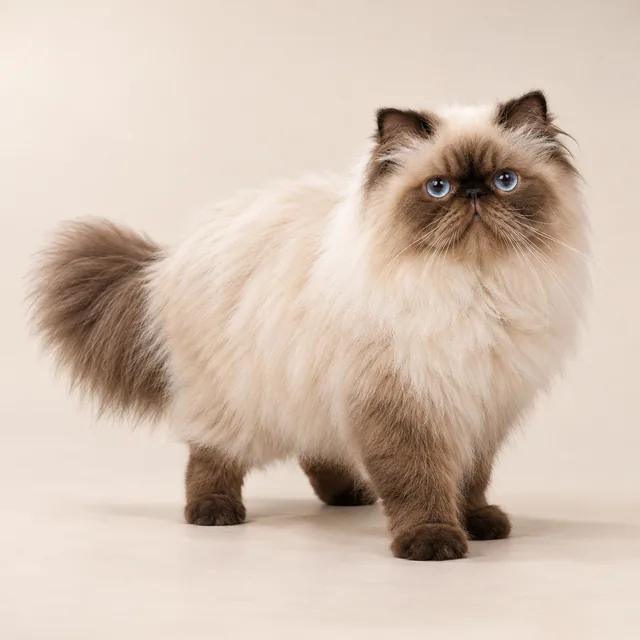
The past focus on refined features led to some cats with smaller-than-average nostrils.
That caused breathing problems. Breeders reduced the number of cats prone to this by removing them from breeding. Polycystic kidney disease (PKD) shortened many Persian lives in the early 2000s. It is now being well controlled with genetic testing and by spaying or neutering affected cats. Owners should check with their breeder and veterinarian. The cat should have been checked for polycystic kidney disease (PKD) and respiratory problems. It should also be checked for eye problems such as progressive retinal atrophy (PRA), and for hypertrophic cardiomyopathy.
Screening
Polycystic kidney disease is being controlled with genetic testing and by spaying or neutering affected cats. The show standard asks that nostrils be open enough for the cat to breathe without restriction. Owners of Persians, Himalayans and Exotic Shorthairs should check with their breeder and veterinarian. They should make sure the cat has been checked for PKD, respiratory problems, eye problems such as progressive retinal atrophy (PRA), and hypertrophic cardiomyopathy. A cat that cannot breathe normally with its mouth closed is disqualified.
CFA health notes
"Breed Future": past emphasis on refined features produced smaller-than-average nostrils and breathing problems; breeders reduced affected cats by removing them from breeding. Polycystic kidney disease, which shortened many lives in the early 2000s, is being well controlled with genetic testing and spaying/neutering of affected cats. Nostrils sufficiently open to breathe without restriction.
Source:CFA
This is what CFA and TICA say about the breed. It is not a health promise for any kitten. TrueKitten verifies breeder identities and documents, but that does not guarantee a kitten's health. Ask the breeder for test results and talk to your vet.
History
Virginia Cobb and Dr. Clyde Keeler began an experimental breeding program in 1931.
It produced the first Himalayan kitten. A breeder named Goforth got a friend's permission to use a longhaired cat with seal point coloring. She was a major pioneer in getting the Himalayan recognized for Championship. In 1955 the GCCF recognized the Himalayan as a Colorpoint Longhair. American associations recognized it as the Himalayan in 1957.
Recognition dates
- 1906CFA One of six foundation breeds
- 1957American associations (as stated by TICA) Recognized as the Himalayan
Did you know?
- At some shows Himalayans are not a separate breed; they are one of seven Persian color divisions.
- Every Himalayan color in the show standard calls for deep vivid blue eyes.
- Older Himalayans may have a darker body, as long as the points still contrast.
- The GCCF first recognized the Himalayan in 1955 under another name: Colorpoint Longhair.
For breeders
Details from the CFA and TICA show standards. Cat show judges use them. They do not rate a kitten as a pet.
What the show standards ask for
- The Persian standard applies: balance and refinement; round, massive head; short, snub, broad nose with open nostrils; small, round-tipped ears set far apart and low.
- Eyes: large, round, full, set level and far apart; deep vivid blue for every Himalayan color.
- Body: cobby, low on the legs, broad deep chest, level back; medium to large; short tail carried lower than the back.
- Coat: long and thick, standing off from the body; immense ruff.
- Pattern: clear body color with subtle shading allowed; definite contrast with points (ears, legs, feet, tail, mask); ideal mask from above the eyes through the chin.
- Lynx point: mask lined with dark stripes and forehead "M"; barred legs and tail; no striping or mottling on body.
- Himalayan disqualifications: white toes; eye color other than blue (plus the all-Persian disqualifications).
- Show rules: one Persian Breed Group standard; points Head 40, Body 35, Coat/Color/Pattern 25; no outcrosses; withhold all awards for audible or heavy breathing or pinched nostrils.
Points show how much each part counts when a judge scores a cat at a show. They add up to 100.
TICA category
HI (Himalayan): Pointed (group standard: PS Traditional; HI Pointed; ES Traditional and Pointed)
Source:TICA
CFA colors and patterns
Himalayan Division: Chocolate, Seal, Lilac, Blue, Flame, Cream, Tortie and Blue-Cream Point; Seal, Blue, Tortie, Flame, Cream and Blue-Cream Lynx Point; Other Lynx Points (Chocolate-Lynx, Lilac-Lynx, Chocolate Tortie Lynx, Lilac Cream-Lynx); OPCC (Other Pointed Colors Class: Chocolate-Tortie or Lilac-Cream); AOV.
Source:CFA
CFA allowed outcrosses
None (reference information, not an official part of the show standard). Longhair Exotics meeting Persian color descriptions may compete in Persian color classes.
Source:CFA
CFA allowances
Himalayan Division: subtle body shading allowed; allowance for darker body color in older cats, provided there is a definite contrast between body and points.
Source:CFA
TICA allowances
Partial: females will generally be smaller than males of the same age; seasonal variation in coat length and fullness.
Source:TICA
TICA penalties
Partial (withhold all awards): audible or heavy breathing; pinched or very narrow nostrils; very small or incorrectly formed nose leather; overall lack of merit; poor overall condition; eye color other than blue in HI and pointed ES. (Penalize items were not shown verbatim.)
Source:TICA
CFA disqualifications
Applies to all Persian cats: locket or button; kinked or abnormal tail; incorrect number of toes; any apparent weakness in the hind quarters; any apparent deformity of the spine; skull deformity causing an asymmetrical face and/or head; nose visibly set to one side of the face's vertical centerline; crossed eyes; nose leather above the top line of a fully opened eye. Further color-specific disqualifications are listed under Colors (Himalayan Division: white toes, eye color other than blue).
Source:CFA
TICA disqualifications
Partial: inability to breathe normally with a closed mouth must be disqualified.
Source:TICA
TICA standard version
Persian Breed Group Standard, revised 05/01/2025 (Persian.pdf, uploaded 2025/04)
Source:TICA
Common questions
At some shows the Himalayan is a Persian with the pointed pattern. There it is shown in the Persian breed's Himalayan Division. It has the Persian's round head, cobby body and long, thick coat. Darker points color the ears, legs, feet, tail and mask. The show standard calls for deep vivid blue eyes in every color. Persians are playful yet placid, easygoing and mellow.
Pointed pattern only. Himalayan Division colors: chocolate, seal, lilac, blue, flame (red), cream, tortie, blue-cream, chocolate-tortie and lilac-cream point, plus lynx (tabby) point versions. The points (ears, legs, feet, tail and mask) show the basic color; the body should be clear with a definite contrast.
Deep vivid blue for all Himalayan colors. Eye color other than blue disqualifies.
Owning one calls for a serious commitment to regular grooming, and to regular vacuuming. A steel or Teflon-coated comb with long, coarse and fine teeth is essential. It keeps the coat free of mats and tangles. Many pet owners use professional groomers. The long coat requires constant grooming. The undercoat will mat if it is not groomed.
The past focus on refined features led to some cats with smaller-than-average nostrils. That caused breathing problems. Breeders reduced the number of cats prone to this by removing them from breeding. Polycystic kidney disease (PKD) shortened many Persian lives in the early 2000s. It is now being well controlled with genetic testing and by spaying or neutering affected cats. Owners should check with their breeder and veterinarian. The cat should have been checked for polycystic kidney disease (PKD) and respiratory problems. It should also be checked for eye problems such as progressive retinal atrophy (PRA), and for hypertrophic cardiomyopathy.
Their calm, even temper makes them compatible with children of all ages.
Himalayans have the Persian build: solid and cobby, with short, heavy legs and a short, plumed tail. The ears are small and the eyes large and round. The body should be a clear color, with subtle shading allowed. Older cats may be darker, but the points must clearly contrast with the body. The ideal mask covers the face from above the eyes through the chin.
It is a very healthy breed that can be expected to live 8-11 years.
Virginia Cobb and Dr. Clyde Keeler began an experimental breeding program in 1931. It produced the first Himalayan kitten. A breeder named Goforth got a friend's permission to use a longhaired cat with seal point coloring. She was a major pioneer in getting the Himalayan recognized for Championship. In 1955 the GCCF recognized the Himalayan as a Colorpoint Longhair. American associations recognized it as the Himalayan in 1957.
Questions to ask a breeder
- Have the parents been DNA-tested for polycystic kidney disease (PKD)? May I see the results?
- Do the parents or this kitten have any breathing problems, and how open are this kitten's nostrils?
- Has this kitten been handled for combing and bathing, and what grooming routine is it used to?
- Do this kitten's eyes tear or stain, and how do you clean them?
- Is this kitten registered as a Persian (Himalayan Division) or as a Himalayan?
Sources
Every fact on this page comes from the two cat registries, CFA and TICA.
Last updated