
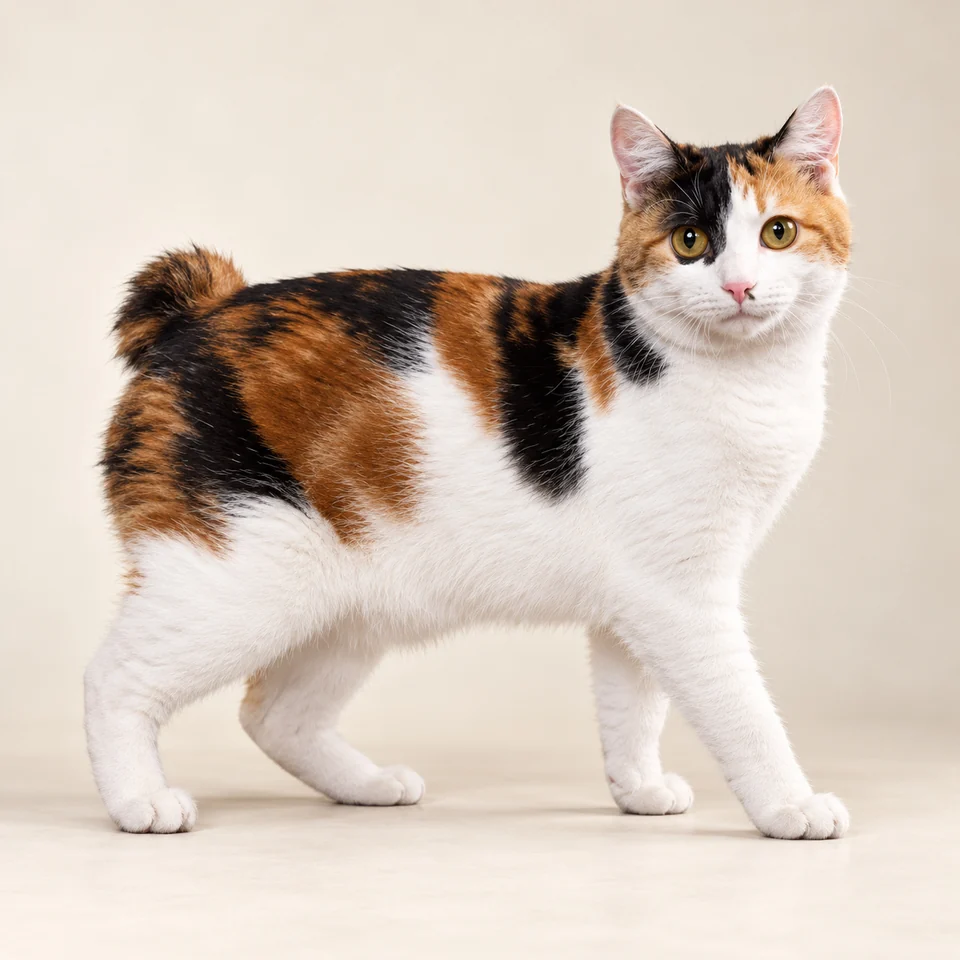
The Kurilian Bobtail is a natural breed from Russia's Sakhalin and Kuril Islands.
The cats are heavier and more solid than they look. They are excellent jumpers and skilled hunters. They like to watch their home from the highest spot they can find.
Source:TICA
Quick facts
- Where it beganTICA
- Russia: Sakhalin and the Kuril Islands; the show standard also names the Kamchatka peninsula
- When it beganTICA
- Short-tailed cats have been on the islands for at least 200 years. They were brought to central Russia in the middle of the 20th century.
- Coat lengthTICA
- Shorthair
- Coat feelTICA
- The coat is soft and silky and generally does not mat.
- WeightTICA
- Mature males can weigh as much as 15 lb. Females are smaller, typically 8 to 11 lb.
- LifespanTICA
- Kurilian Bobtails live 15 to 20 years. This is linked to the breed developing in the wild.
- TICA statusTICA
- Championship (accepted for championship in 2012)
Appearance
Solid and brawny; the cat is heavier than it first looks.
Source:TICA
Colors and patterns
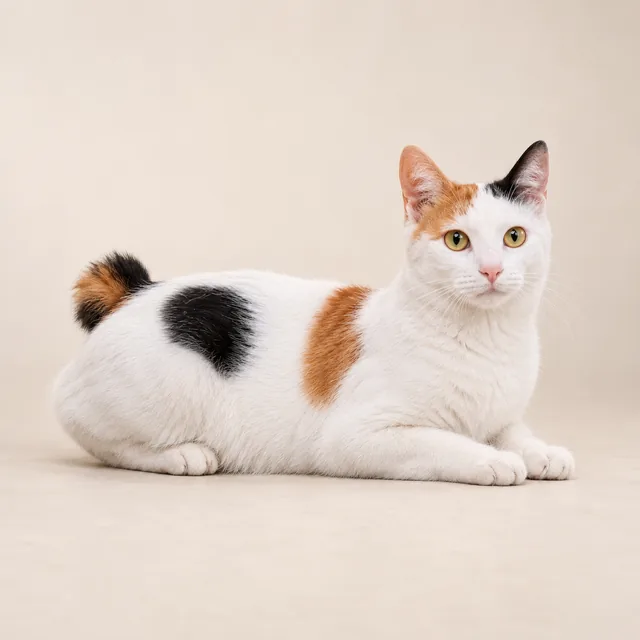
All colors and divisions are accepted. This includes Corin in the tabby, tabby and white, silver/smoke, and silver/smoke and white divisions.
Source:TICA
About this variety
This is the shorthaired Kurilian Bobtail (code KB). The longhair (KBL) is covered by the same breed group standard.
Source:TICA
Personality
The Kurilian Bobtail is independent, highly intelligent and clever.
It is curious, social and playful. It can be trained, is not aggressive and is very gentle.
Source:TICA
Living with a Kurilian Bobtail
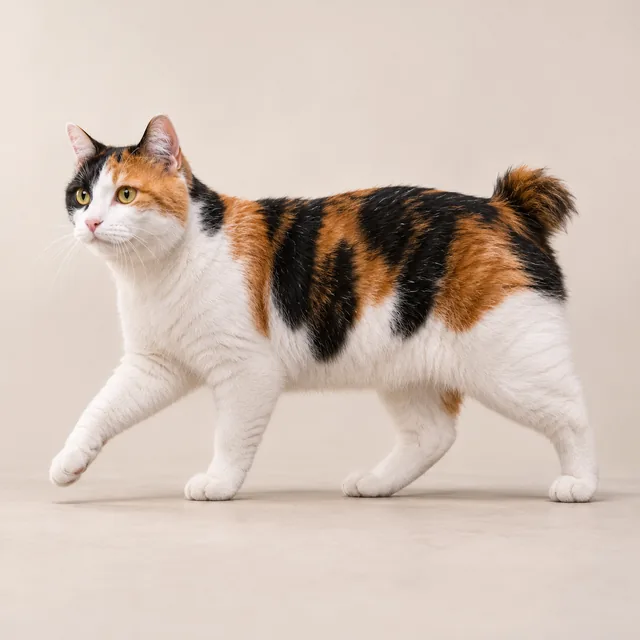
They are excellent jumpers.
They like to survey their home from the highest point they can reach.
Source:TICA
Care
History
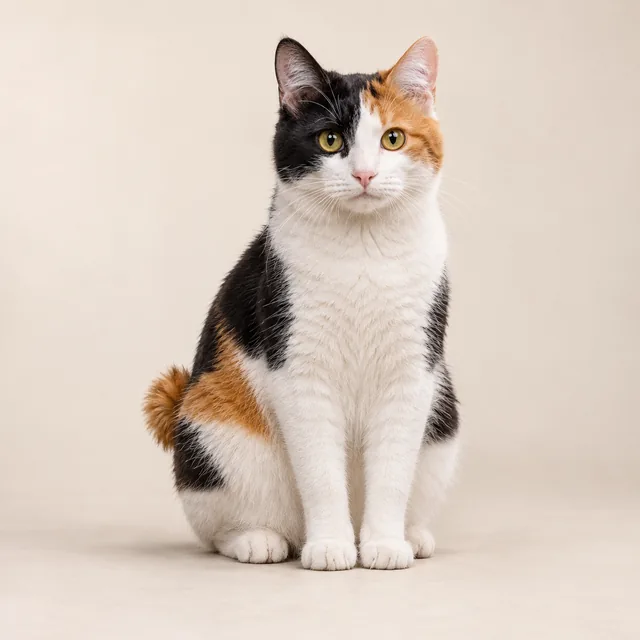
The breed comes from Sakhalin and the Kuril Islands.
The Kuril Islands stretch between Russia's Kamchatka peninsula and Japan's island of Hokkaido. Cats with short tails have been on the islands for at least 200 years. In the mid-20th century, soldiers or scientists brought some to central Russia. They became popular in Russia as mousers. The breed was accepted for championship in 2012.
Source:TICA
Did you know?
- The Kurilian Bobtail is an amazing hunter and fish catcher.
- The Kuril Islands are about 56 volcanic islands stretching 700 miles.
- These cats look lighter than they are.
Source:TICA
For breeders
Details from the TICA show standard. Cat show judges use it. It does not rate a kitten as a pet.
Points show how much each part counts when a judge scores a cat at a show. They add up to 100.
| Part | Points |
|---|---|
| Head | 40 |
| Body | 40 |
| Coat/Color | 20 |
Source:TICA
TICA colors
All, including Corin in the Tabby, Tabby and White, Silver/Smoke, and Silver/Smoke and white divisions
Source:TICA
TICA standard version
Revised 05/01/26 Kurilian Bobtail Breed Group Standard, 05/01/2026 Revised 05/01/26 Kurilian Bobtail Breed Group Standard, 05/01/2026
Source:TICA
Common questions
The breed comes from Sakhalin and the Kuril Islands. The Kuril Islands stretch between Russia's Kamchatka peninsula and Japan's island of Hokkaido. Cats with short tails have been on the islands for at least 200 years. In the mid-20th century, soldiers or scientists brought some to central Russia. They became popular in Russia as mousers. The breed was accepted for championship in 2012.
The Kurilian Bobtail is independent, highly intelligent and clever. It is curious, social and playful. It can be trained, is not aggressive and is very gentle.
They are excellent jumpers. They like to survey their home from the highest point they can reach.
Mature males can weigh as much as 15 lb. Females are smaller, typically 8 to 11 lb.
Kurilian Bobtails live 15 to 20 years. This is linked to the breed developing in the wild.
All colors and divisions are accepted. This includes Corin in the tabby, tabby and white, silver/smoke, and silver/smoke and white divisions.
Championship (accepted for championship in 2012)
Questions to ask a breeder
- Is this kitten registered?
- What health checks have the parents had?
- How does this kitten act with children and other pets?
- Where can a cat that loves high places climb in my home?
- What grooming routine is this kitten used to?
- How heavy are the parents as adults?
Sources
Every fact on this page comes from the cat registry TICA.
Last updated