
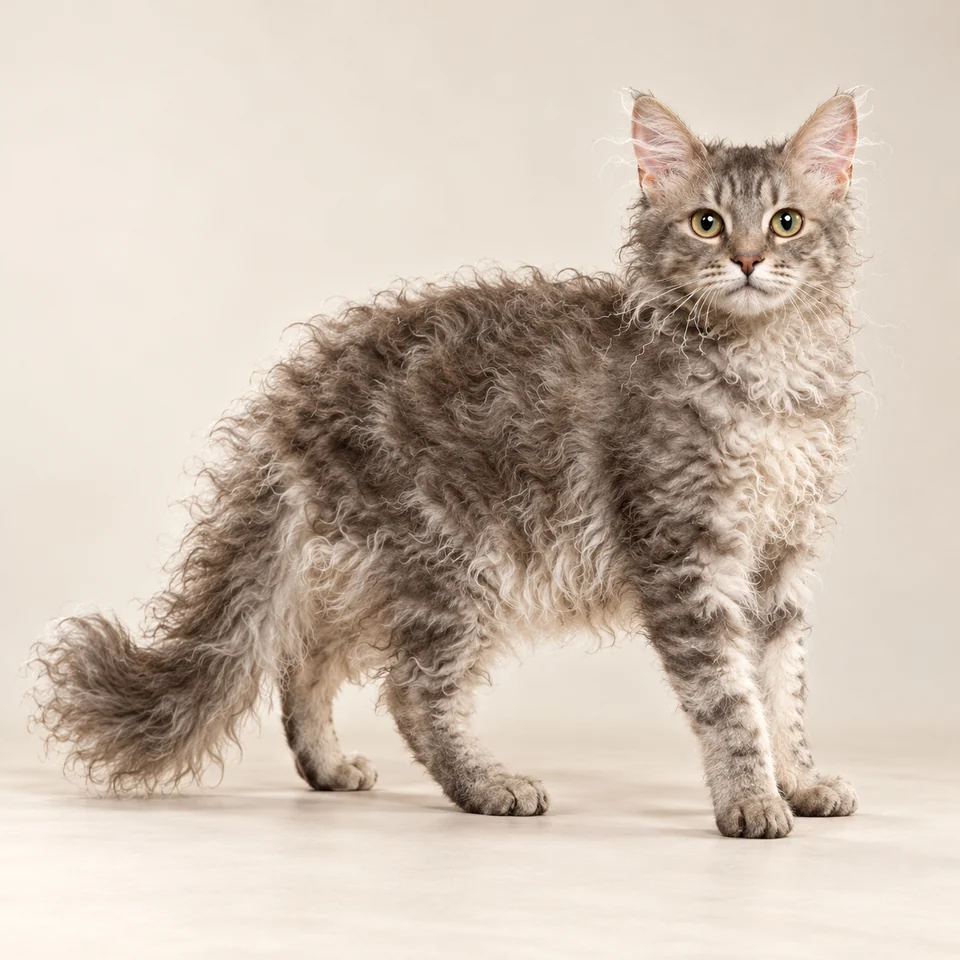
The LaPerm is known for its soft, springy, curly coat.
Most owners can't keep their hands off it. The curls come from a natural mutation. LaPerms are very interactive and affectionate. Many crave human contact.
Source:CFA
Quick facts
- Where it beganCFA
- United States (an Oregon farm)
- When it beganCFA
- 1982
- Coat lengthCFA
- Longhair
- Coat feelCFA
- Semi-longhair; springy, light and airy; curly or wavy (curl preferred); loose and bouncy, standing away from the body.
- WeightCFATICA
- Adult females weigh 6–9 lb and adult males 7–12 lb. Other texts say 6–8 lb for females and 8–10 lb for males. The LaPerm is a small-to-medium breed, with males larger than females. LaPerms have surprising weight for their size, and females are generally smaller than males.
- LifespanTICA
- Life expectancy is 12–15 years. Some LaPerms have been known to live as long as 20 years.
- Fully grownCFA
- The LaPerm matures in 2 to 3 years. Females mature sooner than males.
- CFA statusCFA
- Championship (since 2008)
Appearance
LaPerms are medium-sized with a curly coat.
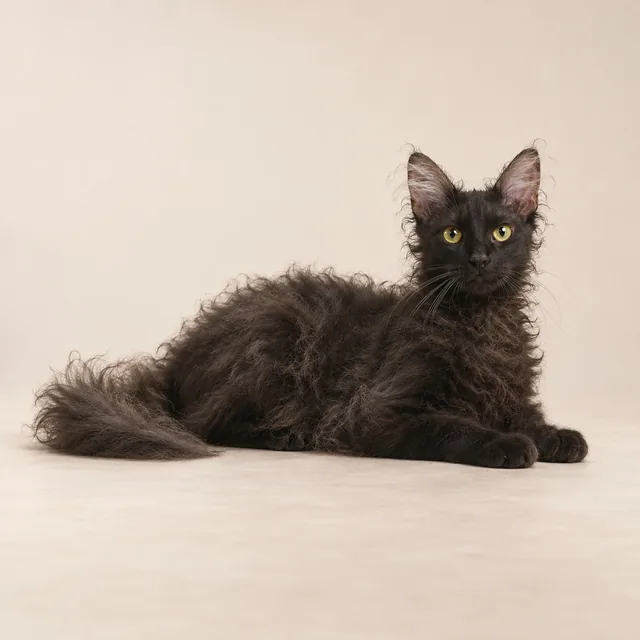
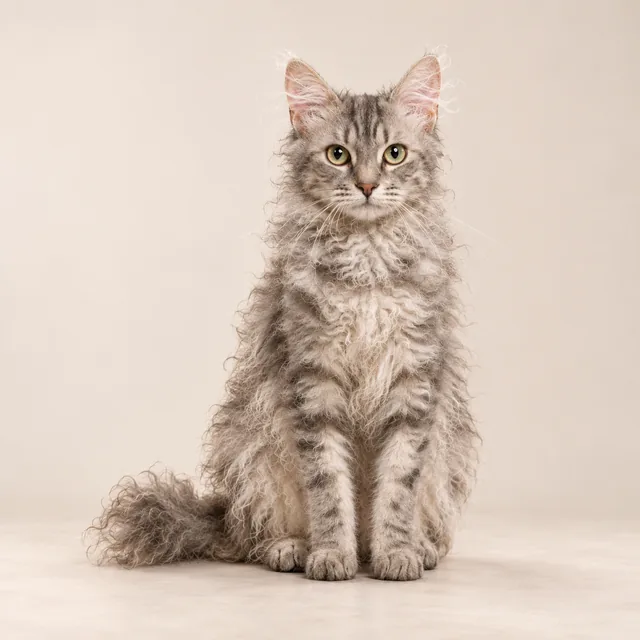
Curls range from soft waves to tight ringlets. The tightest curls are often on the throat, belly and ear bases. The head is a modified wedge with full whisker pads. The almond-shaped eyes are medium-large and set well apart.
Source:CFA
Body
Moderate size, medium-fine to medium boning; hips slightly higher than shoulders; surprising weight for size.
Source:CFA
Colors and patterns
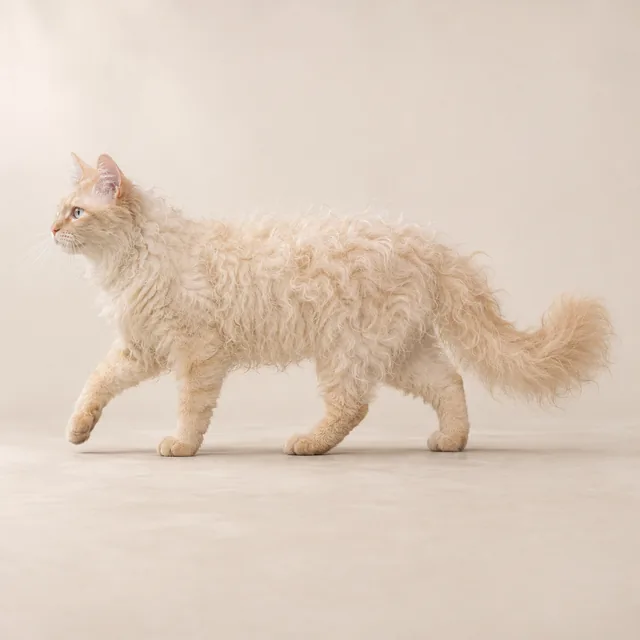
Any genetically possible color or pattern is allowed. The LaPerm is currently the only breed showable in the Karpati pattern. Karpati shows "reverse pointing": lighter face, legs and feet.
Source:CFA
Eye colors
Copper, gold, yellow, green, blue, aqua (in mink colors) or odd. Eye color need not match coat color.
Source:CFA
About this variety
The longhair LaPerm has a semi-long, curly coat with an "almost unkempt" look. It is the "Gypsy Shag" look. Longhairs often have full ruffs and plume-like tails. Ear furnishings and lynx tips are preferred.
Source:CFA
Personality
LaPerms are smart, curious, affectionate and people-oriented.
They have a strong hunting instinct from their farm past. They like faces. A LaPerm may reach for your face with a paw. They are not demanding. Many purr as soon as they see you coming.
Source:CFA
With their people
LaPerms are very attuned to their owners and follow their lead. They follow you from room to room and want to join family activities.
Lap time
LaPerms are active but also happy to be lap cats. If you sit down with one, it will often stay in your lap.
Source:CFA
Voice
LaPerms will speak up if they want more attention. Most of the time they are not vocal.
Source:CFA
Living with a LaPerm
LaPerms get along well with children.
Source:CFA
Care
Regular combing is recommended.
Use a comb with rolling teeth. This removes loose hair without pulling out healthy hair. The coat usually does not mat. A wide-toothed comb can be used. Brushing and bathing are not necessary, because LaPerms are meant to look a little untidy.
Baths
Some coats get oily and benefit from an occasional bath. Ask your breeder about bathing and products. Human shampoos should not be used on cats. Bathing is not necessary. Blow-drying is unnecessary because it makes the coat frizz.
Skin care
The coat can change in length and fullness over a LaPerm's life. Watch sun exposure, because bare or thin spots may get sunburned.
Source:CFA
Food
Asking your breeder what the kitten is eating now is recommended. To keep to that food to avoid stomach upsets.
Source:TICA
Health
LaPerms have a genetically diverse background.
No specific health problems have yet been noted. There are no breed-specific diseases associated with the LaPerm.
CFA health notes
Genetically diverse background; no specific health problems yet noted; monitor sun exposure because bare or sparse areas may sunburn.
Source:CFA
This is what CFA and TICA say about the breed. It is not a health promise for any kitten. TrueKitten verifies breeder identities and documents, but that does not guarantee a kitten's health. Ask the breeder for test results and talk to your vet.
History
The LaPerm began with one kitten born on an Oregon farm in 1982.
The kitten, "Curly," was bald at birth. By four months she had a full, curly coat. Her litter of five was also born bald and grew curly coats. Owner Linda Koehl began to control the breeding and named the breed LaPerm. The LaPerm was accepted for registration in 2000 and for championship in 2008. Linda Koehl lived in The Dalles, Oregon. She thought the coat looked like a loose perm, so she named the breed LaPerm.
Did you know?
- The first LaPerm, "Curly," was born bald.
- The LaPerm is currently the only breed showable in the Karpati pattern.
- The curls hold the hair the way a Poodle's coat does.
- The coat may part naturally down the middle of the back.
- Founder Linda Koehl named the breed because the coat looked like a loose perm.
For breeders
Details from the CFA and TICA show standards. Cat show judges use them. They do not rate a kitten as a pet.
What the show standards ask for
- Head: modified wedge, slightly rounded, gentle contours; full, rounded whisker pads with long, flexible whiskers.
- Muzzle/chin: broad, rounded, moderate to strong whisker pinch; strong chin in a perpendicular line from the nose tip.
- Profile: slight dip just below the eye, then straight to the nose tip; dip must be felt for.
- Ears: continue the wedge, slightly flared and cupped, medium to large; furnishings/lynx tips preferred on longhairs.
- Eyes: medium large, almond at rest, rounder when alert; any color, unrelated to coat.
- Body: moderate, medium-fine to medium boning, hips slightly higher than shoulders; surprising weight for size.
- Coat (longhair): semi-long, springy, light, airy, curly preferred; plumed tail. Coat (shorthair): short to medium-long, may be harder, bottlebrush tail.
- Matures in 2-3 years; allowances for age and sex.
Source:CFA
Points show how much each part counts when a judge scores a cat at a show. They add up to 100.
CFA colors and patterns
Any genetically possible color or combination of colors, including solids, shaded, chinchilla, smoke, tabby patterns, tortoiseshell, calico and bi-color/van, pointed, lynx point and mink colors; OLC covers any other genetically possible color or pattern.
Source:CFA
CFA allowed outcrosses
Domestic longhair and domestic shorthair. Kittens born on or after January 2025 may have only LaPerm parents.
Source:CFA
CFA allowances
- Allowances for age and sex.
- Jowls on mature males.
- Larger size in males, if balanced and in proportion.
- Cats with no more than a locket and/or button are judged in their basic color class with no penalty.
Source:CFA
CFA disqualifications
- Cobby body.
- Short legs.
- Crossed eyes.
- Incorrect number of toes.
- Visible and non-visible tail faults.
- Straight hair.
Source:CFA
CFA breeding notes
Domestic longhair and domestic shorthair outcrosses are allowed. Kittens born on or after January 2025 may have only LaPerm parents.
Source:CFA
TICA breeding notes
Breeders should DNA test all allowed domestic outcrosses before they enter the breed pool. The show standard lists domestic longhair/shorthair as permissible outcrosses.
Source:TICA
Common questions
The LaPerm is known for its soft, springy, curly coat. Most owners can't keep their hands off it. The curls come from a natural mutation. LaPerms are very interactive and affectionate. Many crave human contact.
Shedding is minimal because the curls hold the hair, much like a Poodle's coat.
Regular combing is recommended. Use a comb with rolling teeth. This removes loose hair without pulling out healthy hair. The coat usually does not mat. A wide-toothed comb can be used. Brushing and bathing are not necessary, because LaPerms are meant to look a little untidy.
LaPerms are active but also happy to be lap cats. If you sit down with one, it will often stay in your lap.
LaPerms get along well with other pets.
The LaPerm matures in 2 to 3 years. Females mature sooner than males.
The coat can change in length and fullness over a LaPerm's life. Watch sun exposure, because bare or thin spots may get sunburned.
Any genetically possible color or pattern is allowed. The LaPerm is currently the only breed showable in the Karpati pattern. Karpati shows "reverse pointing": lighter face, legs and feet.
The LaPerm began with one kitten born on an Oregon farm in 1982. The kitten, "Curly," was bald at birth. By four months she had a full, curly coat. Her litter of five was also born bald and grew curly coats. Owner Linda Koehl began to control the breeding and named the breed LaPerm. The LaPerm was accepted for registration in 2000 and for championship in 2008. Linda Koehl lived in The Dalles, Oregon. She thought the coat looked like a loose perm, so she named the breed LaPerm.
Adult females weigh 6–9 lb and adult males 7–12 lb. Other texts say 6–8 lb for females and 8–10 lb for males. The LaPerm is a small-to-medium breed, with males larger than females. LaPerms have surprising weight for their size, and females are generally smaller than males.
Life expectancy is 12–15 years. Some LaPerms have been known to live as long as 20 years.
Questions to ask a breeder
- Is this kitten from a domestic outcross, and when was it born?
- How has this kitten's coat changed since birth?
- Does this kitten have any bare or thin patches?
- What comb and bathing routine is this kitten used to?
- What health checks have the parents had?
- Is this kitten registered, and with which registry?
- Were the domestic outcrosses in this kitten's pedigree DNA tested?
Sources
Every fact on this page comes from the two cat registries, CFA and TICA.
Last updated