
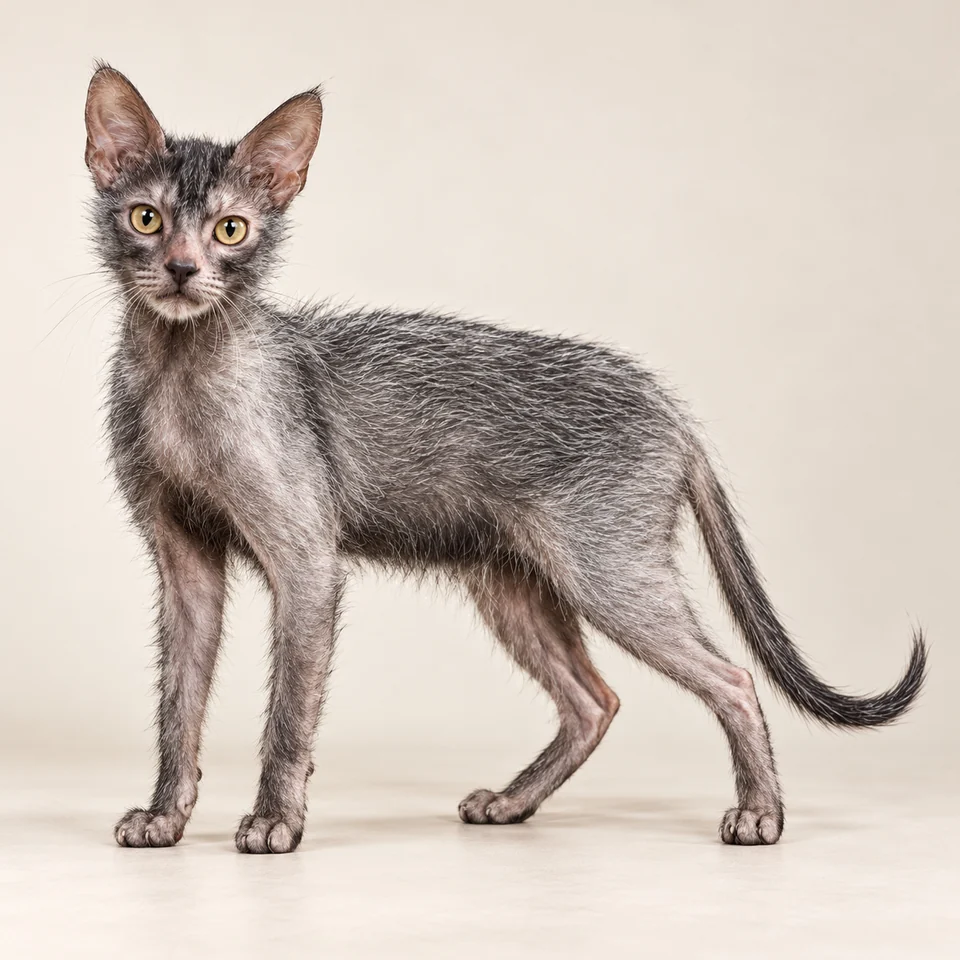
The Lykoi is a partly hairless cat with a roan coat.
Its name means "wolves" in Greek, and it is known as the "werewolf" cat. It comes from a natural coat mutation, not a hybrid. Its face "mask" and mixed white and colored hairs make it stand out. This is an intelligent, interactive cat.
Source:CFA
Quick facts
- Where it beganCFA
- United States: the first Lykoi were discovered in Virginia, and similar cats were found in Tennessee the next year.
- When it beganCFATICA
- Discovered in 2010; first intentionally bred kitten born September 14, 2011. The breed was founded in 2011. The first known instance of this kind of cat was well over 40 years ago.
- Coat lengthCFA
- Shorthair
- Coat feelCFA
- Made only of guard hairs. It looks rough or wiry but feels soft and silky. Coverage changes with age and the molting cycle.
- LifespanTICA
- Lykoi "have been known to live well into their late teens." No numeric range is given.
- CFA statusCFA
- Championship (since 2023)
Appearance
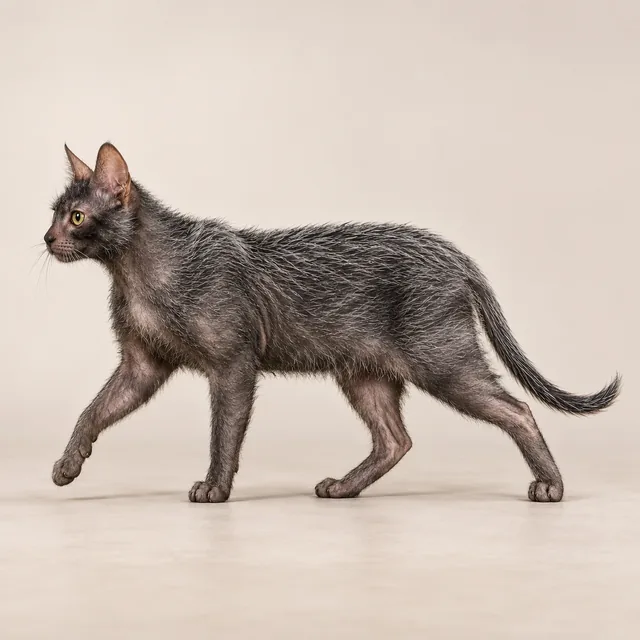
Lykoi are lean, muscular and graceful.
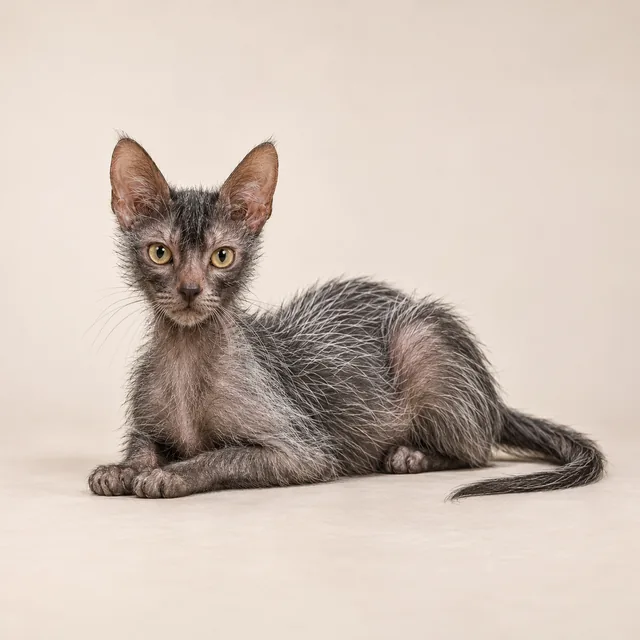
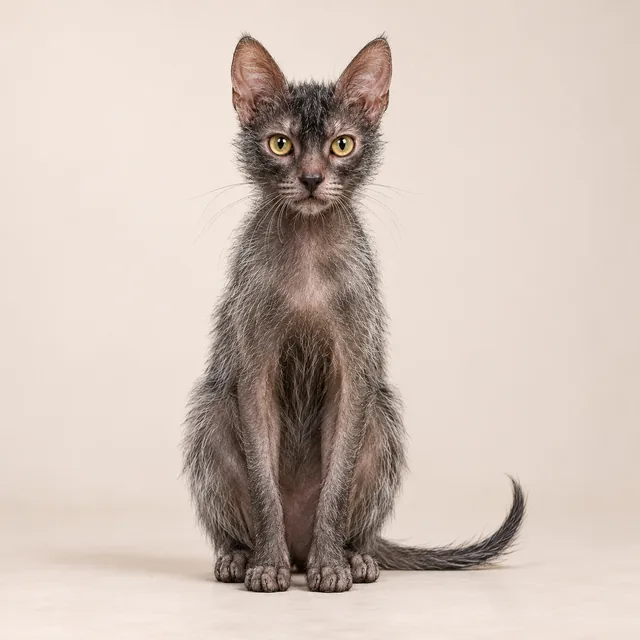
They have large, walnut-shaped eyes, tall high-set ears and a leathery nose. The face, legs and feet have sparse hair. The coat mixes white and colored guard hairs and has no undercoat. It looks rough but feels soft and silky.
Source:CFA
Body
Lean, muscular and graceful; between semi-foreign and foreign type, with solid weight but no excess bulk.
Source:CFA
Colors and patterns
The roan pattern (white hairs mixed with colored hairs, a salt-and-pepper look) defines the breed. One registry accepts all base colors, with 50% roaning ideal. The other shows black roan only; other colors may be used for breeding but not shown.
About this variety
Kittens look normal at birth. The roan pattern shows up in a week or two. As they grow, Lykoi go through their own coat cycles, from almost hairless to almost fully coated. Longhaired Lykoi can be registered for breeding. They can be shown in the Exhibition class.
Source:CFA
Personality
Lykoi are very active and curious.
They would generally rather hunt than cuddle. Still, they thrive on human attention and will seek you out for it. They are fun loving and intelligent.
Source:CFA
Lap time
They would generally rather hunt than cuddle. They love a warm lap but prefer to be actively playing.
Voice
Lykoi chirp, trill, purr and meow to share their feelings. They are not overly vocal unless they feel neglected.
Source:CFA
Living with a Lykoi
Care
Groom regularly, but it need not take much time.
Pay special attention to the ears and toes, which can get oily.
Source:CFA
Shedding
Shedding is minimal except during a molt, because there is no undercoat. Most cats molt most of the coat at least once.
Source:CFA
Baths
Advice differs. The skin can become oily and need occasional bathing. Lykoi must be washed often, but bathing is simple because they have little hair. Ask your breeder about products, because human shampoos should not be used on cats.
Skin care
Some Lykoi need more frequent baths and may get blackheads or small "cystic acne" type issues. Ingrown hairs may occur during a molt. The pink skin can darken to black within a few days in sunlight or heat.
Heat and cold
Without an undercoat, Lykoi do best in a warm environment. The skin can be harmed by the sun, and too much sun can speed up molting. Limiting sunbathing and considering a pet-safe sunscreen are recommended.
Source:CFA
Health
No breed-specific health issues have been noted to date.
The sparse coat needs some care: ingrown hairs may occur during a molt, and the skin can be harmed by the sun.
Source:CFA
Screening
Its Lykoi Breed Committee recommends genetic testing for all cats. The breed's development has included extensive genetic testing.
CFA health notes
The breed's development has stressed health and diversity, with extensive genetic testing. No breed-specific health issues have been noted to date.
Source:CFA
This is what CFA and TICA say about the breed. It is not a health promise for any kitten. TrueKitten verifies breeder identities and documents, but that does not guarantee a kitten's health. Ask the breeder for test results and talk to your vet.
History
The first Lykoi were found in Virginia in 2010.
Their look was so unusual that their health was questioned at first. Similar cats were found in Tennessee the next year. Johnny Gobble, Brittney Gobble and Patti Thomas founded the breed in 2011 from two unrelated litters. Testing showed the coat gene was recessive and unrelated to other mutations. The first intentionally bred kitten, Daciana, was born on September 14, 2011. The breed was accepted for registration in 2018 and for championship in 2023.
For breeders
Details from the CFA and TICA show standards. Cat show judges use them. They do not rate a kitten as a pet.
What the show standards ask for
- Three defining traits: no undercoat; sparse guard hair, most notably on ears, face, legs and feet; roaning (intermixed white and colored guard hairs).
- Face mask: hairless muzzle, nose and eye rims ideally form a clover-shaped mask; a missing mask costs all awards.
- Head: moderately sized modified wedge with rounded contours, slightly longer than wide; profile with a smooth concave curve and no hard stop.
- Ears tall, open at the base, rounded tips, set high; eyes large, walnut-shaped, slanting upward.
- Body: between semi-foreign and foreign; solid weight without excess bulk; sparsely haired legs with medium boning; tail shorter than body, tapering to a point.
- Coat: 50-100% of the body covered in guard hairs; under 30% is penalized; less than 50% is expected during molt phases.
- Color: all base colors at some shows, black roan only at others; 50% roaning is ideal.
Points show how much each part counts when a judge scores a cat at a show. They add up to 100.
CFA colors and patterns
All base colors, with roaning (50% ideal). White lockets, buttons and belly spots allowed on solid-colored cats; white extending onto the paws beyond the digits makes a bicolor. Longhaired Lykoi: AOV, all colors and patterns.
Source:CFA
TICA allowed outcrosses
Solid black Domestic Shorthair. Due to the limited gene pool, any cat naturally born with the sparse hairless and roan coat may be used for breeding only; it may be shown if it meets the standard.
Source:TICA
CFA allowed outcrosses
Domestic Shorthair (class-number reference, not an official part of the show standard)
Source:CFA
CFA allowances
Less than 50% coat coverage during molting/regrowth phases; males may be substantially larger than females; skin pigmentation or pigmented spots from sun tanning.
Source:CFA
CFA penalties
Less than 30% of the body covered in guard hairs; visible or palpable ingrown hairs or cysts.
Source:CFA
TICA penalties
Partial: withhold all awards for absence of the hairless face mask, any base color other than black, or no roan (amelanistic hair). Other penalties not seen.
Source:TICA
CFA disqualifications
Any evidence of illness or poor health; visible tail kink; aggressive behavior endangering the judge.
Source:CFA
CFA breeding notes
Over 200 Lykoi were produced through extensive outcrossing to limit inbreeding and keep the look. Domestic Shorthair is the allowable outcross.
Source:CFA
TICA breeding notes
A solid black Domestic Shorthair outcross is allowed. Because the gene pool is small, any cat born with the sparse, roan coat may be used for breeding. Such cats may be shown only if they meet the standard. Non-black colors may be bred but not shown.
Source:TICA
Common questions
The Lykoi is a partly hairless cat with a roan coat. Its name means "wolves" in Greek, and it is known as the "werewolf" cat. It comes from a natural coat mutation, not a hybrid. Its face "mask" and mixed white and colored hairs make it stand out. This is an intelligent, interactive cat.
The Lykoi is a partly hairless cat with a roan coat. Its name means "wolves" in Greek, and it is known as the "werewolf" cat. It comes from a natural coat mutation, not a hybrid. Its face "mask" and mixed white and colored hairs make it stand out. This is an intelligent, interactive cat.
Kittens look normal at birth. The roan pattern shows up in a week or two. As they grow, Lykoi go through their own coat cycles, from almost hairless to almost fully coated. Longhaired Lykoi can be registered for breeding. They can be shown in the Exhibition class.
Advice differs. The skin can become oily and need occasional bathing. Lykoi must be washed often, but bathing is simple because they have little hair. Ask your breeder about products, because human shampoos should not be used on cats.
Without an undercoat, Lykoi do best in a warm environment. The skin can be harmed by the sun, and too much sun can speed up molting. Limiting sunbathing and considering a pet-safe sunscreen are recommended.
The roan pattern (white hairs mixed with colored hairs, a salt-and-pepper look) defines the breed. One registry accepts all base colors, with 50% roaning ideal. The other shows black roan only; other colors may be used for breeding but not shown.
"Males can weigh up to 7-12 pounds, while females generally weigh 6-9 pounds."
They would generally rather hunt than cuddle. They love a warm lap but prefer to be actively playing.
Lykoi "have been known to live well into their late teens." No numeric range is given.
Questions to ask a breeder
- What genetic testing have the parents had? May I see the results?
- Which molt stage is this kitten in, and how much coat did the parents keep as adults?
- How often do you bathe your Lykoi, and which products do you use?
- Have the parents had ingrown hairs, blackheads or skin problems?
- How do you protect your cats from too much sun and from cold?
- Is this kitten black roan, and which registry is it registered with?
Sources
Every fact on this page comes from the two cat registries, CFA and TICA.
Last updated