
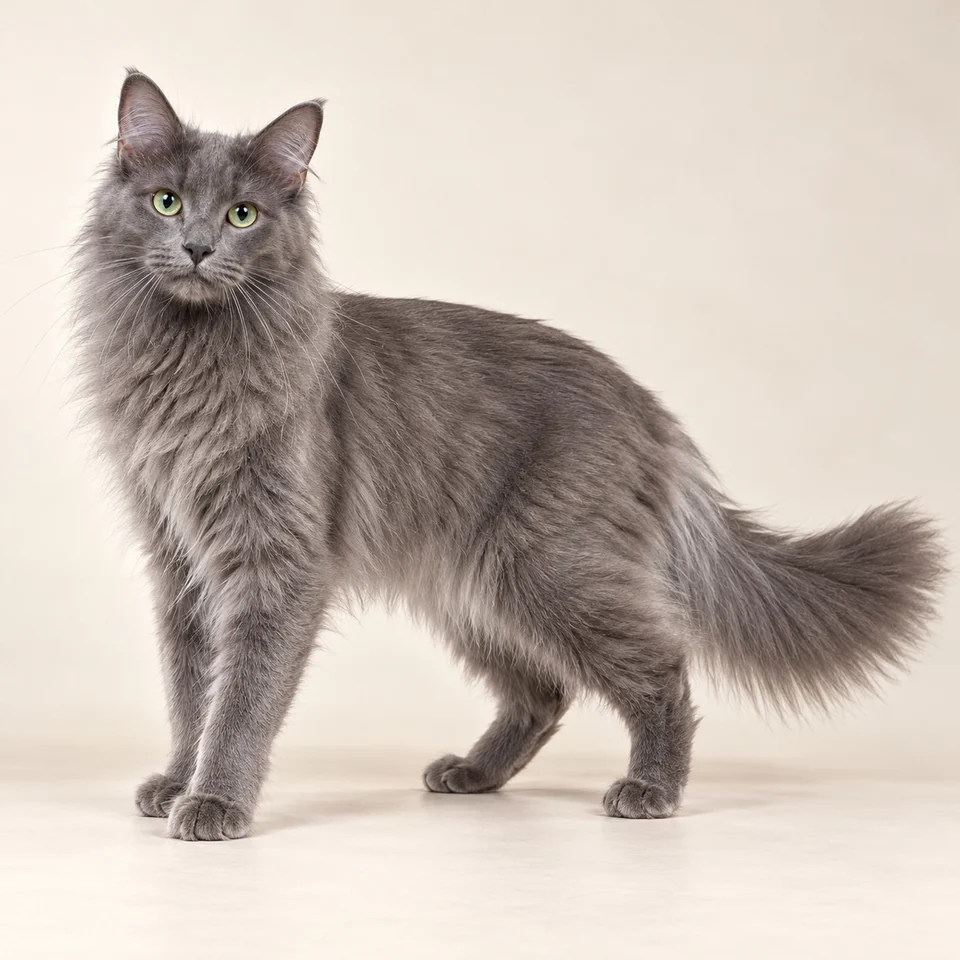
The Nebelung is a blue cat with a thick, shimmering coat of medium length.
Breeders aim for the type of blue cats imported from Russia long ago. It is a medium-sized, long and graceful cat. Nebelungs are gentle and mild-mannered. They are loving and loyal with people they know.
Source:TICA
Quick facts
- When it beganTICA
- 1980s: the first registered Nebelungs were born in 1984 and 1985.
- SizeTICA
- Medium.
- Coat lengthTICA
- Semi-longhair
- Coat feelTICA
- Soft, two-layered, water-resistant coat. The outer coat is fine and silky. The winter coat is denser, fuller, longer and softer; the summer coat is less dense.
- LifespanTICA
- Life expectancy is 11 to 16 or more years.
- Fully grownTICA
- Adult coats may take up to 2 years to fully develop. Eye color reaches full green at maturity, which could be at 2 years or more.
- TICA statusTICA
- Championship (since 1997)
Appearance
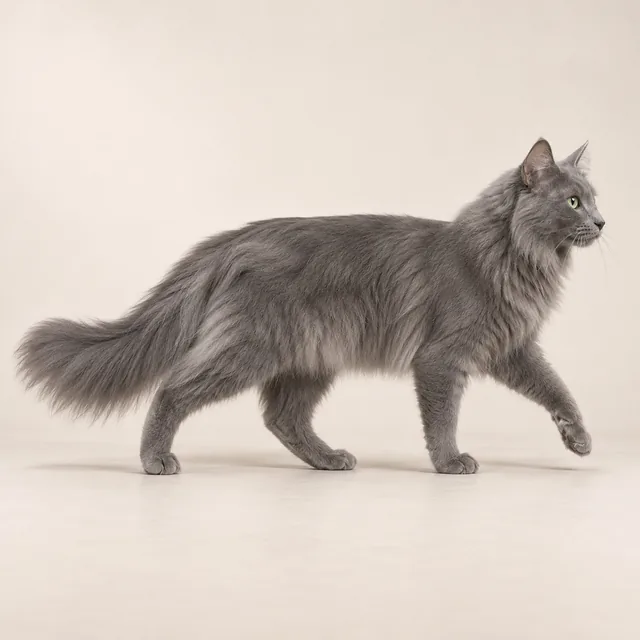
The Nebelung has a long, graceful body and long legs.
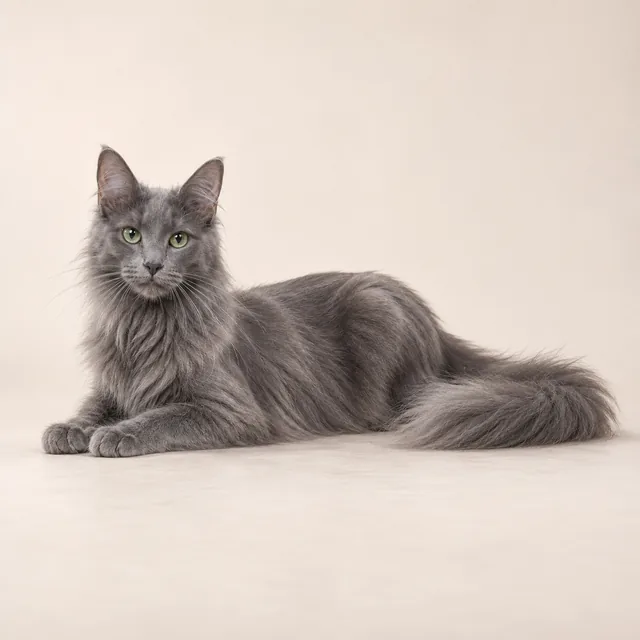
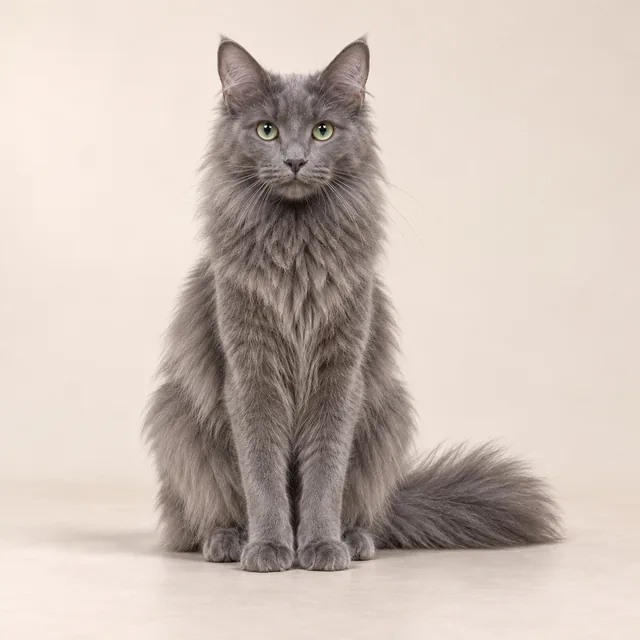
The coat is blue with a soft sheen. Silver tips are wanted but not required. Often they show only on the head and shoulders. The ears are large and pointed. The eyes are medium-sized, widely spaced and green. The tail is long, with longer hair than the body.
Source:TICA
Body
Long, graceful, semi-foreign body with medium boning; athletic and well-muscled, neither rangy nor cobby.
Source:TICA
Colors and patterns
Blue only, in the solid division. Silver tipping is desirable but not required, and is often seen only on the head and shoulders. No white spots or lockets.
Source:TICA
Eye colors
Green; a yellow/green mixture is allowed. Kittens' eyes change from yellow to green, with a green halo around the pupil by 8 months. Eyes should be as vividly green as possible at maturity, which could be at 2 years or more.
Source:TICA
Personality
Nebelungs are gentle and mild-mannered.
They are loving and loyal with those they know. They can be shy with strangers.
Source:TICA
Living with a Nebelung
Care
History
The first registered Nebelungs were Siegfried, born in 1984, and Brunhilde, born in 1985.
Their names come from characters in an epic Germanic poem. Some foundation Russian Blues carried the longhair gene and added new bloodlines. The Nebelung was recognized for championship competition in 1997.
Source:TICA
Did you know?
- The first two registered Nebelungs, Siegfried and Brunhilde, were named after characters in an epic Germanic poem.
- Nebelung kittens' eyes change from yellow to green.
- The summer coat is less dense and tends to drape over the body.
Source:TICA
For breeders
Details from the TICA show standard. Cat show judges use it. It does not rate a kitten as a pet.
What the show standards ask for
- Head: modified wedge, more pointed than rounded; profile with no stop, break or nose bump, but not straight either; straight line from nose tip to chin.
- Ears large and pointed, continuing the wedge.
- Eyes very slightly oval, medium-sized and widely spaced; green, as vivid as possible at maturity.
- Muzzle medium length with puffy whisker pads; nose pad charcoal gray.
- Neck long and slender (may look shorter under the fur).
- Body: long, graceful, semi-foreign, medium boning; neither rangy nor cobby; balance valued over size.
- Legs long; feet medium-sized ovals with generous tufting; tail at least equal to body length from rump to shoulder blades.
- Coat: medium-long, lengthening from shoulders to tail; soft, two-layered, water-resistant; blue, sound to the roots; silver tipping desirable but not mandatory.
Source:TICA
Points show how much each part counts when a judge scores a cat at a show. They add up to 100.
| Part | Points |
|---|---|
| Head | 30 |
| Body | 35 |
| Coat/Color/Pattern | 35 |
Source:TICA
TICA allowances
Seasonal changes in coat length and texture; ghost tabby markings in kittens; yellow eyes changing to green in kittens and young adults (green halo by 8 months); size differences between males and females; jowling of mature males.
Source:TICA
TICA penalties
Rangy or cobby body; underweight, poor condition; weak chin; any white spots or lockets.
Source:TICA
TICA disqualifications
No breed-specific disqualification list. The standard repeats the general Show Rules: a challenging temperament disqualifies, and Show Rules Article 16 lists mandatory disqualifications (e.g. biting, intent to deceive, missing testicles in adult whole males, extra toes, total blindness).
Source:TICA
Common questions
The Nebelung has a long, graceful body and long legs. The coat is blue with a soft sheen. Silver tips are wanted but not required. Often they show only on the head and shoulders. The ears are large and pointed. The eyes are medium-sized, widely spaced and green. The tail is long, with longer hair than the body.
Blue only, in the solid division. Silver tipping is desirable but not required, and is often seen only on the head and shoulders. No white spots or lockets.
Life expectancy is 11 to 16 or more years.
Nebelungs can be shy with strangers and young children. It is not unusual for them to hide when people visit.
They can be shy with young children.
Green; a yellow/green mixture is allowed. Kittens' eyes change from yellow to green, with a green halo around the pupil by 8 months. Eyes should be as vividly green as possible at maturity, which could be at 2 years or more.
The first registered Nebelungs were Siegfried, born in 1984, and Brunhilde, born in 1985. Their names come from characters in an epic Germanic poem. Some foundation Russian Blues carried the longhair gene and added new bloodlines. The Nebelung was recognized for championship competition in 1997.
Questions to ask a breeder
- How does this kitten react to visitors and to children?
- What color are the kitten's eyes now, and what color were the parents' eyes as adults?
- Are any Russian Blue outcrosses in the pedigree?
- How do you groom the coat, and how often do you brush teeth and trim nails?
- May I see health records for both parents?
Sources
Every fact on this page comes from the cat registry TICA.
Last updated