
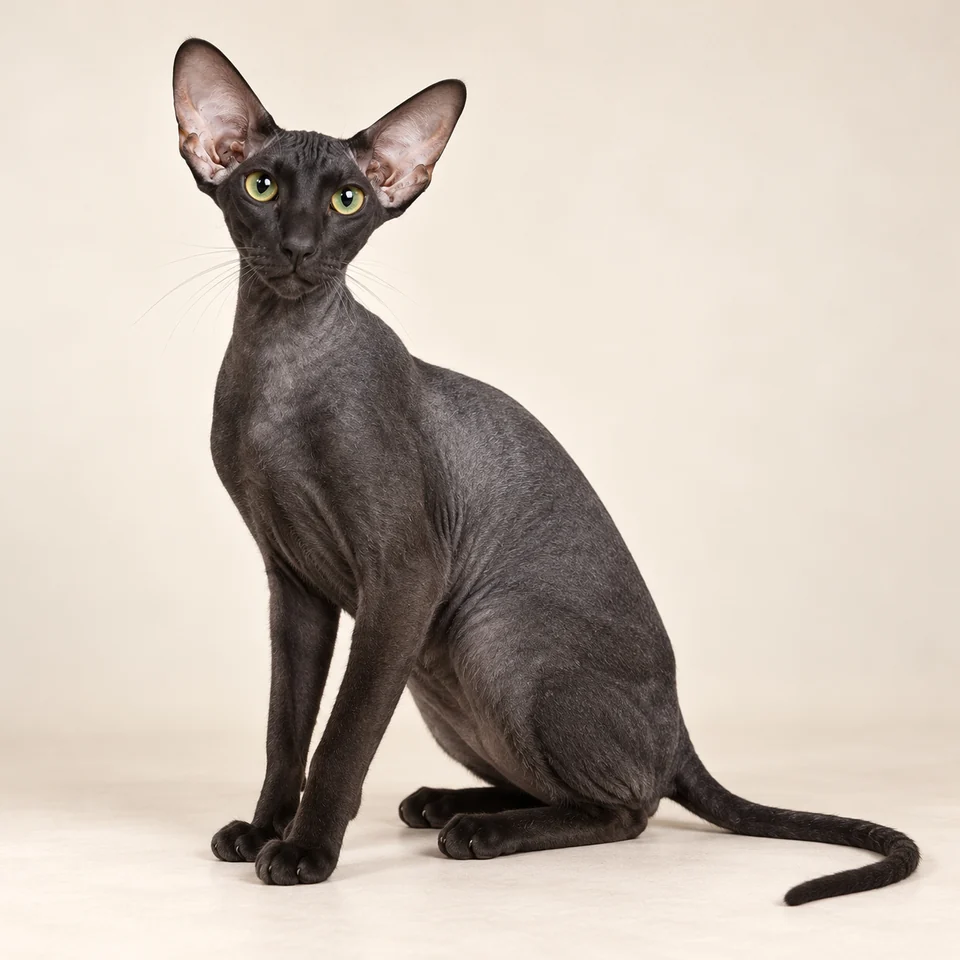
The Peterbald is a breed from Russia.
The show standard calls the ideal Peterbald an elegant and intelligent cat. It has a long, lean body and graceful movement. A Peterbald may be bald or have one of several coat types. Its coat may change several times over its life. Peterbalds are very loving, social and affectionate.
Source:TICA
Quick facts
- Where it beganTICA
- Russia
- When it beganTICA
- January 1994 (first Peterbalds born)
- SizeTICA
- Medium-sized, long and graceful torso
- Coat lengthTICA
- Hairless to coated: naked, chamois, flock, brush or straight; a coat may change over the cat's life
- Coat feelTICA
- The breed has a range of coat types: naked (soft, warm, almost elastic skin), chamois (suede or peach-fuzz, dry and very soft), flock (velour/velvet coat with no guard hair), brush (sparse, wiry coat) and straight (normal coat).
- WeightTICA
- Adult females weigh 5–7 lb and adult males 7–10 lb.
- LifespanTICA
- Life expectancy is 12–15+ years.
- Fully grownTICA
- The hair losing and growth phase generally settles into a permanent coat by age three.
Appearance
The head is a long, inverted triangle forming a wedge.
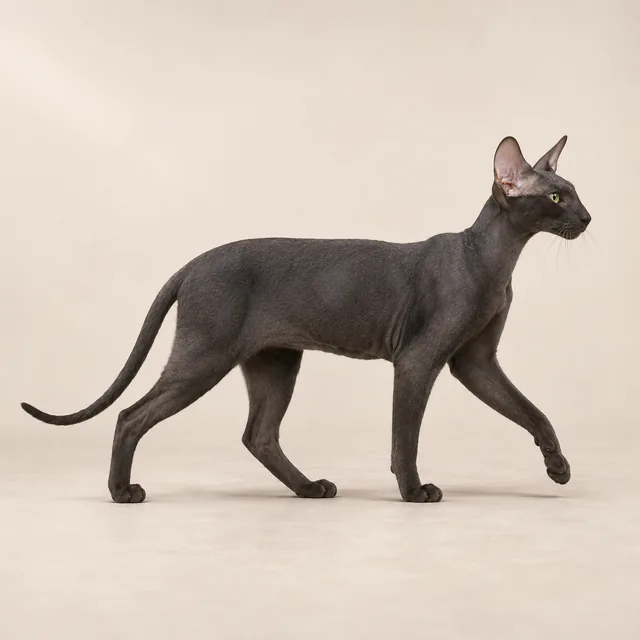
The ears are extra large, pointed and broad at the base. The eyes are medium-sized and almost almond-shaped. The legs are long, and the hind legs are a bit longer than the front. The feet are oval with long, agile toes. The tail is long, strong and whippy. Whiskers, if present, should be crinkly and kinky.
Source:TICA
Body
Sturdy, long, lean body; medium-sized, long, graceful torso with shoulders and hips equal in width; medium-fine boning; firm, well-developed muscles.
Source:TICA
Colors and patterns
All colors are accepted in the traditional and pointed categories, in all divisions.
Source:TICA
About this variety
A Peterbald may have a single coat or a mix. Coat types sit along a range from fully naked to fully brush-coated. Kittens born with coat may lose it, regain it and change several times in the first few years. Straight-coated cats do not carry the hair-loss gene and never lose their coat. They are allowed in breeding programs but not in the show ring. No one coat type is preferred in the show ring.
Source:TICA
Personality
Peterbalds are a very loving, social and affectionate breed.
The show standard describes the ideal Peterbald as elegant and intelligent.
Source:TICA
Living with a Peterbald
Peterbalds get along well with other animals.
Source:TICA
Care
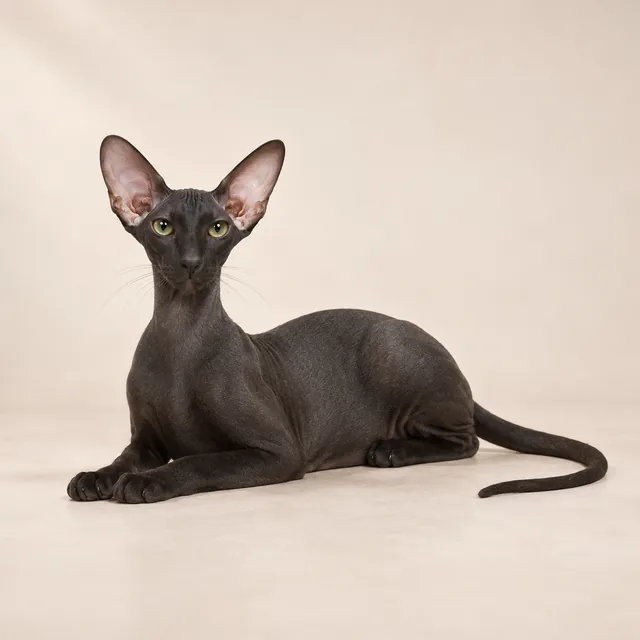
For Peterbalds with coat, brush once a week with a fine-toothed comb to remove dead hair.
Coats can change over time. Short fine down may stay on the legs, feet and other extremities.
Source:TICA
Baths
Bathing hairless Peterbalds every other week and warns against washing too often are recommended.
Source:TICA
Skin care
Naked Peterbalds usually have soft, warm, almost elastic skin. The skin may feel sticky or silky.
Source:TICA
Heat and cold
Hairless Peterbalds are more sensitive to the weather. They may need an extra layer in winter and sunscreen in summer.
Source:TICA
Nails, ears, eyes and teeth
Keep nails trimmed, ears cleaned and teeth brushed regularly with a vet-approved pet toothpaste.
Source:TICA
Health
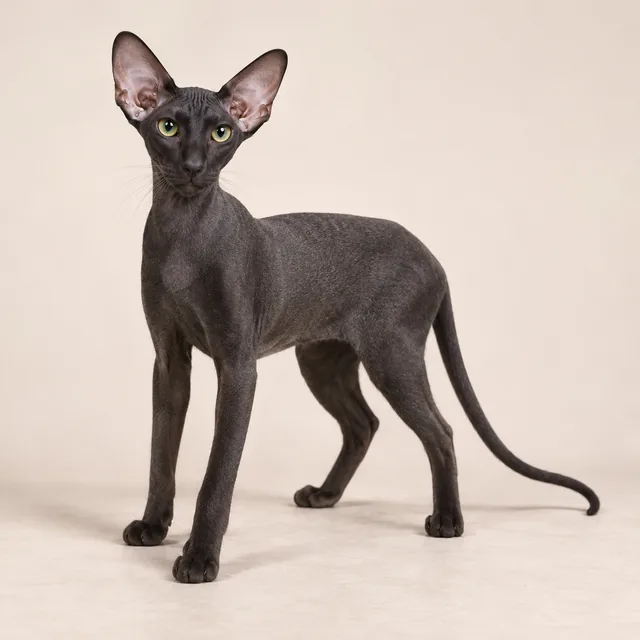
No health issues have been reported for the breed.
So no screening is suggested.
Source:TICA
This is what TICA says about the breed. It is not a health promise for any kitten. TrueKitten verifies breeder identities and documents, but that does not guarantee a kitten's health. Ask the breeder for test results and talk to your vet.
History
The first Peterbalds were born in Russia in January 1994.
They came from breeding an Oriental Shorthair (RADMA VOM JAGERHOF) to a light-boned, Oriental-looking Donskoy (AFINOGUEN MYTH). The first litter showed that the Peterbald/Donskoy gene is dominant. This is unlike the Canadian Sphynx gene.
Source:TICA
Did you know?
- No one coat type is given preference in the show ring.
- A Peterbald's coat may change several times over its life.
- Whiskers, if present, should be crinkly and kinky and may look broken.
Source:TICA
For breeders
Details from the TICA show standard. Cat show judges use it. It does not rate a kitten as a pet.
What the show standards ask for
- Head: long, inverted triangle from ear tip to ear tip to blunted muzzle, forming a wedge; flat forehead and flat high cheekbones.
- Ears: extra large, pointed, broad at the base, slightly flared; set to extend just below the line of the wedge.
- Eyes: medium, almost almond-shaped, obliquely set; at least one eye width apart; eye color independent of coat color.
- Profile: straight nose and flat forehead forming two flat planes meeting over the eyes in a convex angle.
- Muzzle: strong, slightly blunt, not narrow; smooth wedge with no whisker pinch.
- Body: medium-sized, long, graceful torso; shoulders and hips equal in width; medium-fine boning; firm musculature.
- Legs and feet: long legs, hind legs slightly longer; oval feet with long, agile toes.
- Tail: long, strong and whippy.
- Coat: naked, chamois, flock and brush are all eligible with no preference; straight coat is not eligible for the show ring.
Source:TICA
Points show how much each part counts when a judge scores a cat at a show. They add up to 100.
| Part | Points |
|---|---|
| HEAD | 40 |
| BODY | 40 |
| COAT | 20 |
Source:TICA
TICA allowed outcrosses
The entire Siamese Breed Group (Siamese, Balinese, Oriental Shorthair, Oriental Longhair) and Donskoy
Source:TICA
TICA penalties
Head: curved profile; weak chin; muzzle break. Body: heavy, rounded body; bowed forelegs.
Source:TICA
TICA disqualifications
Withhold all awards: long haired cats; normal coat. Disqualify: protruding sternum; visible tail fault; crossed eyes; any sign of any means of artificial hair removal. Also the general Show Rules Article Sixteen disqualifications listed in the standard (e.g. biting, intent to deceive, missing testicles in adult whole males, extra toes, total blindness, markedly smaller size, sternum depression).
Source:TICA
TICA breeding notes
Permissible outcrosses: the entire Siamese Breed Group (Siamese, Balinese, Oriental Shorthair, Oriental Longhair) and Donskoy. Straight-coated Peterbalds do not carry the hair-loss gene; they may be used in breeding but are not eligible for the show ring.
Source:TICA
Common questions
A Peterbald may have a single coat or a mix. Coat types sit along a range from fully naked to fully brush-coated. Kittens born with coat may lose it, regain it and change several times in the first few years. Straight-coated cats do not carry the hair-loss gene and never lose their coat. They are allowed in breeding programs but not in the show ring. No one coat type is preferred in the show ring.
A Peterbald may have a single coat or a mix. Coat types sit along a range from fully naked to fully brush-coated. Kittens born with coat may lose it, regain it and change several times in the first few years. Straight-coated cats do not carry the hair-loss gene and never lose their coat. They are allowed in breeding programs but not in the show ring. No one coat type is preferred in the show ring.
Hairless Peterbalds are more sensitive to the weather. They may need an extra layer in winter and sunscreen in summer.
Adult females weigh 5–7 lb and adult males 7–10 lb.
Life expectancy is 12–15+ years.
Peterbalds are a very loving, social and affectionate breed. The show standard describes the ideal Peterbald as elegant and intelligent.
The first Peterbalds were born in Russia in January 1994. They came from breeding an Oriental Shorthair (RADMA VOM JAGERHOF) to a light-boned, Oriental-looking Donskoy (AFINOGUEN MYTH). The first litter showed that the Peterbald/Donskoy gene is dominant. This is unlike the Canadian Sphynx gene.
Questions to ask a breeder
- What coat type does this kitten have now, and how have coats changed in its relatives?
- Is this kitten straight-coated, and is it sold as a pet or for breeding?
- What bathing and skin-care routine is this kitten used to?
- How do you keep your hairless cats comfortable in cold or sunny weather?
- What health checks have the parents had, and may I see the records?
- Does this kitten live with other cats or pets now?
Sources
Every fact on this page comes from the cat registry TICA.
Last updated