
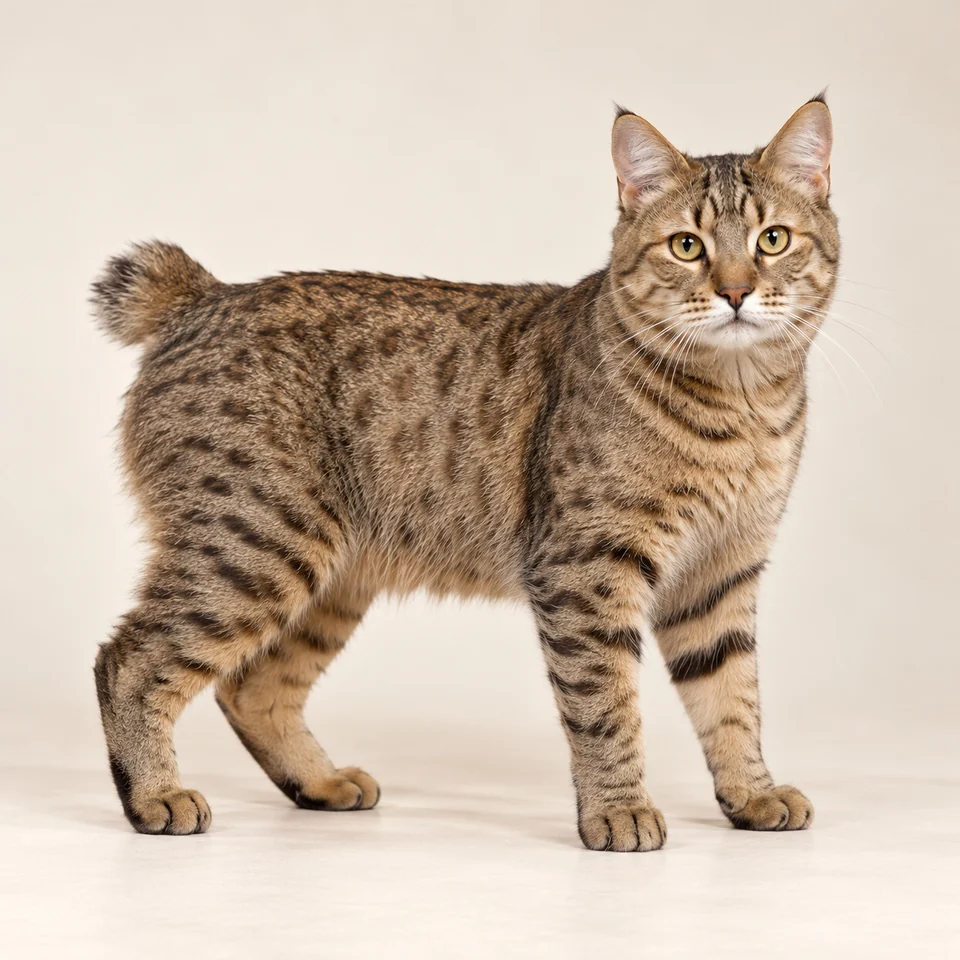
The Pixiebob was bred to look like the wild Coastal Red Bobcat.
The founding cats came from Washington State. Pixiebobs have short tails and come in two coat lengths. They are active, social and doglike in their loyalty to family.
Source:TICA
Quick facts
- Where it beganTICA
- Foothills of the Cascade Range, Washington State
- When it beganTICA
- 1985–1987 (the first cats were found in 1985 and 1986; by 1987 the founder was looking for more)
- Coat lengthTICA
- Shorthair
- Coat feelTICA
- Thick double coat with a woolly texture that stands off from the body and feels padded.
- WeightTICA
- Males weigh 12 to 17 lb. Females are slightly smaller, at 8 to 12 lb.
- LifespanTICA
- Life expectancy is 13 to 15 or more years.
- TICA statusTICA
- Championship (granted 1997, from the 1998 show season)
Appearance
The Pixiebob is bred to resemble the wild Coastal Red Bobcat.
The ideal is a brown spotted tabby, from tawny to reddish brown. The tail is at least 2 inches long and can reach the hock. It is often kinked or knotted but should be fully flexible. The coat is thick, woolly and stands off the body.
Source:TICA
Colors and patterns
Brown spotted tabby. The ideal ranges in shade from tawny to a reddish brown.
Source:TICA
About this variety
The Pixiebob has a thick, woolly double coat. The Pixiebob Longhair has a medium coat up to 2 inches long that is softer and silky.
Source:TICA
Personality
Living with a Pixiebob
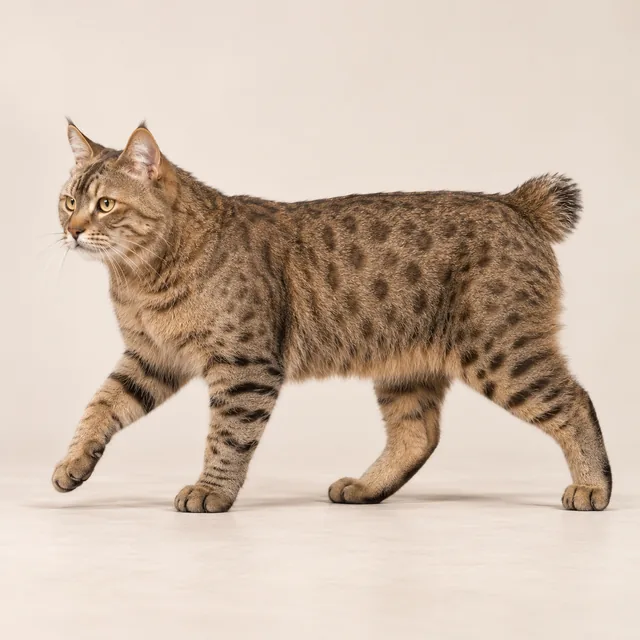
Pixiebobs easily learn to fetch and to walk on a harness and leash.
Source:TICA
Care
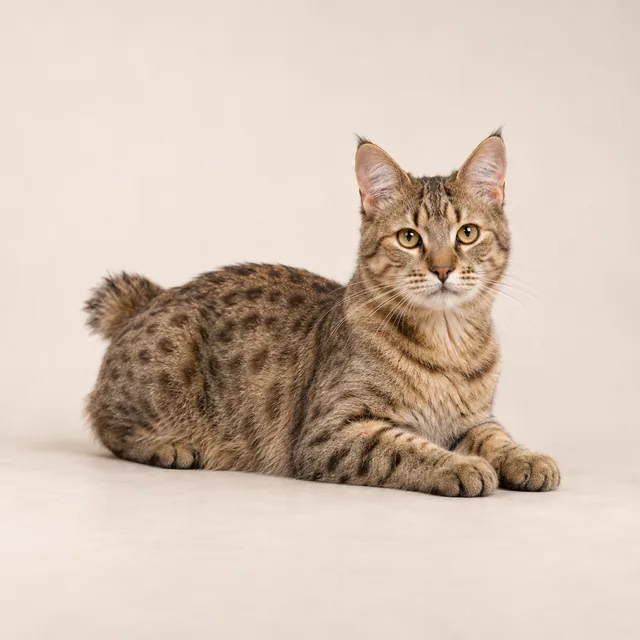
The Pixiebob coat is easy to groom with weekly combing or brushing.
The thick double coat needs regular brushing. This helps avoid mats and heavy shedding.
Source:TICA
Shedding
The thick double coat needs regular brushing to avoid matting and excessive shedding.
Source:TICA
Food
Pixiebobs have no particular nutritional needs. To watch their weight and not mistake extra weight for a large build.
Source:TICA
History
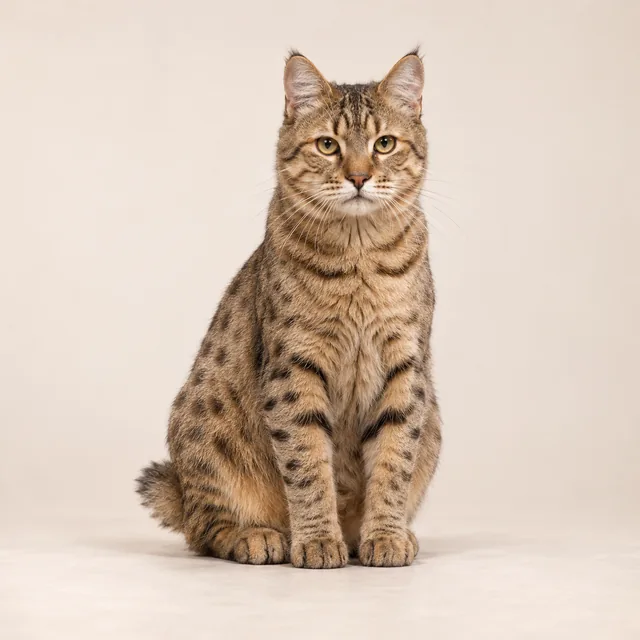
Carol Ann Brewer bought a polydactyl spotted male kitten with a short tail in spring 1985.
He came from the foothills of the Cascade Range in Washington State. In January 1986 she rescued a short-tailed male who stood as tall as her knees. She named him Keba. Keba fathered a litter born in April 1986. Carol Ann kept a female kitten with muted spots, a reddish-fawn coat and a wild look. She named her Pixie. By 1987 she saw that these bobtailed cats had a distinctive look. She began looking for more cats like them.
Source:TICA
Recognition dates
- 1994TICA Accepted for Exhibition Status
- 1997TICA Granted championship status (from the 1998 show season)
Source:TICA
Did you know?
- Pixiebobs may have extra toes, up to seven on a foot.
- Pixiebobs can learn to fetch and walk on a leash.
- The breed is named in memory of founder Carol Ann's first cats.
Source:TICA
For breeders
Details from the TICA show standard. Cat show judges use it. It does not rate a kitten as a pet.
What the show standards ask for
- Partial: items below come from the breed introduction, breed page and Standing Rules.
- Color: brown (black) spotted tabby; ideal ranges from tawny to reddish brown.
- Tail: minimum 2 inches, may reach the hock; often kinked or knotted but should be fully flexible.
- Polydactyly is accepted; maximum seven toes on any foot.
- Coat: thick, woolly double coat standing off the body (shorthair); medium coat up to 2 inches, softer and silky (longhair).
Source:TICA
Points show how much each part counts when a judge scores a cat at a show. They add up to 100.
| Part | Points |
|---|---|
| Head | 40 |
| Body | 39 |
| Coat/Color/Pattern | 21 |
Source:TICA
Common questions
Males weigh 12 to 17 lb. Females are slightly smaller, at 8 to 12 lb.
Life expectancy is 13 to 15 or more years.
The Pixiebob is bred to resemble the wild Coastal Red Bobcat. The ideal is a brown spotted tabby, from tawny to reddish brown. The tail is at least 2 inches long and can reach the hock. It is often kinked or knotted but should be fully flexible. The coat is thick, woolly and stands off the body.
Pixiebobs are active and social. They are doglike in their loyal devotion to family. They have a loving, trusting, tractable (easy to handle) nature.
The Pixiebob coat is easy to groom with weekly combing or brushing. The thick double coat needs regular brushing. This helps avoid mats and heavy shedding.
Pixiebobs easily learn to fetch and to walk on a harness and leash.
Questions to ask a breeder
- Does this kitten or either parent have extra toes, and how many?
- How long is the kitten's tail, and is it fully flexible?
- What health records can you share for the kitten and both parents?
- What food is the kitten eating now, and how much?
- Can I see the registration papers for the kitten and parents?
Sources
Every fact on this page comes from the cat registry TICA.
Last updated