
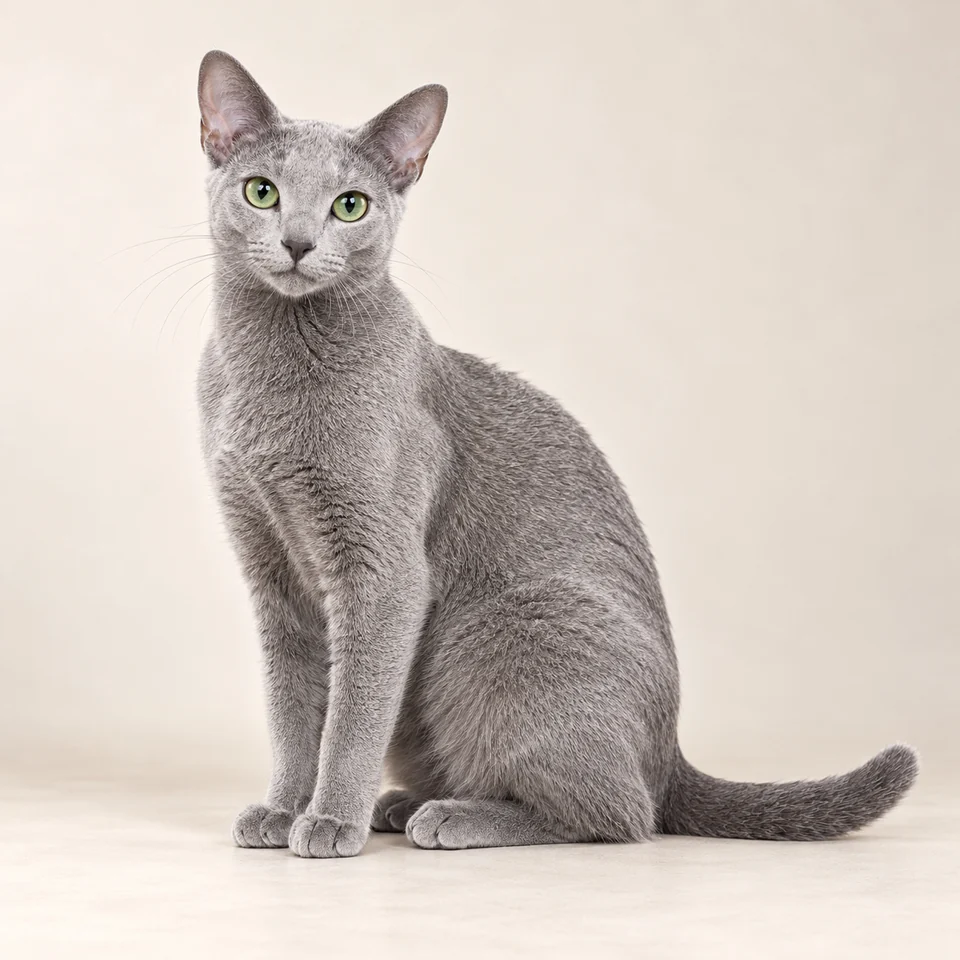
The Russian Blue is a shorthair with a dense, silver-tipped blue coat and green eyes.
It is one of the cleverest of all cat breeds. It can seem shy at first, but it soon becomes a friendly, affectionate companion. The show standard describes a sweet, smiling expression.
Quick facts
- Where it beganCFA
- Northern Russia (believed to come from the Archangel Isles)
- When it beganCFA
- Very little written history before the late 1800s; shown at early English cat shows as "Archangel Cats".
- SizeCFA
- Medium
- WeightCFATICA
- Males rarely exceed 10 pounds, and females range from 5 to 8 pounds. Males are proportionally larger than females.
- LifespanTICA
- Life expectancy is 10 to 20 years. It is not uncommon for some to reach 16 years or more with proper care.
Appearance
The coat is short, dense and plush.
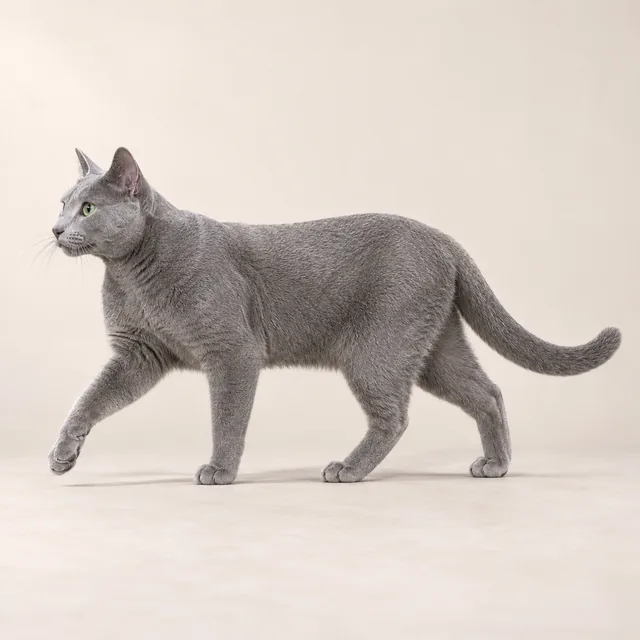
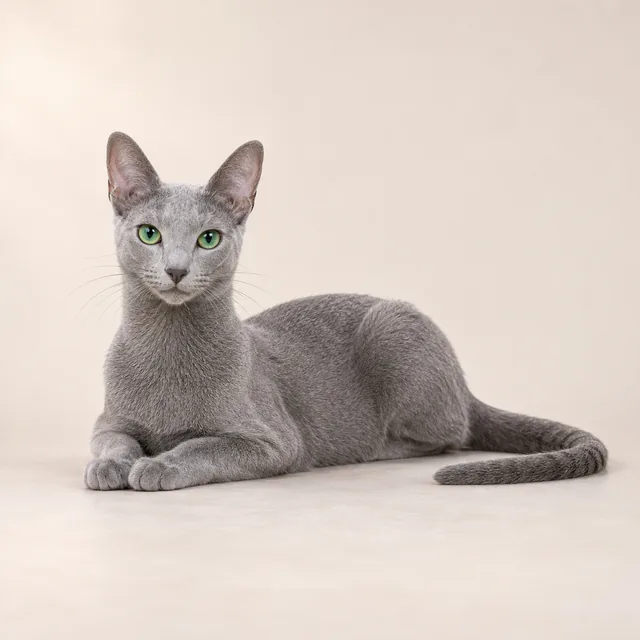
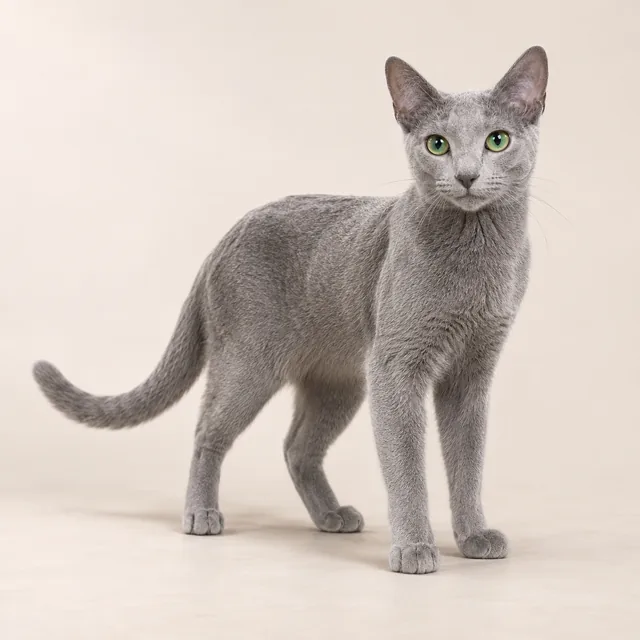
Silver tips on the blue guard hairs glisten in the light. Eyes are green and set wide apart. The head is a smooth, medium wedge. Ears are rather large and wide at the base. The body is long, fine-boned and graceful. The tail is long and tapering.
Source:CFA
Body
Long, fine-boned, firm and muscular; lithe and graceful. Foreign body type, lithe and slender with solid weight.
Colors and patterns
Blue only. An even, bright blue with silver-tipped guard hairs that give a silvery sheen. No tabby markings, though ghost tabby markings are permitted on kittens at some shows.
Personality
Few breeds match the Russian Blue for intelligence.
They are skilled at opening doors, drawers and even jars. They are also loving companions. They are very sensitive to their owners' moods and may clown around to cheer you up. They are gentle and shy.
With their people
They may seek a spot on your lap or ride through the house on your shoulder.
Source:CFA
Living with a Russian Blue
They are best suited to quieter homes, though many thrive in noisier households.
They don't need a lot of space.
Source:CFA
With children
They are good pets for older children who let the cat take its time getting comfortable.
Source:CFA
Activity
Puzzle toys and interactive games to keep their minds busy are recommended. Without frequent, interactive exercise, they are at risk of becoming obese.
Source:CFA
Settling in
It is typical for a Russian to hide under the sofa when a guest arrives. Curiosity soon brings it out to investigate.
Source:CFA
Care
Russian Blues are clean cats that need very little grooming.
Comb two or three times a month to help control shedding. Russian Blues need minimal grooming if you keep a good hygiene routine.
Undercoat
Double coat that stands out from the body due to density; dense, plush double coat.
Baths
A coat may sometimes become oily or greasy and benefit from a bath. Ask your breeder about products; every coat is slightly different.
Source:CFA
Nails, ears, eyes and teeth
Keep the claws trimmed and the eyes and ears clean. Brush their teeth weekly to prevent periodontal disease. To trim their nails every couple of weeks.
Health
The Russian Blue is a natural breed not known to have any specific genetic problems.
Some believe its small gene pool may make it more prone to certain diseases. Obesity can lead to many other health issues.
Source:CFA
CFA health notes
This natural breed is not known to have any specific genetic problems. Some believe the relatively small gene pool may make the cats more susceptible to certain diseases.
Source:CFA
This is what CFA says about the breed. It is not a health promise for any kitten. TrueKitten verifies breeder identities and documents, but that does not guarantee a kitten's health. Ask the breeder for test results and talk to your vet.
History
The breed is believed to come from the Archangel Isles in northern Russia.
There is little written history before the late 1800s. Sailors are thought to have brought the cats to England. At early English cat shows they were called Archangel Cats and competed with other solid blue cats. From the early 1900s until World War II, Scandinavian breeders led the breed's development. After the war, U.S. breeders combined English and Scandinavian lines to make today's Russian Blue.
Source:CFA
Did you know?
- Fingers run through the coat leave little “footprints” behind.
- Russian folklore calls them good-luck charms; stories say they were pets of Russian royalty and two English queens.
- The green eye color usually deepens with age.
- The silver tipping is not caused by the Inhibitor (silver) gene.
For breeders
Details from the CFA and TICA show standards. Cat show judges use them. They do not rate a kitten as a pet.
What the show standards ask for
- Head: smooth, medium wedge with no nose break or stop, broad across the eyes; a modified wedge with seven flat planes.
- Ears: rather large, wide at the base, more pointed than rounded, set far apart.
- Eyes: set wide apart; rounded to almost round, with a slight oriental slant; vivid green.
- Neck: long and slender but looks short due to thick fur.
- Body: long, fine-boned, firm and muscular, lithe and graceful; foreign type with solid weight.
- Legs/feet: long and fine-boned; small, slightly rounded paws; appears to walk on tiptoe.
- Tail: long, tapering from a moderately thick base.
- Coat: short, dense, fine and plush double coat with a soft, silky feel; stands out from the body.
- Color: blue only, even and bright, with distinct silver tipping; lighter shades are preferred.
Points show how much each part counts when a judge scores a cat at a show. They add up to 100.
CFA colors and patterns
Blue only: even bright blue, lighter shades preferred, distinct silver tipping, free from tabby markings.
Source:CFA
TICA allowances
No ALLOWANCES heading; the standard permits ghost tabby markings on kittens and expects kitten eyes to change from yellow to green.
Source:TICA
TICA penalties
Weak chin; eye color not completely green (amount by quantity/vividness of green and age); full penalty for eyes with no green.
Source:TICA
CFA disqualifications
Kinked or abnormal tail; locket or button; incorrect number of toes; any color other than blue; long coat.
Source:CFA
TICA disqualifications
Withhold all awards: any white spots or lockets. Disqualify: any sign of definite challenge; Show Rules Article Sixteen mandatory disqualifications (biting, intent to deceive, etc.).
Source:TICA
Common questions
Males rarely exceed 10 pounds, and females range from 5 to 8 pounds. Males are proportionally larger than females.
Few breeds match the Russian Blue for intelligence. They are skilled at opening doors, drawers and even jars. They are also loving companions. They are very sensitive to their owners' moods and may clown around to cheer you up. They are gentle and shy.
It is typical for a Russian to hide under the sofa when a guest arrives. Curiosity soon brings it out to investigate.
They are good pets for older children who let the cat take its time getting comfortable.
Many Russians make friends with other animals.
Russian Blues are clean cats that need very little grooming. Comb two or three times a month to help control shedding. Russian Blues need minimal grooming if you keep a good hygiene routine.
Russians have large appetites and are at risk of becoming obese without frequent, interactive exercise. Monitor food intake carefully. A regular feeding schedule and avoiding too many cat treats is recommended.
The Russian Blue is a natural breed not known to have any specific genetic problems. Some believe its small gene pool may make it more prone to certain diseases. Obesity can lead to many other health issues.
Blue only. An even, bright blue with silver-tipped guard hairs that give a silvery sheen. No tabby markings, though ghost tabby markings are permitted on kittens at some shows.
The breed is believed to come from the Archangel Isles in northern Russia. There is little written history before the late 1800s. Sailors are thought to have brought the cats to England. At early English cat shows they were called Archangel Cats and competed with other solid blue cats. From the early 1900s until World War II, Scandinavian breeders led the breed's development. After the war, U.S. breeders combined English and Scandinavian lines to make today's Russian Blue.
Life expectancy is 10 to 20 years. It is not uncommon for some to reach 16 years or more with proper care.
Questions to ask a breeder
- How does this kitten react to visitors and new people?
- Has this kitten been around children or other pets?
- What and how much does this kitten eat each day?
- What toys and games does this kitten enjoy?
- What health checks have the parents had?
- Is a retired adult available as well as kittens?
Sources
Every fact on this page comes from the two cat registries, CFA and TICA.
Last updated