
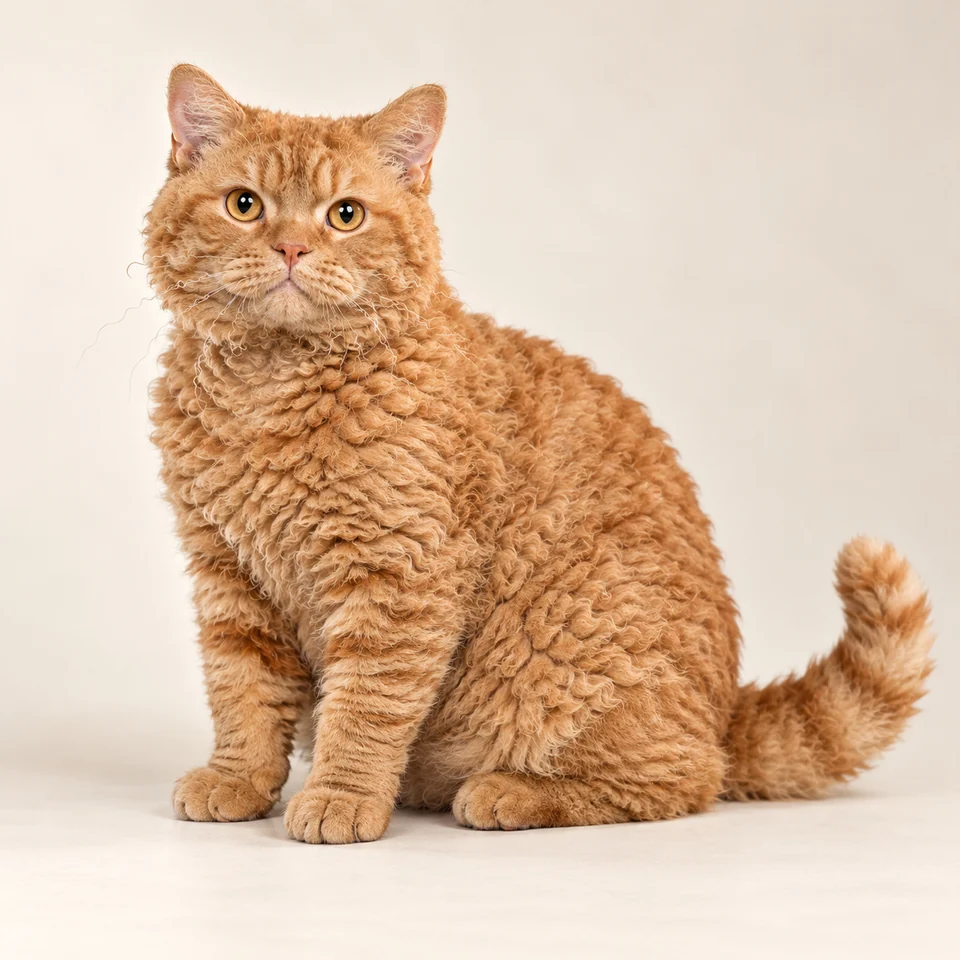
The Selkirk Rex is known for its curly coat of loose, random curls.
Judges joke that Selkirks are the original “bad hair day” cats. It is a medium to large cat with heavy boning. It is an easy-going, relaxed cat. The longhaired version is listed separately as the Selkirk Rex Longhair.
Quick facts
- Coat lengthTICA
- Shorthair
- Coat feelCFATICA
- Soft, plushy, full and obviously curly. Soft, dense and plush, with deep waves and curled ends.
- WeightCFATICA
- Adult males weigh 12 to 15 pounds, with females somewhat smaller. Heavy boning gives surprising weight.
- LifespanTICA
- Life expectancy is 10 to 15+ years.
- Fully grownTICA
- Coat maturity only: kittens are curly at birth, may lose the coat and start an adult curly coat at 8–10 months, and the coat keeps developing until about 2 years of age.
- CFA statusCFA
- Championship (since 2000)
- TICA statusTICA
- Championship (since February 1994)
Appearance
The coat is soft, plush and obviously curly.
Hair is about the same length all over the body. Tail curls lie close around the tail. The head is round and full-cheeked. Eyes are large and round. Whiskers are curly. Curls show most around the neck, tail and belly.
Body
Solid, muscular, semi-cobby body with heavy (substantial) boning; torso more rectangular than square.
Colors and patterns
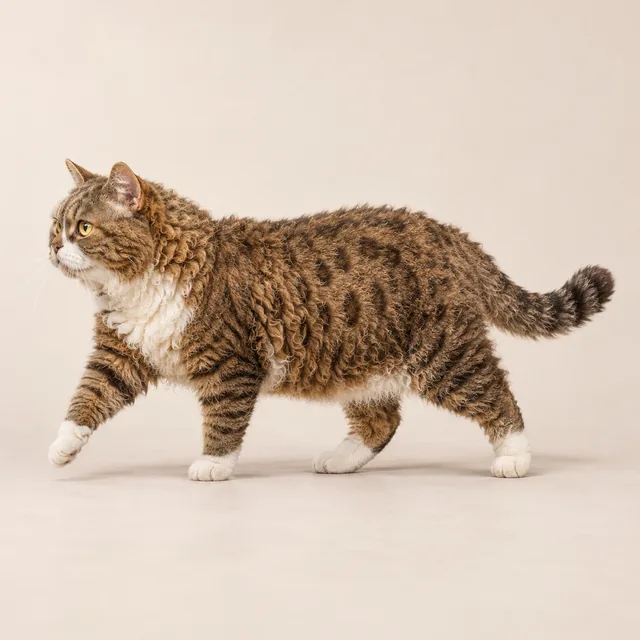
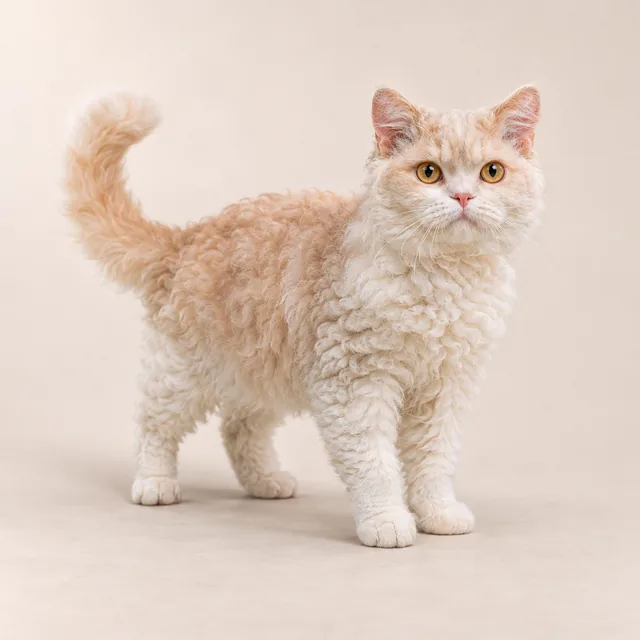
Any color or pattern. Any genetically possible color, pattern or combination is accepted.
Eye colors
Any eye color is acceptable by one standard. The other accepts blue or odd eyes only in pointed, white or with-white cats.
About this variety
The Selkirk Rex (SR) is the shorthair version. Its coat is medium length and fairly even over the body. At some shows shorthairs are in the Shorthair Division of the Selkirk Rex.
Source:TICA
Personality
Selkirks combine intelligence with a silly streak.
Like the founding cat, they often ask politely for time and love. They are placid and cuddly, yet very active and playful. The show standard asks for a sweet, loving temperament.
With their people
Their focus is on you. They are very social and dislike being left alone for long periods.
Lap time
Their idea of kitty heaven is a warm lap. They may jump into your lap if they want attention.
Source:CFA
Voice
They are not particularly vocal, but very responsive. If you start a conversation, they will “talk” back. They are “quiet.”
Source:CFA
Living with a Selkirk Rex
They do well with children.
Children need to handle them gently.
Source:CFA
Care
No special tools are needed.
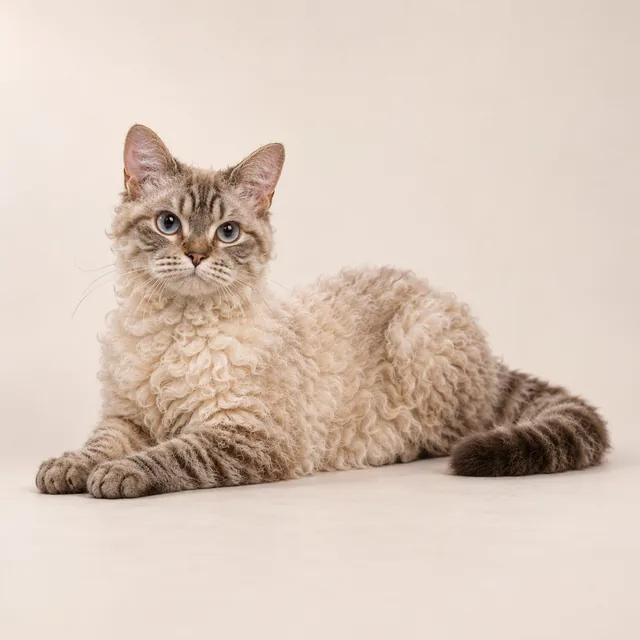
Use your fingers in a gentle scratching motion to fluff the curls. They do not mat easily, but a good combing once or twice a month is recommended.
Source:CFA
Baths
A bath is rarely necessary. If your Selkirk gets dirty, use a moisturizing shampoo and let the coat air dry.
Source:TICA
Nails, ears, eyes and teeth
Keep nails trimmed, ears cleaned and teeth brushed regularly with a vet-approved pet toothpaste.
Source:TICA
Health
Selkirks are known for robust good health, not for breed-specific health concerns.
British Shorthairs and Exotics were used to develop the breed. So breeders typically screen for conditions seen in those breeds, such as polycystic kidney disease (PKD), hip dysplasia and hypertrophic cardiomyopathy (HCM).
Source:CFA
Screening
Breeders typically screen for PKD, hip dysplasia and HCM. Blood type incompatibility can also occur, so most breeders do genetic tests for blood type before breeding.
Source:CFA
CFA health notes
“Selkirks are known for their robust good health and not for any breed-specific health concerns.” Breeders typically screen for conditions known in the parent breeds. Most breeders test blood type before breeding.
Source:CFA
This is what CFA says about the breed. It is not a health promise for any kitten. TrueKitten verifies breeder identities and documents, but that does not guarantee a kitten's health. Ask the breeder for test results and talk to your vet.
History
The breed began with a spontaneous mutation in a litter born in Montana in 1986.
Another account dates the curly kitten to 1987. The foundation female had curly whiskers and a coat that looked permed. Persian breeder Jeri Newman adopted her and named her Miss DePesto of NoFace. Bred to a black Persian male, she had three curly kittens out of six, showing the gene is dominant. Newman named the breed after her stepfather's family name, Selkirk. The breed was accepted for registration in 1992 and for championship in 2000. A second registry recognized it for championship in February 1994.
Recognition dates
- 1992CFA Accepted for registration
- 2000CFA Championship status
- 1994TICA Recognized for championship competition (February)
Did you know?
- The Selkirk Rex is sometimes called “the cat in sheep’s clothing.”
- It is the only cat breed named after a person.
- Whiskers are curly and fragile and tend to break off.
- Miss DePesto earned her name by being a pest for attention.
- Kittens are curly at birth. They may lose the coat and begin to grow an adult curly coat at 8–10 months.
For breeders
Details from the CFA and TICA show standards. Cat show judges use them. They do not rate a kitten as a pet.
What the show standards ask for
- Overall: medium to large cat with heavy boning that gives surprising weight; females may be less massive but not dainty.
- Head: round, broad and full-cheeked with no flat planes; gentle nose stop and firm chin.
- Muzzle: short and broad, wider than high; well-padded whisker pads give an impression of squareness.
- Ears: medium, broad at the base, set well apart; rounded with pointed tip.
- Eyes: large, rounded, set well apart; not almond or oval.
- Body: torso more rectangular than square, substantial and muscular; semi-cobby with full, deep chest.
- Legs/tail: medium to long legs with substantial boning; tail medium length, heavy at base / thick, tapering to rounded tip.
- Coat (shorthair): soft, plushy, full and obviously curly; a double coat with thick undercoat and deep waves with curled ends.
- Curl: random, unstructured, loose individual curls; most prominent on neck, belly and tail; whiskers curly.
- Color: any color or pattern; blue or odd eyes are limited to pointed, white or with-white cats at some shows.
Points show how much each part counts when a judge scores a cat at a show. They add up to 100.
CFA colors and patterns
Any genetically possible color or combination of colors; any eye color.
Source:CFA
CFA allowances
Allowance should be made for less curl on younger adults and kittens (stated for both coat lengths).
Source:CFA
TICA penalties
Excessive resemblance to Persian or Exotic type; lack of rectangular muzzle; excessively weak chin; lack of substantial boning; harsh, crisp or coarse coat; in SRL, dreadlocks rather than loose unstructured curls.
Source:TICA
CFA disqualifications
Extreme nose break; lack of visible muzzle; malocclusion; tail kinks; crossed eyes; obvious physical deformities, including polydactyl feet; no evidence of curl.
Source:CFA
TICA disqualifications
Blue eyes in cats that are not pointed, white or with white; odd eyes in cats that are not white or with white; nose break; prominent facial skin folds from eye corner toward nose; severe overshot or undershot jaw or malocclusion; any sign of definite challenge; plus Show Rules Article Sixteen mandatory disqualifications (biting, intent to deceive, adult whole males without two descended testicles, missing tail or extra toes unless authorized, tail faults/crossed eyes if required, total blindness, markedly smaller size, sternum depression or unusually small rib cage). Withhold all awards: no evidence of curl on coat or whiskers.
Source:TICA
CFA breeding notes
British Shorthairs and Exotics were used to develop the breed and are currently allowable outcrosses. Most breeders test blood type before breeding.
Source:CFA
Common questions
Adult males weigh 12 to 15 pounds, with females somewhat smaller. Heavy boning gives surprising weight.
Life expectancy is 10 to 15+ years.
Selkirks combine intelligence with a silly streak. Like the founding cat, they often ask politely for time and love. They are placid and cuddly, yet very active and playful. The show standard asks for a sweet, loving temperament.
They do well with children. Children need to handle them gently.
They do well with other animals.
No special tools are needed. Use your fingers in a gentle scratching motion to fluff the curls. They do not mat easily, but a good combing once or twice a month is recommended.
Selkirks tend to be more interactive than active. They can charge through the house after a toy. One show standard calls the Selkirk an active cat. They are very active and love to play.
Breeders typically screen for PKD, hip dysplasia and HCM. Blood type incompatibility can also occur, so most breeders do genetic tests for blood type before breeding.
The breed began with a spontaneous mutation in a litter born in Montana in 1986. Another account dates the curly kitten to 1987. The foundation female had curly whiskers and a coat that looked permed. Persian breeder Jeri Newman adopted her and named her Miss DePesto of NoFace. Bred to a black Persian male, she had three curly kittens out of six, showing the gene is dominant. Newman named the breed after her stepfather's family name, Selkirk. The breed was accepted for registration in 1992 and for championship in 2000. A second registry recognized it for championship in February 1994.
Coat maturity only: kittens are curly at birth, may lose the coat and start an adult curly coat at 8–10 months, and the coat keeps developing until about 2 years of age.
Questions to ask a breeder
- Have the parents been screened for PKD, HCM and hip dysplasia? May I see the results?
- Have you tested the parents' blood types?
- Which outcross breeds are in this kitten's pedigree?
- Is this kitten curly-coated or straight-coated?
- What grooming routine is this kitten used to?
- Has this kitten been around children or other pets?
Sources
Every fact on this page comes from the two cat registries, CFA and TICA.
Last updated