
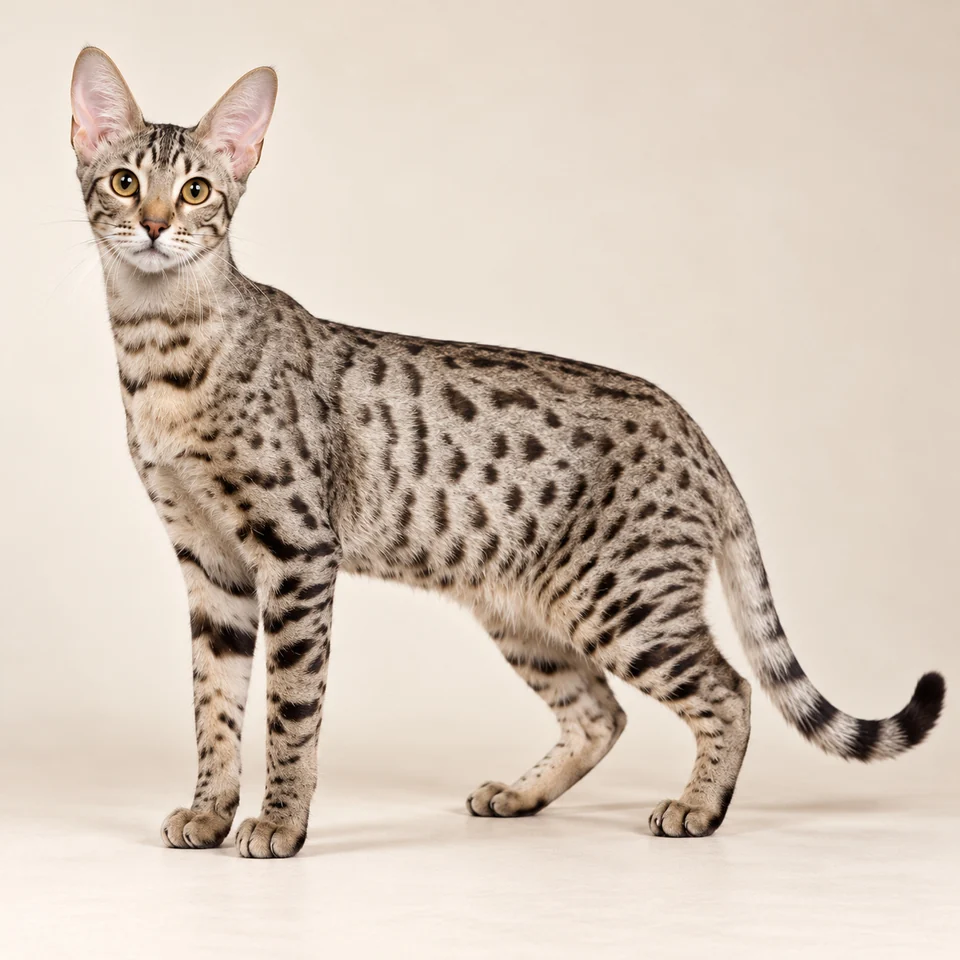
The Serengeti is a long-legged domestic cat.
Its coat is short, tight and silky. Breed founder Karen Sausman partly modeled it on the African serval. It has no serval blood. It was developed by crossing Bengals and Oriental Shorthairs.
Source:TICA
Quick facts
- Where it beganTICA
- California, USA (Kingsmark Cattery)
- When it beganTICA
- 1995 (the project started slowly in 1995)
- Coat lengthTICA
- Shorthair
- Coat feelTICA
- The breed has a short, tight coat with a silky texture. The standard asks for a fine, dense coat with some loft.
- WeightTICA
- Males can weigh 10–15 lb. Females usually weigh 8–12 lb.
Appearance
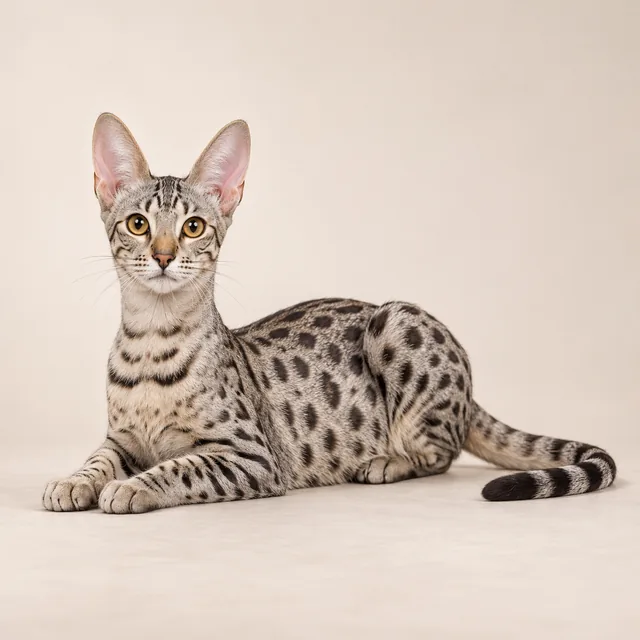
The show standard asks for very long legs and strikingly large ears.
The ears have rounded tips. They sit upright and close together on top of the head. The eyes are round and large. The coat is short, tight and silky.
Source:TICA
Body
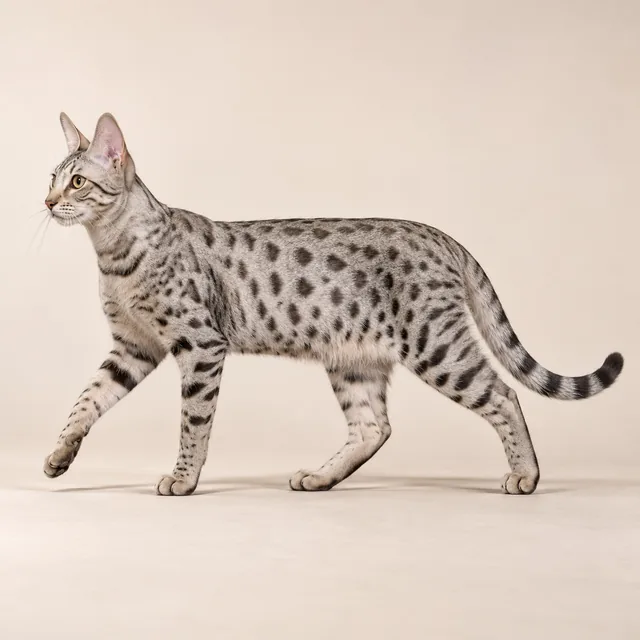
Long-legged cat; the show standard asks for extremely long legs with medium boning and musculature.
Source:TICA
Colors and patterns
Accepted colors are brown spotted tabby, black, black silver spotted tabby and black smoke.
Source:TICA
Personality
Living with a Serengeti
History
Karen Sausman created the Serengeti.
She was a professional conservation biologist. She owns Kingsmark Cattery in California. She set out to make a domestic breed partly modeled on the African serval. The project started slowly in 1995. The cats have no serval blood. They were developed by crossing Bengals and Oriental Shorthairs. Serengetis are now bred in the United States, the United Kingdom, Europe, Australia and even Russia.
Source:TICA
Did you know?
- The Serengeti was partly modeled on the African serval, but it has no serval blood.
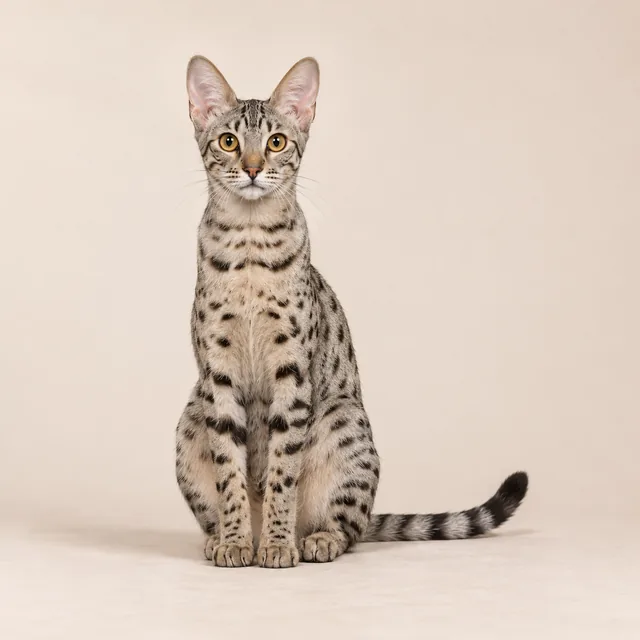
- The ears should be as long as the head.
- Serengetis can be vocal. This probably comes from their Oriental ancestors.
Source:TICA
For breeders
Details from the TICA show standard. Cat show judges use it. It does not rate a kitten as a pet.
What the show standards ask for
- Ears: wide and deep at the base with rounded tips; strikingly large, equal to the length of the head; set upright and close together on top of the head.
- Eyes: round and large; gold or yellow preferred, hazel to light green allowed.
- Legs: extremely long with medium boning and musculature.
- Coat: short and even; fine textured, dense, with some loft.
- Colors: brown spotted tabby, black, black silver spotted tabby and black smoke.
- Temperament: gentle, confident, outgoing and alert.
Source:TICA
Points show how much each part counts when a judge scores a cat at a show. They add up to 100.
| Part | Points |
|---|---|
| Head | 35 |
| Body | 30 |
| Coat/Color/Pattern | 35 |
Source:TICA
TICA colors
Tabby Division: Brown spotted tabby ONLY; Solid Division: Black ONLY; Silver/Smoke Division: Black silver spotted tabby and black smoke.
Source:TICA
TICA breeding notes
Oriental Shorthair and Bengal are permissible outcrosses for the Serengeti.
Source:TICA
Common questions
Males can weigh 10–15 lb. Females usually weigh 8–12 lb.
The Serengeti is a long-legged domestic cat. Its coat is short, tight and silky. Breed founder Karen Sausman partly modeled it on the African serval. It has no serval blood. It was developed by crossing Bengals and Oriental Shorthairs.
The show standard asks for a gentle, confident, outgoing and alert cat. They might be shy for a few moments in a new place. After that, it says, they can become "like Velcro."
Serengetis are extremely agile and very active.
They can be vocal. This probably comes from their Oriental ancestors.
The show standard asks for very long legs and strikingly large ears. The ears have rounded tips. They sit upright and close together on top of the head. The eyes are round and large. The coat is short, tight and silky.
Accepted colors are brown spotted tabby, black, black silver spotted tabby and black smoke.
Karen Sausman created the Serengeti. She was a professional conservation biologist. She owns Kingsmark Cattery in California. She set out to make a domestic breed partly modeled on the African serval. The project started slowly in 1995. The cats have no serval blood. They were developed by crossing Bengals and Oriental Shorthairs. Serengetis are now bred in the United States, the United Kingdom, Europe, Australia and even Russia.
Questions to ask a breeder
- How much do this kitten's parents weigh?
- Which Bengal or Oriental Shorthair outcrosses are in this kitten's pedigree?
- May I see health and genetic records for both parents?
- How does this kitten react to new places and new people?
- How much play and climbing space is this kitten used to?
Sources
Every fact on this page comes from the cat registry TICA.
Last updated