
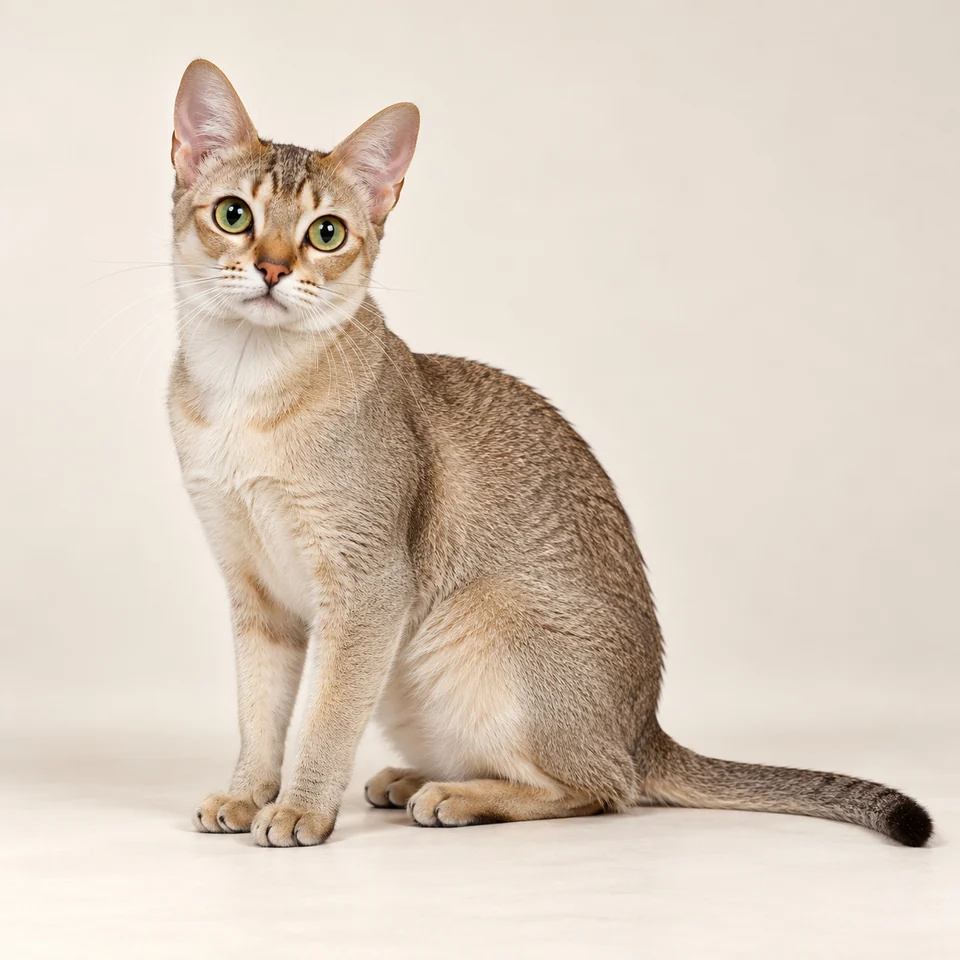
The Singapura is one of the smallest pedigreed cats.
It is active, affectionate and curious. Its ticked brown coat seems to sparkle in the sun. Its large eyes seem to say "please." Small as it is, it has a quiet way of getting what it wants.
Source:CFA
Quick facts
- Where it beganCFA
- Singapore. The breed is believed to come from street cats there.
- When it beganCFA
- The breed's start dates to 1975, when five cats came to the U.S. from Singapore; a sixth followed in 1980.
- SizeCFATICA
- Small. It is one of the smallest pedigreed cats, small to medium. One show standard says medium to small and compact.
- Coat lengthCFA
- Shorthair
- Coat feelCFATICA
- Fine, very short and silky, lying close to the body. The coat should be fine, not plush or springy.
- WeightCFATICA
- Adult males weigh 6 to 7 pounds, with females closer to 4 or 5 pounds. The breed page lists males at 6 to 8 pounds and females at 4 to 6 pounds. Another section of the same page says 5 to 6 pounds for females. There is little size difference between males and females.
- LifespanTICA
- Life expectancy is 11 to 18 years. Lines differ in health and life span.
- Fully grownTICA
- A Singapura does not reach full size until it is almost 2 years old.
- CFA statusCFA
- Championship (since 1988)
Appearance
Singapuras are small but solid, muscular and strong.
The head is rounded, with large ears and large almond-shaped eyes. Each hair has several bands of color. This makes the coat seem to sparkle in sunlight. Dark "cheetah lines" run down from the inner eye corners beside the nose.
Source:CFA
Body
Moderately stocky and muscular; body, legs and floor form a square; mid-section firm.
Colors and patterns
One color only: dark brown ticking on a warm old ivory base. Each hair has bands of dark and light. This color is called sepia agouti. It is also listed as Sable Ticked, in the Sepia category and Tabby division.
Personality
The Singapura is outgoing, curious and very playful.
It is smart and wants to check out everything around it. It is most keen on whatever has your attention. Its personality is summed up as "sweet, demanding, affectionate and occasionally bossy." Singapuras are outgoing, gentle cats.
With their people
This is a people-oriented cat. It will want to help you cook, type and make the bed. Then it may cuddle under the covers with you. It is not a cat that just lies on the couch looking pretty.
Source:CFA
Voice
Singapuras are fairly quiet. But when one decides to speak up, its voice can be surprisingly loud.
Source:CFA
Living with a Singapura
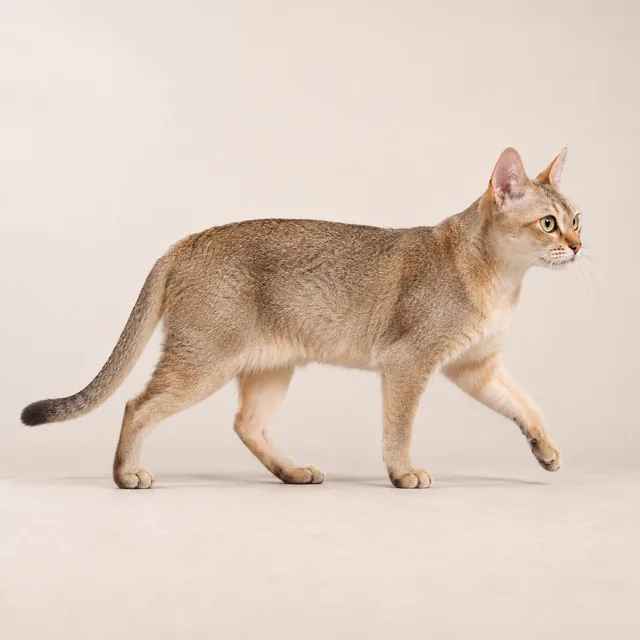
Singapuras are fairly quiet cats.
They do best in a quiet home.
Source:CFA
Activity
The Singapura's love of play lasts well into adulthood. Its energy rarely drops with age.
Source:CFA
Settling in
A Singapura is confident in a place it knows. It may become wary if something big changes. Give it time to adapt. Gently reassure it that all is still okay.
Source:CFA
Care
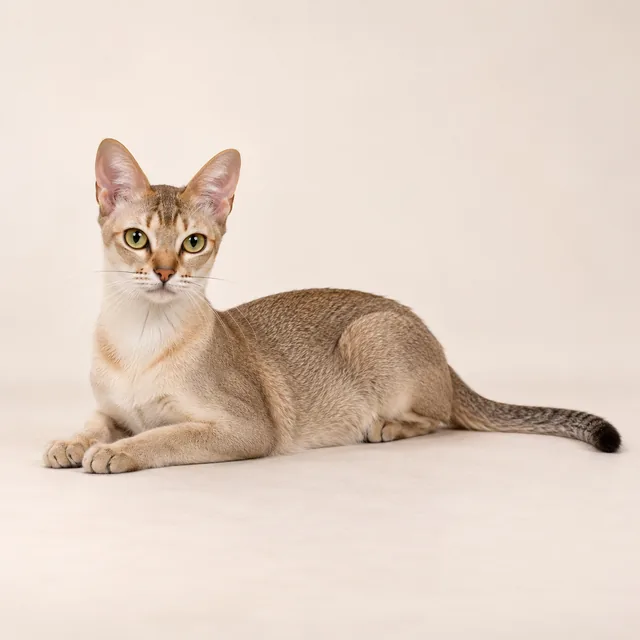
The short, close-lying coat needs only minimal grooming.
It recommends a weekly combing to remove dead hair. Combing can be a bonding time for you and your cat.
Source:CFA
Health
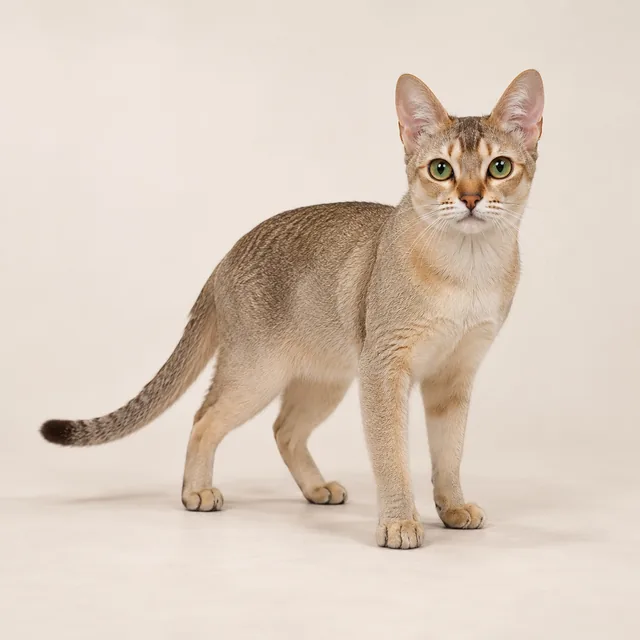
Most Singapuras are vigorous and healthy, given their street-cat roots.
Very few health problems have been recorded. Asking your breeder about any history of progressive retinal atrophy in the lines is recommended. This condition can cause blindness. Some lines have a high incidence of cardiomyopathies.
Screening
Breeders regularly do genetic testing and remove carrier cats from breeding. Not every condition can be found this way. Genetic testing panels cover known mutations such as pKDef and PRA. Some lines have a high incidence of cardiomyopathies.
Health questions to ask
Asking your breeder whether progressive retinal atrophy has appeared in the cat's lines is recommended.
Source:CFA
This is what CFA and TICA say about the breed. It is not a health promise for any kitten. TrueKitten verifies breeder identities and documents, but that does not guarantee a kitten's health. Ask the breeder for test results and talk to your vet.
History
The Singapura is a natural breed.
It is believed to come from street cats in Singapore. There it is called "Kucinta, the Love Cat." Americans Hal and Tommy Meadow worked in Singapore. In 1975 they returned to the U.S. with five Singapuras. A sixth cat came from Singapore in 1980. The breed was accepted for registration in 1981. It reached championship status in 1988.
Source:CFA
Did you know?
- The Singapura is considered a "living national monument" in Singapore.
- In its homeland it is called "Kucinta, the Love Cat,".
- "Singapura" is the Malay name for Singapore.
- The breed is registered and shown in only one color, sepia agouti.
Source:CFA
For breeders
Details from the CFA and TICA show standards. Cat show judges use them. They do not rate a kitten as a pet.
What the show standards ask for
- Overall: small to medium or medium to small, compact muscular cat with noticeably large eyes and ears.
- Head: skull rounded in both directions with rounded width at the outer eye, a definite whisker break and a medium-short, broad muzzle with a blunt nose. Proper head type is a very important judging consideration.
- Ears: large, slightly pointed (slightly to moderately pointed), wide open at the base with a deep cup. Small ears are a serious fault.
- Eyes: large and almond shaped; hazel, green or yellow, and at some shows Celadon green, gold or copper; blue eyes are not allowed.
- Body: moderately stocky and muscular; body, legs and floor form a square; mid-section firm, not tucked. Neck tends toward short and thick.
- Legs and tail: legs heavy and muscled, tapering to small short oval feet; tail short of the shoulder, slender but not whippy, with a blunt tip.
- Coat: fine, very short, silky and close-lying; not plush or springy.
- Color: dark brown (sable) ticking on a warm old ivory ground, at least two dark bands per hair; barring on inner front legs and back knees; facial "cheetah" or "puma" lines desirable.
Points show how much each part counts when a judge scores a cat at a show. They add up to 100.
| Part | Points |
|---|---|
| HeadSkull shape 4, Width at eye 4, Muzzle shape 4, Profile 3 | 15 |
| EarsSize 4, Set 4, Openness 2 | 10 |
| EyesSize 6, Shape 3, Color 1 | 10 |
| Body, Legs and TailNeck 3, Proportion 10, Legs and feet 5, Tail 2 | 20 |
| Coat | 15 |
| Color & MarkingsColor 10, Ticking 9, Facial Markings 6, Leg Markings 5 | 30 |
Source:CFA
| Part | Points |
|---|---|
| Head | 40 |
| Body | 25 |
| Coat/Color | 35 |
Source:TICA
CFA colors and patterns
Sepia agouti only (dark brown ticking on a warm old ivory ground color).
Source:CFA
CFA allowances
Allowance for undeveloped ticking in kittens. Not faults: spine line; salmon tones to the ears and nose bridge.
Source:CFA
TICA allowances
Allowance for jowls in adult males; for slightly thicker or longer coat in kittens; for slow development of faint barring in immature cats; and for coldness or gray tones in kittens, since warmth generally improves with age. Dark spine line is not a fault.
Source:TICA
CFA penalties
Penalize: coldness or gray tones in the coat; gray undercoat next to the skin; barring on outer front legs; necklaces; non-visible tail faults; lack of nose liner. Serious faults: small ears; small eyes. Fault: springy coat.
Source:CFA
TICA penalties
Penalize: small ears; small eyes; springy or plush coat; coldness and predominant gray tones; lack of leg barring; prominent outer front leg barring; dark necklaces; protruding eyes; too short a muzzle; anything more than a slight indentation as a nose stop; non-visible tail faults.
Source:TICA
CFA disqualifications
Disqualify: white spotting; barring on tail; unticked top of the head; unbroken necklaces or leg bracelets; very small eyes or ears; visible tail faults; blue eyes; any color other than sepia agouti.
Source:CFA
TICA disqualifications
Withhold all awards: unbroken necklaces and circular leg bracelets; barring on the tail; white lockets; definite blue or aqua eyes; unticked top of head; removed ear furnishings; paw pad or tail tip color inconsistent with sepia category; lack of any ticking (a solid cat). Disqualify: visibly kinked tail; undershot or overshot jaw, or any malocclusion. The general Show Rules disqualifications also apply.
Source:TICA
CFA breeding notes
Breeders regularly perform genetic testing and remove carrier cats from the breeding program. Most breeders are committed to managing the health of their cats and kittens.
Source:CFA
Common questions
Adult males weigh 6 to 7 pounds, with females closer to 4 or 5 pounds. The breed page lists males at 6 to 8 pounds and females at 4 to 6 pounds. Another section of the same page says 5 to 6 pounds for females. There is little size difference between males and females.
Life expectancy is 11 to 18 years. Lines differ in health and life span.
The Singapura is outgoing, curious and very playful. It is smart and wants to check out everything around it. It is most keen on whatever has your attention. Its personality is summed up as "sweet, demanding, affectionate and occasionally bossy." Singapuras are outgoing, gentle cats.
Singapuras are fairly quiet. But when one decides to speak up, its voice can be surprisingly loud.
The short, close-lying coat needs only minimal grooming. It recommends a weekly combing to remove dead hair. Combing can be a bonding time for you and your cat.
Bathing should not be needed unless you plan to show your cat. If you do, ask your breeder about products and how to bathe. Human shampoos should not be used on cats. A healthy cat does not need baths.
Most Singapuras are vigorous and healthy, given their street-cat roots. Very few health problems have been recorded. Asking your breeder about any history of progressive retinal atrophy in the lines is recommended. This condition can cause blindness. Some lines have a high incidence of cardiomyopathies.
One color only: dark brown ticking on a warm old ivory base. Each hair has bands of dark and light. This color is called sepia agouti. It is also listed as Sable Ticked, in the Sepia category and Tabby division.
The Singapura is a natural breed. It is believed to come from street cats in Singapore. There it is called "Kucinta, the Love Cat." Americans Hal and Tommy Meadow worked in Singapore. In 1975 they returned to the U.S. with five Singapuras. A sixth cat came from Singapore in 1980. The breed was accepted for registration in 1981. It reached championship status in 1988.
Questions to ask a breeder
- Which genetic tests have the parents had, and may I see the results?
- Has progressive retinal atrophy ever appeared in your lines?
- Have the parents had heart check-ups, and what did they show?
- How do the kittens react to new people and changes at home?
- How big are the parents as adults?
Sources
Every fact on this page comes from the two cat registries, CFA and TICA.
Last updated