
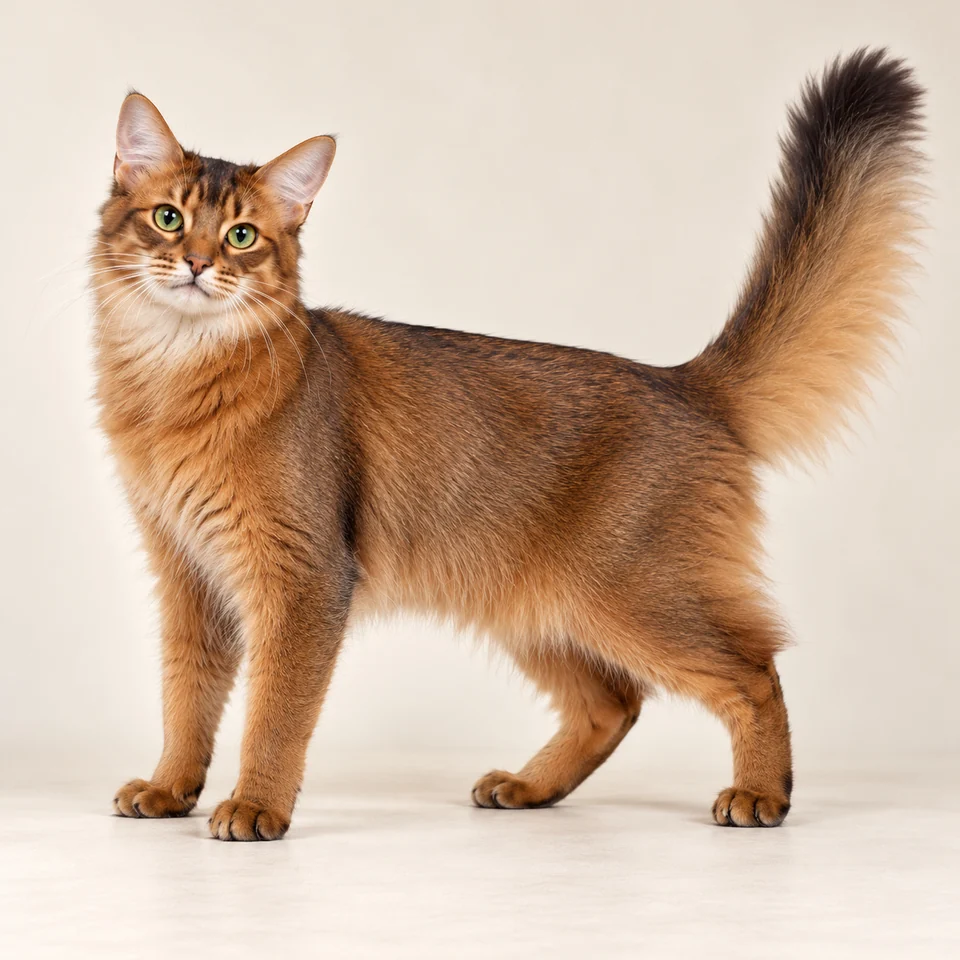
The Somali is the longhaired variety of the Abyssinian.
It has the Aby's vibrant color and high energy. A full ruff, a soft silky coat and a bushy tail. It is often compared to a fox. Somalis are active, curious, bold and affectionate.
Source:CFA
Quick facts
- Where it beganCFA
- Longhair kittens appeared among Abyssinians; the breed was developed from them. The name comes from Somalia, the country that borders Abyssinia (now Ethiopia).
- When it beganCFA
- Mid-1960s (Evelyn Mague's 'George', one of the first documented longhair Abyssinians)
- Coat lengthCFA
- Longhair; the standard asks for a medium-length coat
- Coat feelCFATICA
- Very soft, extremely fine and double coated; the denser the better. It resists matting and tangles.
- WeightTICA
- It is a medium sized cat. Males weigh 8–10 lb and females 6–7 lb.
- LifespanCFATICA
- Life expectancy is 10 to 19+ years. Most breeders will help you learn how to care for your cat to ensure a long life.
- Fully grownCFA
- The Somali is very slow to show mature ticking. Judges make allowances for kittens and young cats. No age is given.
- CFA statusCFA
- Championship (since 1979)
Appearance
Somalis are medium-sized, solid and muscular.
Each hair has several bands of color. The coat is longer on the ruff, tummy and britches. The tail is full and plumed. They have large, flaring ears and almond-shaped eyes.
Source:CFA
Colors and patterns
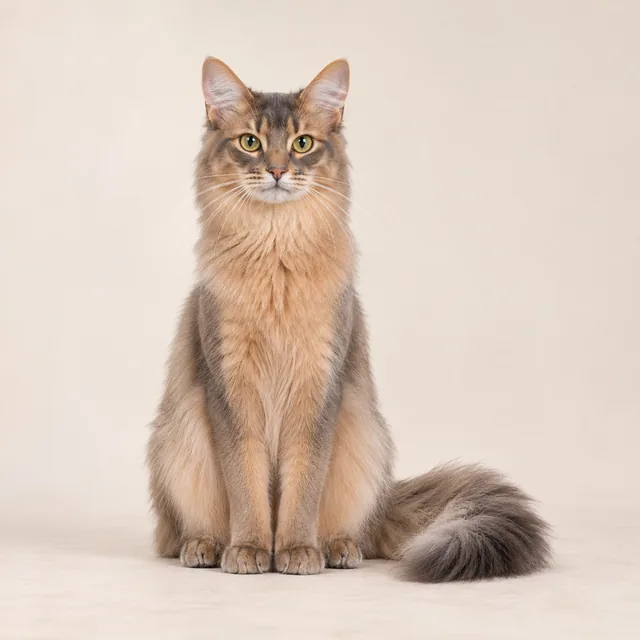
Ticked coat in the same colors as the Abyssinian. One registry accepts four colors: ruddy, cinnamon, blue and fawn. The other limits colors to eumelanistic colors in the agouti pattern, in Tabby and Silver/Smoke divisions.
Personality
Somalis are active, curious and bold.
They are smart enough to learn to open a cupboard door. They have a very sweet side. They show love with head butts and kneading. Some even rearrange your hair.
Source:CFA
With their people
Somalis follow their people from room to room. They often match your mood. They may purr at your feet while you work. They burst with energy when you get active.
Source:CFA
Voice
Somalis are good at communicating with people, but it may not be with their voice. Their body language makes it clear when they want attention, play or food.
Source:CFA
Living with a Somali
Somalis are happiest with interactive play with another pet or a human.
Source:CFA
Activity
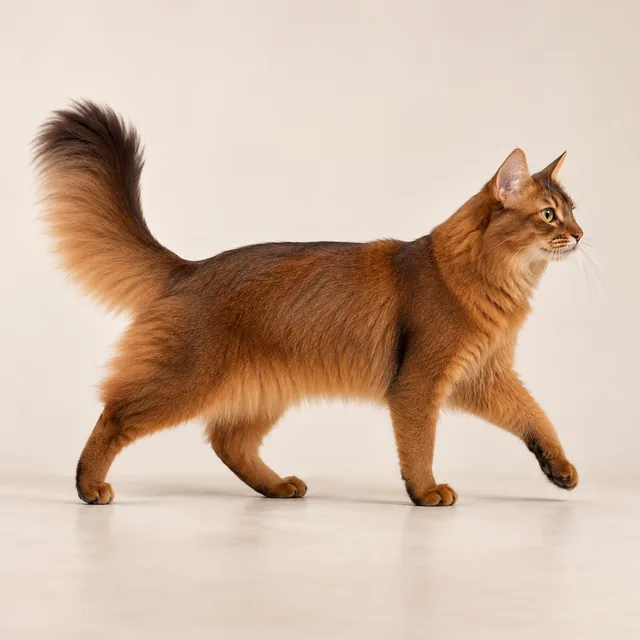
Given plenty of toys, Somalis can amuse themselves for hours. They are happiest with interactive play with a person or another pet. They move swiftly on tiptoe, like a fox chasing prey. The prey is more likely a feather toy.
Source:CFA
Care
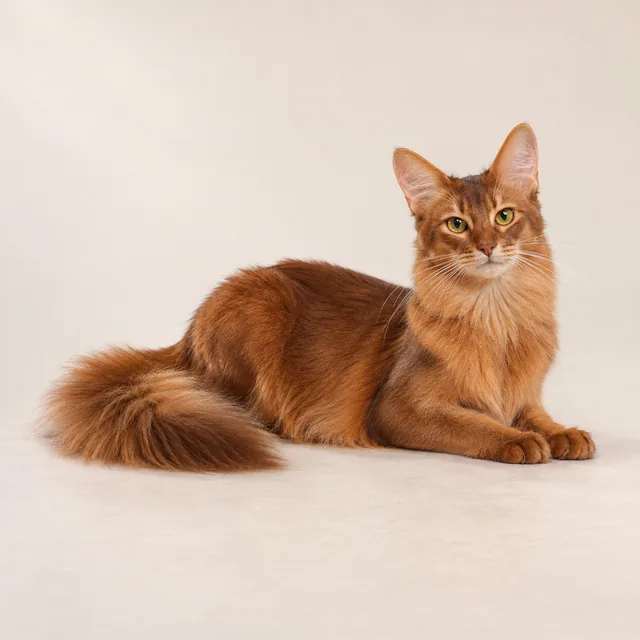
Somalis are not hard to groom despite longer coats.
The coat resists matting. Weekly combing to remove dead hair and control shedding are recommended. Regular brushing is not required, but many Somalis like it.
Baths
Somalis generally need no bath unless shown. Some have oily coats that clump near the tail base and spine. Then a bath helps; ask your breeder about products. Baths are needed only if the cat gets into something messy.
Nails, ears, eyes and teeth
Clip claws every other week or more. Some lines are prone to gingivitis. Start brushing teeth early with a vet-approved pet toothpaste.
Source:TICA
Health
Some lines are prone to dental issues like gingivitis.
Testing now lets breeders remove carriers of inherited diseases that once caused anemia and blindness. Some other health issues cannot be found by genetic testing. Asking your breeder about any history of renal amyloidosis in the lines.
Screening
Genetic testing lets breeders remove carriers of inherited diseases that once caused anemia and blindness. Some issues cannot be screened by genetic testing. Asking your breeder about any renal amyloidosis in the lines.
Source:CFA
CFA health notes
Genetic testing removes carriers of inherited diseases that once caused anemia and blindness. Renal amyloidosis cannot be screened genetically; ask about it in the lines. Most breeders help new owners learn care for a long life.
Source:CFA
This is what CFA and TICA say about the breed. It is not a health promise for any kitten. TrueKitten verifies breeder identities and documents, but that does not guarantee a kitten's health. Ask the breeder for test results and talk to your vet.
History
No one knows exactly how the longhair gene entered the Abyssinian.
Some estimates say barely a dozen Abys survived after World War II. Longhair kittens were quietly placed as pets at first. In the mid-1960s, Evelyn Mague produced 'George', one of the first documented longhair Abyssinians. She named the breed 'Somali' after Somalia, which borders Abyssinia (now Ethiopia). Somalis were first registered in 1976. They reached championship status in 1979.
Source:CFA
Did you know?
- Somalis are often compared to a fox, with full, plumy tails held high.
- Somalis tend to be fascinated with water and may turn on a faucet to watch it drip.
- The name comes from Somalia, which borders Abyssinia, now Ethiopia.
- Somalis are very slow to show their mature ticking.
Source:CFA
For breeders
Details from the CFA and TICA show standards. Cat show judges use them. They do not rate a kitten as a pet.
What the show standards ask for
- Well proportioned medium to large cat, firm muscles, lithe, alert and lively.
- Head: modified, slightly rounded wedge with gentle contours.
- Muzzle: no snippiness, foxiness or whisker pinch; jowls allowed in adult males.
- Ears: large, alert, moderately pointed, broad and cupped; inner-ear tufts desirable.
- Eyes: almond shaped, large, brilliant, expressive; dark lidskin with light surround.
- Body: medium long, lithe, graceful; slightly arched back; between cobby and svelte.
- Tail: full brush, thick at base, slightly tapering.
- Coat: very soft, extremely fine, double coated, medium length; ruff and breeches preferred.
Source:CFA
Points show how much each part counts when a judge scores a cat at a show. They add up to 100.
CFA colors and patterns
Ruddy, cinnamon, blue and fawn, all ticked; any other color disqualifies. The color-class list also shows an AOV class (reference only).
Source:CFA
CFA allowances
- Jowls allowed in adult males.
- Slightly shorter coat permitted over the shoulders.
- Shading allowed up the hocks and at the point of the elbow.
- Allowances for kittens and young cats, which are slow to show mature ticking.
Source:CFA
CFA penalties
- Color faults: cold grey or sandy tone; mottling or speckling on unticked areas.
- Pattern faults: necklaces, leg bars, tabby stripes or bars on body; lack of desired head and tail markings.
- Black roots on body.
Source:CFA
CFA disqualifications
- White locket or groin spot, or white anywhere but upper throat, chin and nostril area.
- Any skeletal abnormality.
- Wrong color paw pads or nose leather.
- Any color other than the four accepted colors.
- Unbroken necklace.
- Incorrect number of toes.
- Kinks in tail.
Source:CFA
Common questions
The Somali is the longhaired variety of the Abyssinian, in the same colors. No one knows exactly how the recessive longhair gene entered the Abyssinian gene pool. At some shows both are judged under one Abyssinian Breed Group standard (AB/SO).
Life expectancy is 10 to 19+ years. Most breeders will help you learn how to care for your cat to ensure a long life.
Somalis are not hard to groom despite longer coats. The coat resists matting. Weekly combing to remove dead hair and control shedding are recommended. Regular brushing is not required, but many Somalis like it.
Somalis generally need no bath unless shown. Some have oily coats that clump near the tail base and spine. Then a bath helps; ask your breeder about products. Baths are needed only if the cat gets into something messy.
Given plenty of toys, Somalis can amuse themselves for hours. They are happiest with interactive play with a person or another pet. They move swiftly on tiptoe, like a fox chasing prey. The prey is more likely a feather toy.
Somalis are active, curious and bold. They are smart enough to learn to open a cupboard door. They have a very sweet side. They show love with head butts and kneading. Some even rearrange your hair.
Some lines are prone to dental issues like gingivitis. Testing now lets breeders remove carriers of inherited diseases that once caused anemia and blindness. Some other health issues cannot be found by genetic testing. Asking your breeder about any history of renal amyloidosis in the lines.
Genetic testing lets breeders remove carriers of inherited diseases that once caused anemia and blindness. Some issues cannot be screened by genetic testing. Asking your breeder about any renal amyloidosis in the lines.
Questions to ask a breeder
- Which genetic tests have the parents had, and may I see the results?
- Is there any history of renal amyloidosis in your lines?
- Have your cats had gum problems such as gingivitis? Have you started tooth brushing with this kitten?
- Does this kitten's line tend to have an oily coat?
- How much play and company is this kitten used to?
Sources
Every fact on this page comes from the two cat registries, CFA and TICA.
Last updated