
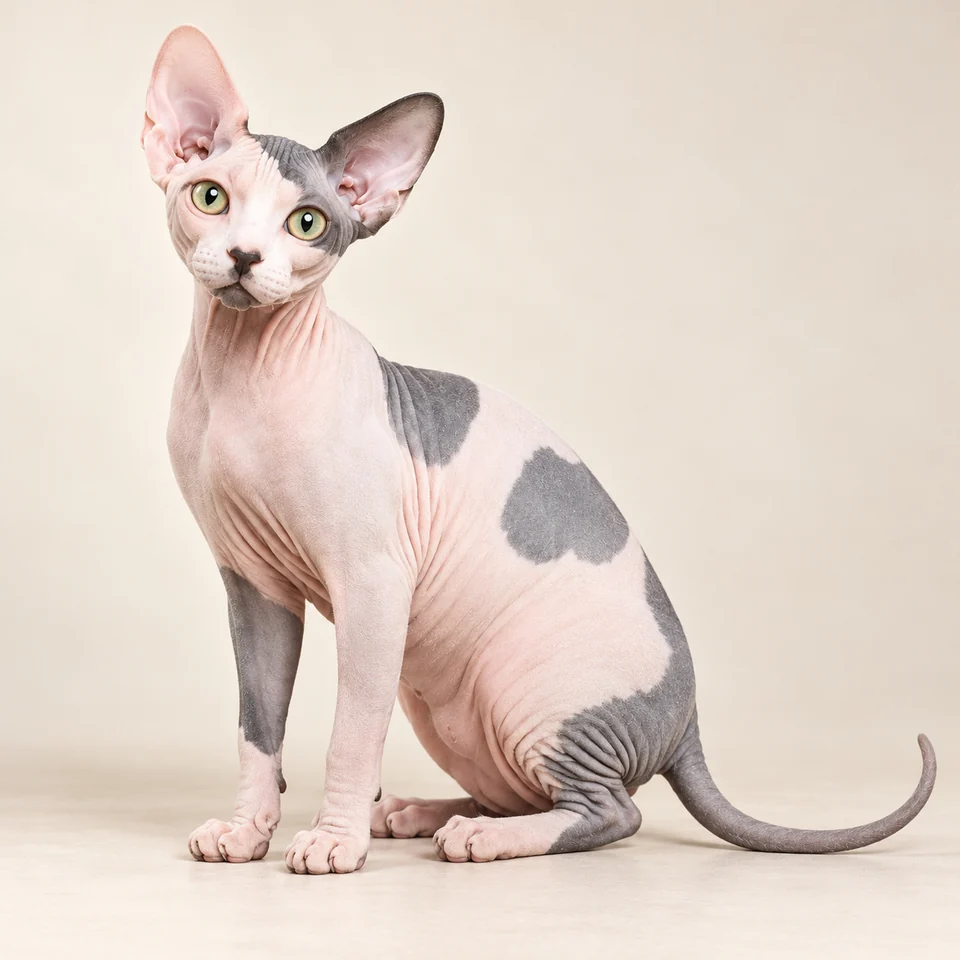
The Sphynx is known for looking hairless.
The breed is not always totally hairless. Short hair is often on the nose, ears and tail. Fans compare the skin to warm suede. Sphynx are curious, outgoing and very intelligent. They crave attention and love to stay close to their people.
Source:CFA
Quick facts
- Where it beganCFA
- Toronto, Canada (first hairless kitten). Two American-born hairless cats from Minnesota (1975) joined the gene pool.
- When it beganCFA
- 1966 (spontaneous mutation first occurred)
- SizeCFATICA
- Medium (medium size with surprising weight for its size). The cat should not be small or dainty.
- Coat lengthCFA
- Hairless (appears hairless; not completely hairless). At shows the breed may be filed under the "Shorthair" coat-length label.
- Coat feelCFATICA
- Skin like a soft peach or a smooth nectarine; may have soft peach-like fuzz. It feels like chamois.
- WeightCFATICA
- Adult Sphynx weigh 6–12 lb: females 7–10 lb and males 8–12 lb. Males may be up to 25 percent larger if proportions stay correct.
- LifespanTICA
- Life expectancy is 7–15 years.
- CFA statusCFA
- Championship (since 2002)
Appearance
Sphynx are medium-sized, sturdy cats with lots of visible wrinkles.
They have a large, rounded belly. Wrinkles on the head can give a worried or curious look. The eyes are lemon-shaped. The ears are large and bat-like. They have thick paw pads and long, finger-like toes. The skin can be fully bare or covered with soft, peach-like fuzz.
Source:CFA
Body
Medium-length, hard, muscular body with a broad rounded chest, full round abdomen and well-rounded rump; medium boning.
Source:CFA
Colors and patterns
All colors and patterns are accepted. Sun exposure intensifies all colors, and that color and pattern should not affect judging.
Eye colors
All eye colors are accepted (no points for eye color; should harmonize with coat/skin color). Pointed pattern: vivid blue; mink pattern: aqua.
Source:CFA
About this variety
The hairless gene is recessive, so coated Sphynx are sometimes born. They have the same people-centered personality. Coated Sphynx are registered for breeding only.
Source:CFA
Personality
Sphynx are curious, outgoing, very intelligent and anything but shy.
Their needy nature is not for everyone. Owners who respond to it get devoted companionship. The Sphynx is sweet-tempered and lively.
With their people
Sphynx crave attention and affection. They often follow you from room to room. They do not do well if left alone for long. Future owners may want to think about a pair instead of one cat.
Source:CFA
Lap time
Sphynx are "body heat magnets." They will spend hours glued to your side to soak up your warmth.
Source:CFA
Being held
The Sphynx is amenable to handling. The show standard says this is true "above all." The skin is delicate and not suited to rough play.
Voice
A Sphynx tells you its needs very clearly, usually attention or food. It keeps up a stream of steady chatter. Sphynx are not always loud. But they should not be thought of as quiet.
Source:CFA
Living with a Sphynx
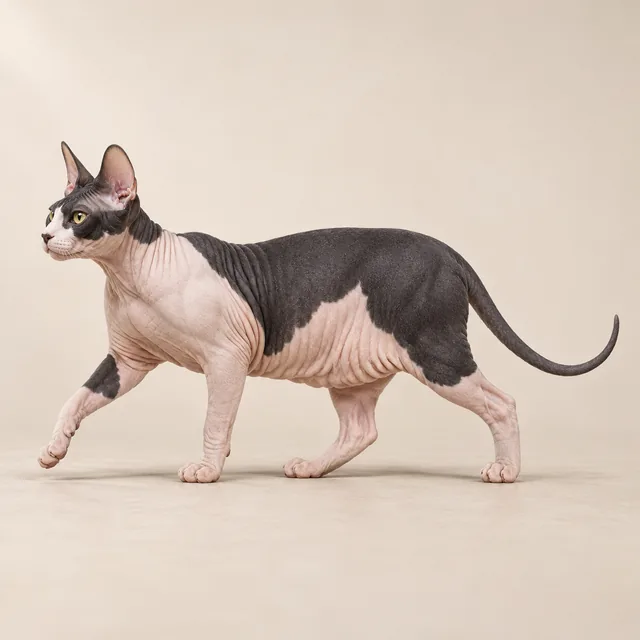
Sphynx are very popular with children.
Care
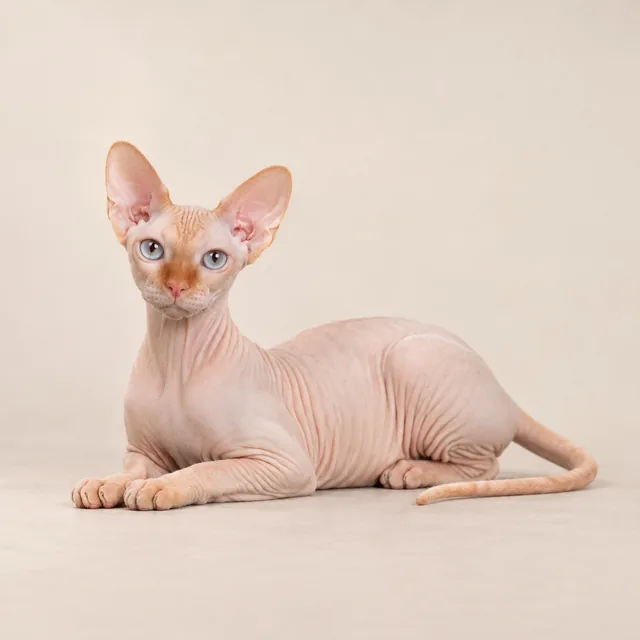
Skin texture and the amount of hair can vary.
Some short hair is usually on the nose, ears and tail. Seasonal and hormonal changes may also affect hair growth. The skin is very oily and needs regular bathing.
Source:CFA
Baths
Sphynx have very oily skin that needs regular bathing. Bathing helps reduce allergens on the skin. Bathing too much can upset the skin's natural pH balance. The skin may then make extra oil (sebum) to balance itself. No one bath schedule fits every cat.
Skin care
Sphynx skin is delicate and not suited to rough play. Sphynx are sometimes prone to skin conditions such as urticaria pigmentosa. Sun exposure will intensify all colors.
Source:CFA
Heat and cold
The lack of coat makes the cat feel quite warm to the touch. Sphynx are "body heat magnets" that stay close to people. Kittens can have breathing (respiratory) issues, due to lack of hair.
Nails, ears, eyes and teeth
The Sphynx needs weekly nail trimming, eye cleaning and dental care. Ear wax should be cleaned out gently each week.
Source:TICA
Health
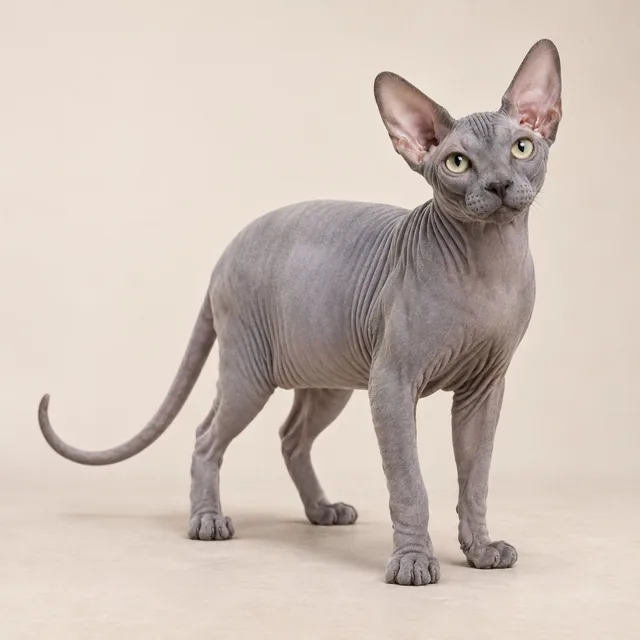
The Sphynx is generally a very robust breed.
There are some breed health issues to know about. These are breathing (respiratory) issues in kittens due to lack of hair, and hypertrophic cardiomyopathy (HCM), a form of heart disease. They also include hereditary myopathy, which affects muscle function, and sensitive digestive systems. Sphynx are sometimes also prone to skin conditions such as urticaria pigmentosa, and to periodontal disease.
Source:CFA
Screening
Testing for conditions such as hypertrophic cardiomyopathy (HCM) has been key. It has helped keep a healthy, diverse gene pool. Breeders keep working to manage health concerns.
Source:CFA
CFA health notes
"Breed Future": generally a very robust breed; breed-specific issues include respiratory issues in kittens due to lack of hair, hypertrophic cardiomyopathy, hereditary myopathy and sensitive digestive systems; sometimes also prone to urticaria pigmentosa and periodontal disease. HCM testing has helped maintain a healthy, diverse gene pool.
Source:CFA
This is what CFA says about the breed. It is not a health promise for any kitten. TrueKitten verifies breeder identities and documents, but that does not guarantee a kitten's health. Ask the breeder for test results and talk to your vet.
History
Today's Sphynx come from a natural mutation first seen in 1966.
That year a domestic cat in Toronto, Canada, had a hairless kitten. The trait was a natural recessive gene. Over 30 years, breeders crossed to normal-coated cats and then back to hairless cats. In 1975, two American-born cats with the same mutation appeared in Minnesota. They were named Epidermis and Dermis. They were bred to American Shorthairs and Devon Rex. The Sphynx was accepted for registration in 1998 and for Championship status in 2002.
Source:CFA
Did you know?
- Two hairless cats born in Minnesota in 1975 were named Epidermis and Dermis.
- The Sphynx can claim to be the first Canadian cat breed.
- Sphynx have long, finger-like toes, "perfect for kneading and making biscuits."
- The thick paw pads give the look of walking on "air cushions."
- A freshly bathed Sphynx is unlikely to spark severe allergy symptoms, but stresses this does not add up to a low-allergen cat.
For breeders
Details from the CFA and TICA show standards. Cat show judges use them. They do not rate a kitten as a pet.
What the show standards ask for
- Head: modified wedge, slightly longer than wide, with prominent cheekbones and a distinct whisker break.
- Ears: large to very large. Both want them broad at the base, open and upright.
- Eyes: large, rounded lemon shape, set at least one eye width apart and slanting toward the outer corner of the ear.
- Body: medium length, hard and muscular, broad rounded chest and full round abdomen, as if having eaten a large meal, but not fat.
- Legs and feet: hind legs slightly longer than front; oval paws with long toes; thick paw pads.
- Tail: whip-like, tapering to a fine point; a lion tail (puff of hair on tip) is accepted at some shows.
- Coat/skin: appearance of hairlessness; short fine hair allowed on set areas such as ears, tail, feet and scrotum; the bridge of the nose should be coated or show some fuzz.
- Wrinkles: wrinkled skin is desirable, especially around the muzzle, between the ears and around the shoulders; adults should keep as many wrinkles as possible without affecting normal functions.
- Temperament: sweet-tempered, lively and amenable to handling (both standards).
Points show how much each part counts when a judge scores a cat at a show. They add up to 100.
CFA colors and patterns
All colors and patterns, in any combination, found in felines. These include solids (white, black, blue, red, cream, chocolate, lavender, cinnamon, fawn), classic/mackerel/spotted/patched tabby, tortoiseshell and dilutes, calico and van calico, bi-color and van bi-color, pointed and mink patterns, sable, champagne, platinum, and OSC (Other Sphynx Colors). Color classes: Solid; Bi-Color; Other Sphynx Colors.
Source:CFA
CFA allowed outcrosses
American Shorthair, Devon Rex, Domestic Shorthair/Domestic Sphynx Outcross; Sphynx born on or after December 31, 2033 may have only Sphynx parents (reference information, not an official part of the show standard).
Source:CFA
CFA allowances
White lockets, buttons, or belly spots are allowed. Allowance for heavy neck musculature in adult males. No points for eye color; all eye colors accepted. Color and pattern should not affect judging.
Source:CFA
CFA penalties
Hair other than described. Delicate or frail appearance. Thin abdomen, thin rump, or narrow chest. Bowed front legs. Resembling Devon Rex, Cornish Rex or Oriental body types. Excessive wrinkles that distort the head and/or eye structure and shape. Head shapes wider than long.
Source:CFA
TICA penalties
Overall small cat. Body too thin, frail-appearing, delicate or fine-boned; too cobby or foreign. Lack of wrinkles on the head. Straight profile, narrow head. Non-amenable disposition. Significant amounts of hair above the ankle.
Source:TICA
CFA disqualifications
Kinked or abnormal tail. Structural abnormalities, including but not limited to curled ears, folded ears, any shortened tail length and/or tail structural change, short legs (achondroplasia), polydactyly. Aggressive behavior endangering the judge.
Source:CFA
TICA disqualifications
Withhold all awards: any indication of wavy hair or suggestion of the Devon Rex, or Cornish Rex in molt. Disqualify: any evidence of depilation, plucking, shaving, clipping or other hair removal; inability to handle; any structural mutation, including but not limited to curled ears, any form of bobtail, short legs (achondroplasia), polydactyl. Also the general Show Rules Article Sixteen disqualifications listed in the standard (e.g. biting, intent to deceive, missing testicles in adult whole males, extra toes, total blindness, markedly smaller size, sternum depression).
Source:TICA
CFA breeding notes
Allowable outcross breeds: American Shorthair, Devon Rex, Domestic Shorthair/Domestic Sphynx Outcross. Sphynx born on or after December 31, 2033 may have only Sphynx parents. Coated Sphynx are registered for breeding only. (This is reference information, not an official part of the show standard.)
Source:CFA
Common questions
Skin texture and the amount of hair can vary. Some short hair is usually on the nose, ears and tail. Seasonal and hormonal changes may also affect hair growth. The skin is very oily and needs regular bathing.
Sphynx have very oily skin that needs regular bathing. Bathing helps reduce allergens on the skin. Bathing too much can upset the skin's natural pH balance. The skin may then make extra oil (sebum) to balance itself. No one bath schedule fits every cat.
Adult Sphynx weigh 6–12 lb: females 7–10 lb and males 8–12 lb. Males may be up to 25 percent larger if proportions stay correct.
Life expectancy is 7–15 years.
The Sphynx is generally a very robust breed. There are some breed health issues to know about. These are breathing (respiratory) issues in kittens due to lack of hair, and hypertrophic cardiomyopathy (HCM), a form of heart disease. They also include hereditary myopathy, which affects muscle function, and sensitive digestive systems. Sphynx are sometimes also prone to skin conditions such as urticaria pigmentosa, and to periodontal disease.
Sphynx crave attention and affection. They often follow you from room to room. They do not do well if left alone for long. Future owners may want to think about a pair instead of one cat.
Sphynx are very popular with children. Children should be old enough to know the skin is delicate. The skin is not suited to rough play.
A Sphynx tells you its needs very clearly, usually attention or food. It keeps up a stream of steady chatter. Sphynx are not always loud. But they should not be thought of as quiet.
Questions to ask a breeder
- How have the parents been tested or screened for hypertrophic cardiomyopathy (HCM), and may I see the results?
- Have any cats in your lines had hereditary myopathy, breathing problems as kittens, or skin conditions such as urticaria pigmentosa?
- What bathing routine is this kitten used to, and how often do you bathe your adults?
- What food does the kitten eat now, given that the breed can have a sensitive digestive system?
- Does this kitten live with other cats, and would you suggest a pair for my home?
- Is this kitten hairless or coated, and is it sold as a pet or for breeding?
Sources
Every fact on this page comes from the two cat registries, CFA and TICA.
Last updated