
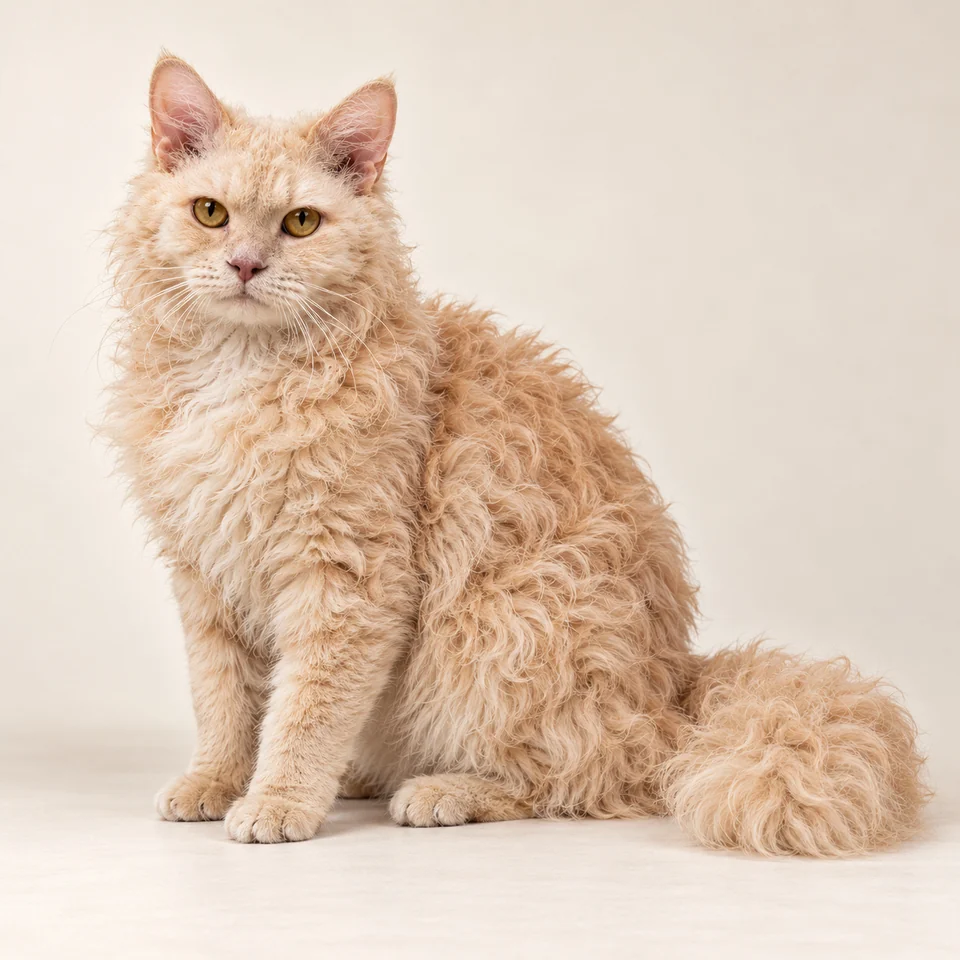
The Tennessee Rex is a curly-coated cat with a satin sheen.
The coat can sparkle in the sunlight. The breed first appeared on its own in Tennessee in 2004. It is gentle and very affectionate. It is a social cat that seeks close company with its family.
Source:TICA
Quick facts
Appearance
The show standard allows molting in kittens and young adults.
Source:TICA
Personality
Care
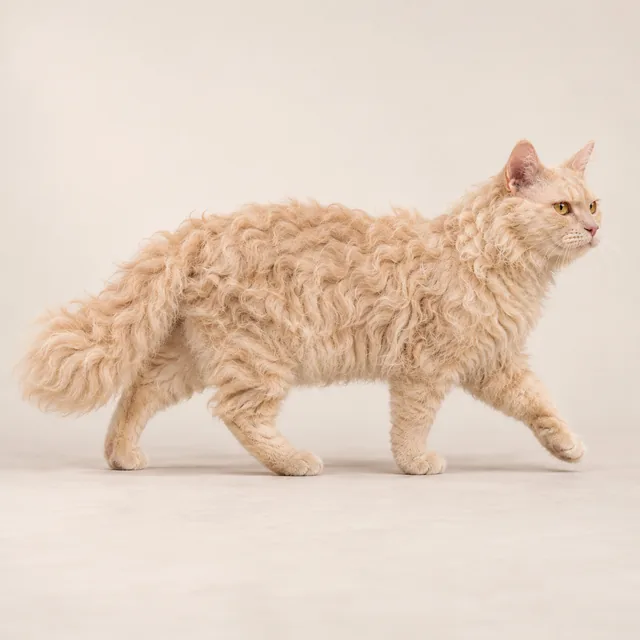
The coat should not mat and is easy to groom.
Source:TICA
History
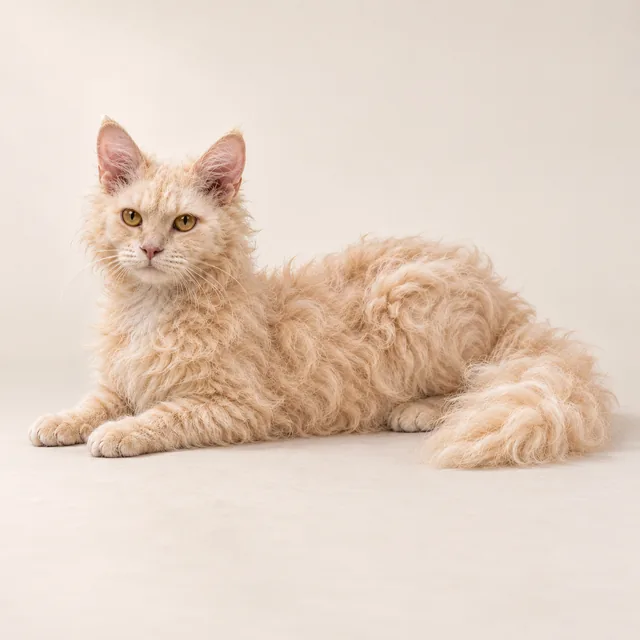
The Tennessee Rex is a natural mutation.
It appeared on its own in the Tennessee Valley in 2004. The satin and the curl (rexing) have consistently been passed on as simple recessive genes. It is listed as a Preliminary New Breed.
Source:TICA
Did you know?
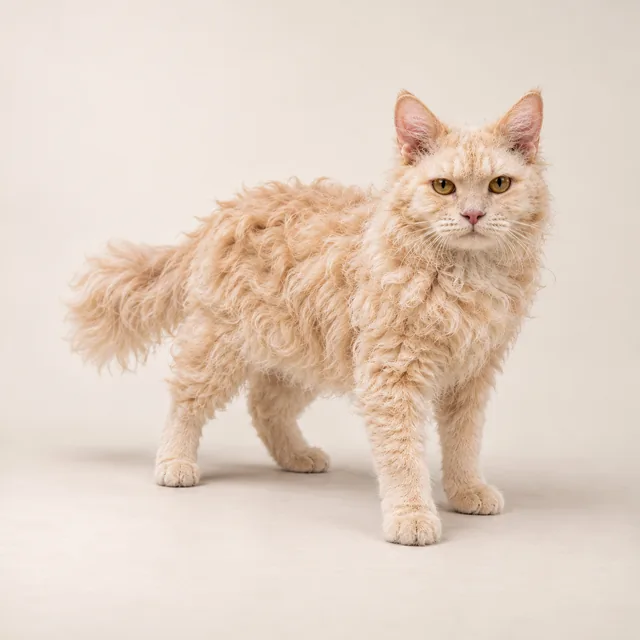
- The satin coat gives a metallic shine and sparkle in the sunlight.
- Both the satin and the curl are inherited as simple recessive genes.
Source:TICA
For breeders
Details from the TICA show standard. Cat show judges use it. It does not rate a kitten as a pet.
Points show how much each part counts when a judge scores a cat at a show. They add up to 100.
| Part | Points |
|---|---|
| Head | 36 |
| Body | 27 |
| Coat/Color/Pattern | 37 |
Source:TICA
TICA allowances
- Lockets.
- Molting in kittens and young adults.
- Molting on back of ears and temple region between eyes and ears.
- Straight hair on back and torso.
- Lack of curl in kittens.
Source:TICA
Common questions
Curly from birth, with a satin sheen. The satin gives a metallic shine and sparkle in the sunlight.
The show standard allows molting in kittens and young adults.
The Tennessee Rex is gentle and very affectionate. An earlier version says gentle and loving. It is a social breed. It seeks close companionship with its family.
The coat should not mat and is easy to groom.
The Tennessee Rex is a natural mutation. It appeared on its own in the Tennessee Valley in 2004. The satin and the curl (rexing) have consistently been passed on as simple recessive genes. It is listed as a Preliminary New Breed.
Preliminary New Breed
Questions to ask a breeder
- Can I see photos of the parents' adult coats?
- How did the coats of past kittens change after their first molt?
- Which domestic shorthair or longhair outcrosses are in this kitten's pedigree?
- What health records do you keep for the parents?
- How much time do the kittens spend with your family each day?
Sources
Every fact on this page comes from the cat registry TICA.
Last updated