
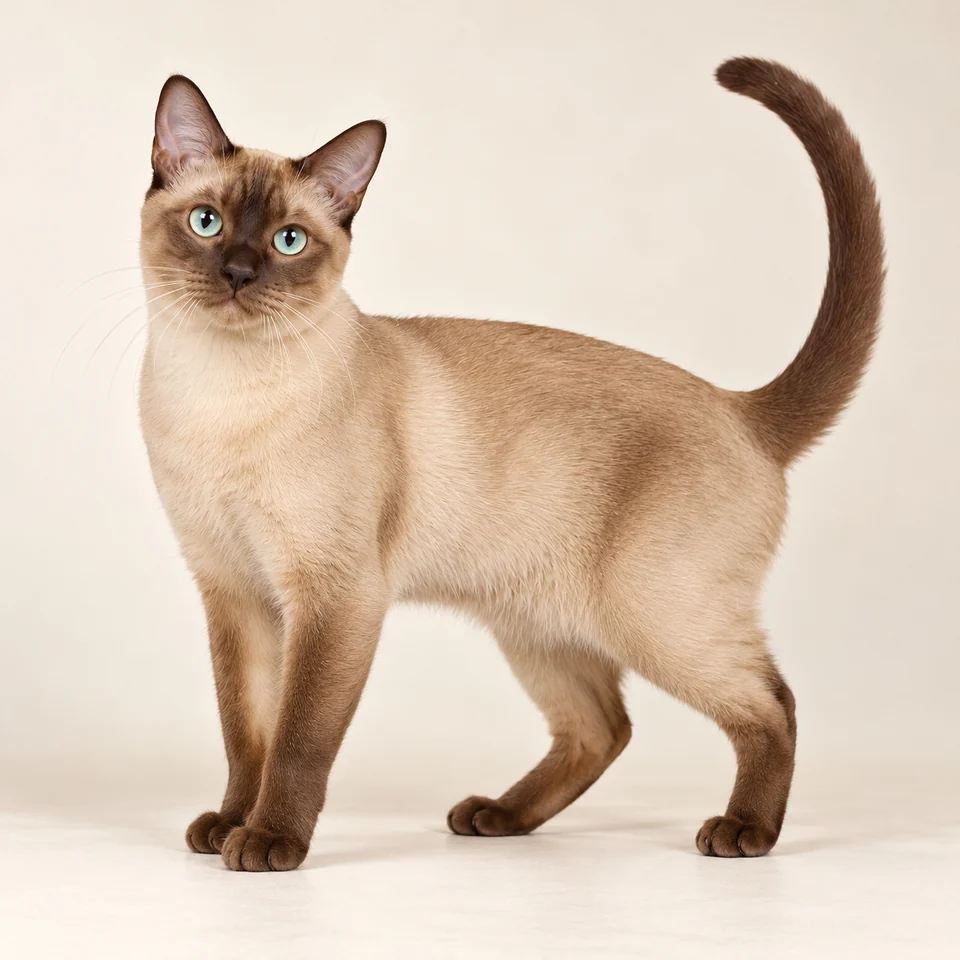
The Tonkinese is a "happy medium."
It was developed from Siamese and Burmese to sit between the two. This is a medium-size cat with a look and personality all its own. It is smart, social and generally quite outgoing. It can be vocal and is people oriented. It comes in mink, solid and pointed patterns, each in four colors.
Source:CFA
Quick facts
- When it beganCFA
- Foundation cat Wong Mau was brought to America in 1930. The breed was first recognized in Canada in 1960.
- Coat lengthCFA
- Shorthair
- Coat feelCFA
- Medium short, close-lying, fine, soft and silky, with a lustrous sheen.
- WeightCFATICA
- Males weigh 8 to 12 pounds and females 6 to 8 pounds. At shows, mature males under 7 pounds and females under 5 pounds count as too small.
- LifespanTICA
- Tonkinese live 12 to 16+ years.
- Fully grownCFA
- Full body color may take up to 16 months to develop, especially in dilute colors. Tonkinese darken with age.
- CFA statusCFA
- Championship (mink since 1984; pointed and solid since 2002)
Appearance
The Tonkinese is a medium cat.
It is neither cobby like the Burmese nor slim like the Siamese. Its dense, muscular body feels surprisingly heavy. The head is a modified wedge with a rounded muzzle. Ears are broad at the base with oval tips. The eyes are an open almond shape. Eye color goes with the pattern: aqua for mink, green for solid and blue for pointed.
Source:CFA
Body
Intermediate type, neither cobby nor svelte; dense and muscular; should feel surprisingly heavy.
Source:CFA
Colors and patterns
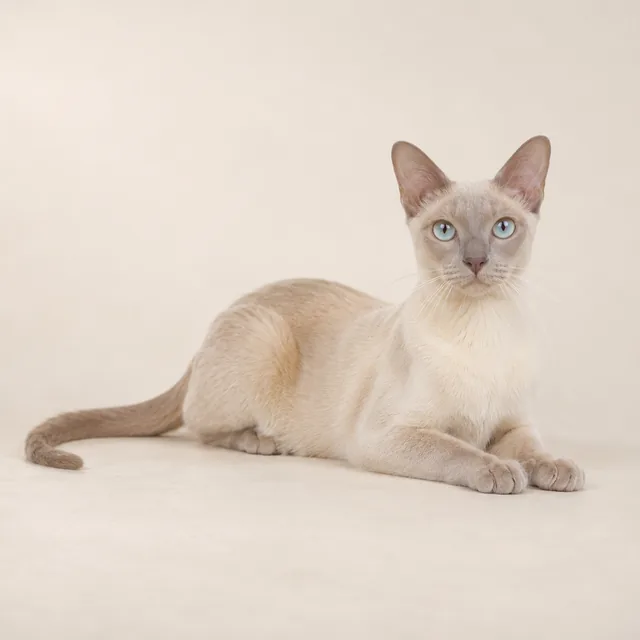
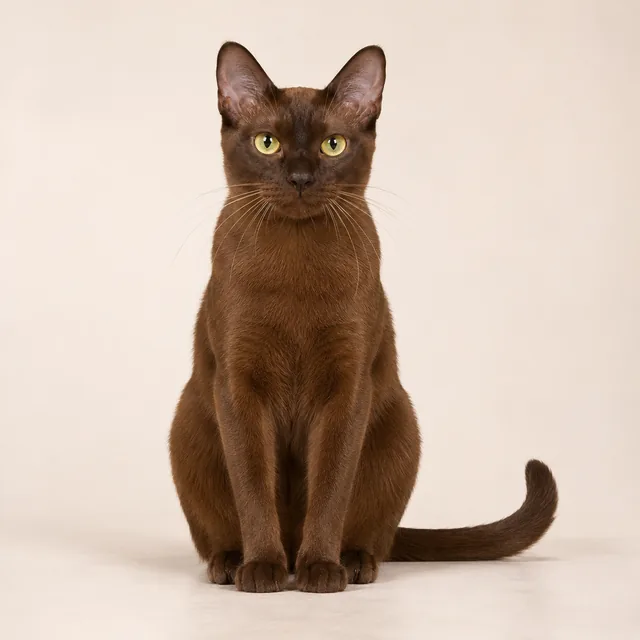
One registry recognizes three patterns: mink, solid and pointed. Each comes in four colors: natural, champagne, blue and platinum. Mink blends darker points gradually into a lighter body. The other lists the categories Sepia, Mink and Pointed, in Solid and Tortoiseshell divisions.
Eye colors
Aqua in mink colors, green to yellow/green in solid colors, blue in pointed colors. Yellow eyes in mink colors are disqualified.
Source:CFA
Personality
Tonkinese are intelligent, gregarious and generally quite outgoing.
They think we were put on earth to love them. They are very sensitive to their owners' moods. A Tonk may show up with a comforting purr when you have had a bad day.
Source:CFA
With their people
A Tonkinese likes to supervise your every activity. It may greet visitors at the door.
Source:CFA
Voice
Tonkinese can be vocal. They talk with meows, purrs and "complete sentences" that expect a quick reply. It is usually very clear what they want.
Source:CFA
Living with a Tonkinese
Tonkinese get along well with dogs, other pets, children and guests.
Source:CFA
Activity
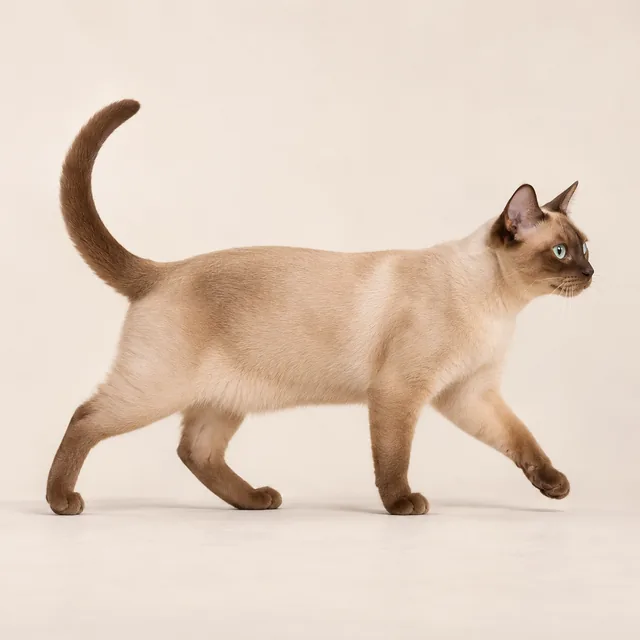
Owners describe Tonkinese as part puppy, part monkey and part elephant. The "elephant" part means running through the house at a noisy gallop. Games range from fetch with a favorite toy to tag with other cats.
Training
Tonkinese have excellent memories. They quickly learn what you don't want them to do. They may still do it while you are at work.
Source:CFA
Care
A rubber brush two or three times a month is recommended.
This keeps shedding down and conditions the silky coat. The flat side of the brush or a soft chamois brings out the sheen. A rubber brush once a week to remove loose dead hair is recommended.
Baths
Bathing is rarely needed unless the cat is being shown. An occasional bath keeps the coat at its best.
Health
Tonkinese are genetically diverse and tend to be robust, healthy cats.
One breed-specific concern is a tendency toward gingivitis in older cats. The breed is generally healthy. But they are more prone to dental disease, feline lower urinary tract disease (FLUTD), inflammatory bowel disease (IBD) and amyloidosis.
Screening
Breeders generally share health and genetic testing information. They remove cats with issues from breeding. Senior Tonkinese should have regular checkups for dental issues.
Source:CFA
This is what CFA and TICA say about the breed. It is not a health promise for any kitten. TrueKitten verifies breeder identities and documents, but that does not guarantee a kitten's health. Ask the breeder for test results and talk to your vet.
History
Most Tonkinese come from one cat, Wong Mau.
She was brought to America in 1930. She was later found to be a natural mink Tonkinese. Bred to a Siamese, she had three kinds of kittens. The solid brown kittens started the Burmese breed. Kittens like Wong Mau were used to make more Tonkinese. Canada recognized the breed in 1960. It was accepted for registration in 1982.
Source:CFA
Recognition dates
- 1960Canada (registry not named) First recognition
- 1982CFA Accepted for registration
- 1984CFA Championship for mink pattern
- 2002CFA Championship for pointed and solid colors
Source:CFA
Did you know?
- Owners call Tonkinese part puppy, part monkey and part elephant.
- Wong Mau, the cat most Tonkinese come from, was also the foundation of the Burmese breed.
- The Tonkinese is a "happy medium" between Siamese and Burmese.
Source:CFA
For breeders
Details from the CFA and TICA show standards. Cat show judges use them. They do not rate a kitten as a pet.
What the show standards ask for
- Overall: intermediate in type, neither cobby nor svelte; alert, active and surprisingly heavy; balance and proportion matter more than size.
- Head: modified slightly rounded wedge, somewhat longer than wide, with high gently planed cheekbones; muzzle blunt, as long as wide, with a slight whisker break.
- Ears: medium, broad at the base with oval tips, set as much on the sides as on the top of the head.
- Eyes: open almond shape, slanted toward the outer edge of the ear; aqua (mink), green to yellow/green (solid), blue (pointed).
- Body: torso medium in length with well-developed muscle without coarseness; abdomen taut and firm.
- Legs and tail: legs fairly slim, hind legs slightly longer; paws more oval than round; tail proportionate and tapering.
- Coat: medium short, close-lying, fine, soft and silky with a lustrous sheen.
Source:CFA
Points show how much each part counts when a judge scores a cat at a show. They add up to 100.
CFA colors and patterns
Mink: natural, champagne, blue, platinum. Solid: natural, champagne, blue, platinum. Pointed: natural, champagne, blue, platinum.
Source:CFA
CFA allowances
Allowance for lighter body color in young cats and less contrast in older cats; full body color may take up to 16 months, especially in dilute colors; tracings connecting mask and ears not required in kittens.
Source:CFA
TICA penalties
Partial: miniaturization is a fault (mature males less than 7 pounds, females less than 5 pounds). Other items were not visible.
Source:TICA
CFA disqualifications
Disqualify: yellow eyes in mink colors; white locket or button; crossed eyes; tail faults.
Source:CFA
CFA breeding notes
Breeders generally share health and genetic testing information and remove cats with issues from breeding programs.
Source:CFA
Common questions
Males weigh 8 to 12 pounds and females 6 to 8 pounds. At shows, mature males under 7 pounds and females under 5 pounds count as too small.
Tonkinese live 12 to 16+ years.
Tonkinese can be vocal. They talk with meows, purrs and "complete sentences" that expect a quick reply. It is usually very clear what they want.
Tonkinese get along well with dogs, other pets, children and guests.
A rubber brush two or three times a month is recommended. This keeps shedding down and conditions the silky coat. The flat side of the brush or a soft chamois brings out the sheen. A rubber brush once a week to remove loose dead hair is recommended.
Tonkinese are genetically diverse and tend to be robust, healthy cats. One breed-specific concern is a tendency toward gingivitis in older cats. The breed is generally healthy. But they are more prone to dental disease, feline lower urinary tract disease (FLUTD), inflammatory bowel disease (IBD) and amyloidosis.
Older Tonkinese tend toward gingivitis. Getting your Tonk used to tooth brushing while young may help prevent it. Start brushing teeth when they are kittens. Keeping nails trimmed and ears cleaned, and giving a tall scratching post are recommended.
One registry recognizes three patterns: mink, solid and pointed. Each comes in four colors: natural, champagne, blue and platinum. Mink blends darker points gradually into a lighter body. The other lists the categories Sepia, Mink and Pointed, in Solid and Tortoiseshell divisions.
Most Tonkinese come from one cat, Wong Mau. She was brought to America in 1930. She was later found to be a natural mink Tonkinese. Bred to a Siamese, she had three kinds of kittens. The solid brown kittens started the Burmese breed. Kittens like Wong Mau were used to make more Tonkinese. Canada recognized the breed in 1960. It was accepted for registration in 1982.
Questions to ask a breeder
- What health and genetic testing information do you share for the parents?
- Have the parents or older relatives had gingivitis or other dental issues?
- Has anyone in this line had urinary tract disease, IBD or amyloidosis?
- Is this kitten mink, solid or pointed, and what eye color should I expect?
- Has the kitten been introduced to tooth brushing yet?
- How has the kitten done with children, dogs or other cats?
Sources
Every fact on this page comes from the two cat registries, CFA and TICA.
Last updated