
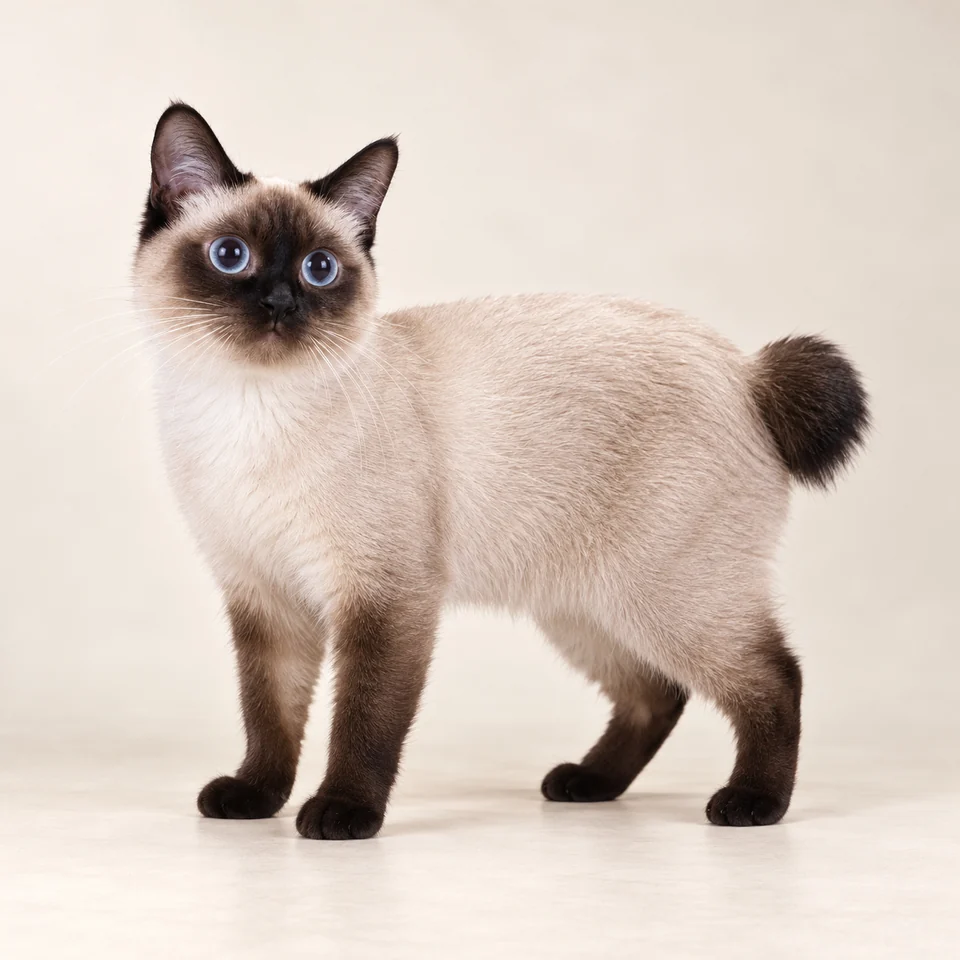
The Toybob is a naturally small cat from Russia with a short, kinked bobtail.
It is one of the smallest known breeds. It keeps a kittenish charm all its life. Large, soulful eyes give it a sweet look. It is affectionate, active, playful and agile.
Source:CFA
Quick facts
- When it beganCFA
- 1983, when the first breeding took place in Russia.
- SizeCFA
- Small. It is one of the smallest known cat breeds. There is little to no size difference between the sexes.
- Coat lengthCFA
- Shorthair and longhair
- Coat feelCFA
- Shorthair: medium-short, soft, moderately plush and slightly crisp. Longhair: semi-long to long, softer, with a thick, plushy feel.
- Fully grownCFA
- Toybobs reach full maturity at 1.5 years. Adults should keep a kitten-like look.
- CFA statusCFA
- Championship (since 2025)
Appearance
Toybobs are small but do not look or feel delicate.
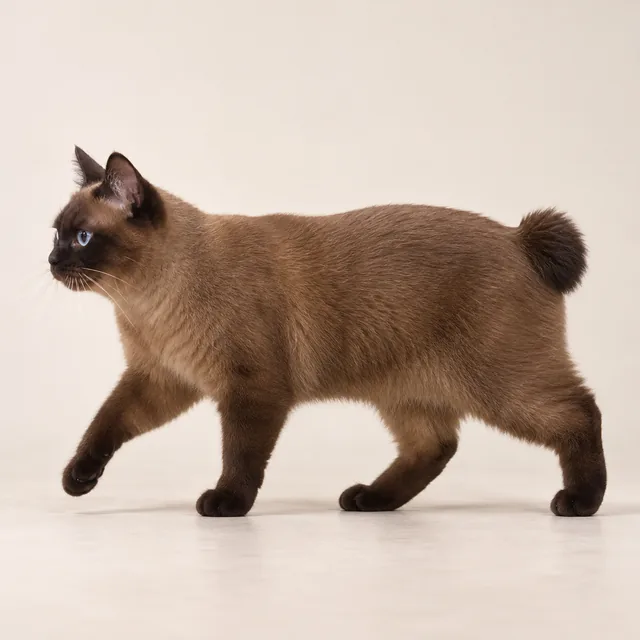
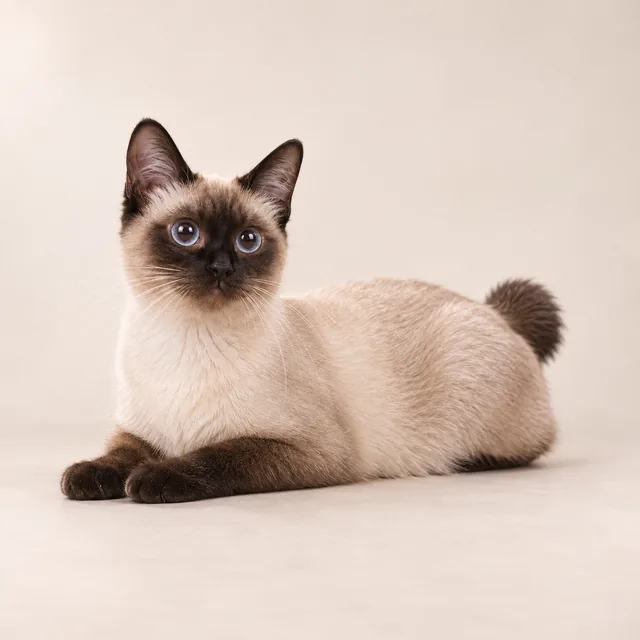
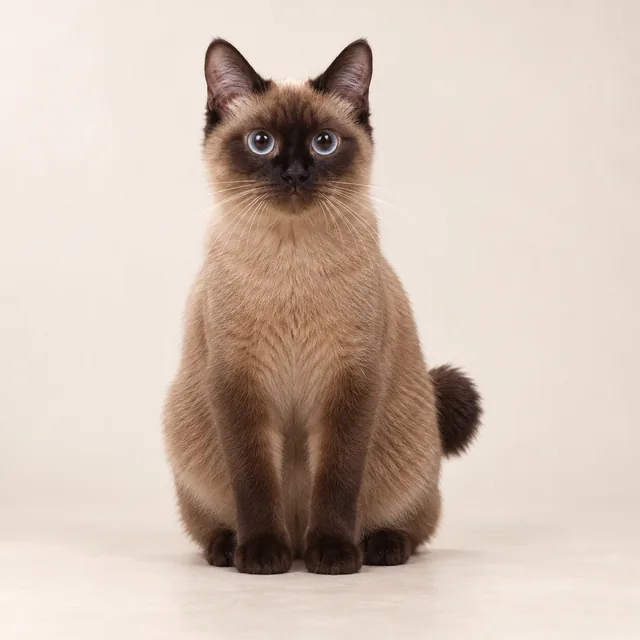
The body is compact and muscular, with strong bones. The head is a modified wedge with a rounded muzzle. Large, round eyes are set well apart. The bobbed tail is at least two vertebrae long. It does not affect the cat's agility or health. The coat can be short or semi-long, and it feels dense and plush.
Source:CFA
Body
Small, compact and muscular, with a broad rib cage and strong boning; should not look or feel delicate.
Source:CFA
Colors and patterns
Any color or pattern is allowed. Toybobs are most often seen in the pointed pattern. Size and shape matter more than color.
Source:CFA
Eye colors
Eye color relates to coat color. Green, aqua, gold, copper, yellow or hazel. Blue only in solid white, calico, bi-color, van and pointed cats. Odd eyes in solid white, calico, bi-color and van.
Source:CFA
Personality
The Toybob is perky, playful, intelligent, docile and affectionate.
It is interactive but not overly active. It has a pleasant temperament and is affectionate and obedient with its people. It is very gentle and easy to handle.
With their people
A Toybob will follow you anywhere with gentle curiosity. It may sleep under the covers with you. They do not like being left alone for long. If no one is home in the day, you may want a pair.
Source:CFA
Voice
Toybobs are not very vocal. They make many sounds, like chirps, trills and purrs, and now and then a meow.
Source:CFA
Living with a Toybob
Care
Toybobs change their coats with the seasons, so get them used to regular grooming.
Health
The breed has a very high level of genetic diversity.
To date, no breed-specific health issues have been identified.
Source:CFA
This is what CFA says about the breed. It is not a health promise for any kitten. TrueKitten verifies breeder identities and documents, but that does not guarantee a kitten's health. Ask the breeder for test results and talk to your vet.
History
The Toybob began in Russia in 1983.
Elena Krasnichenko bred two stray cats with short, kinked or curled tails. One kitten, a male named Kutciy, went to a cat show in 1989. Though fully grown, he was taken for a kitten, which inspired the name "Toybob." Breeders kept working in Russia through the 1990s. The first Toybob came to the United States in 2004. The breed was accepted for registration in 2019 and for championship in 2025.
Source:CFA
Did you know?
- The name came from Kutciy, a grown male who was mistaken for a kitten at a 1989 show.
- "Toy" means a playful small cat and "bob" means the bobbed tail.
- A belly pouch is common in Toybobs and is not a sign of obesity.
Source:CFA
For breeders
Details from the CFA and TICA show standards. Cat show judges use them. They do not rate a kitten as a pet.
What the show standards ask for
- Overall: naturally small, compact, muscular bobtailed cat; must not look or feel refined or delicate; little to no size difference between sexes; full maturity at 1.5 years.
- Head: medium-sized modified wedge with rounded contours, slightly longer than broad; short, gently rounded muzzle; distinctly curved profile with no definite stop.
- Eyes: large to very large, rounded, with a slight upward slant; wide set preferred.
- Ears: medium tall, as tall as wide, rounded tips, slightly tilted forward, one ear width apart.
- Neck and body: short thick neck; small compact torso with a solid chest and broad rib cage; primordial pouch common.
- Tail: bobbed with kinks and curves, from a minimum of two vertebrae to a maximum down to the hock.
- Coat: shorthair medium-short, moderately plush; longhair semi-long to long with heavy ruff and plumed tail; no ear tufts.
- Color: every genetically possible color and pattern; size and shape matter more than color.
Source:CFA
Points show how much each part counts when a judge scores a cat at a show. They add up to 100.
TICA colors
All, including Corin in the Tabby, Tabby and White, Silver/Smoke, and Silver/Smoke and white divisions.
Source:TICA
CFA colors and patterns
Every genetically possible color and pattern. Buttons, lockets and small white spots allowed without penalty and not considered bi-colors.
Source:CFA
TICA allowed outcrosses
Domestic Shorthair and Longhair with similar phenotype and no structural mutation(s). DNA testing is strongly advised to ensure no (foreign) structural mutation(s) and free of all testable genetic diseases.
Source:TICA
CFA allowed outcrosses
Russian Domestic Shorthair and Longhair with similar phenotype and no structural mutation(s).
Source:CFA
CFA allowances
Allowance for longer necks in kittens; somewhat wooly coat in kittens; minimal (shorthair) or moderate (longhair) seasonal changes in coat density, texture and length; buttons, lockets and small white spots without penalty; soundness of color and clarity of pattern unimportant.
Source:CFA
CFA penalties
Penalize: oversized cat; narrow head; small eyes; eyes set too close; narrow muzzle; weak chin; ears too large; longer necks in adults; delicate boning; elongated body; short tight close-lying coat; tufts on ears of Longhaired Toybob.
Source:CFA
CFA disqualifications
Disqualify: crossed eyes; docked tail; complete absence of tail or tail past the hock (without stretching); rapid oscillation of eyes; Dominant Blue Eye (DBE) gene (blue eyes outside pointed, solid white, calico, bi-color or van); disproportionately short legs; extra toes; evidence of wild ancestry, including glitter; undernourished or frail appearance.
Source:CFA
CFA breeding notes
Most breeders are committed to managing the health of their breeding cats and kittens. Breeders are few, so you may have to wait for a kitten.
Source:CFA
TICA standard version
Revised 01-May2026 Toybob Breed Group, 05/01/2026 Revised 01-May-2026 Toybob Breed Group, 05/01/2026
Source:TICA
Common questions
Small. It is one of the smallest known cat breeds. There is little to no size difference between the sexes.
Toybobs reach full maturity at 1.5 years. Adults should keep a kitten-like look.
The Toybob is perky, playful, intelligent, docile and affectionate. It is interactive but not overly active. It has a pleasant temperament and is affectionate and obedient with its people. It is very gentle and easy to handle.
A Toybob will follow you anywhere with gentle curiosity. It may sleep under the covers with you. They do not like being left alone for long. If no one is home in the day, you may want a pair.
Toybobs make a wonderful pet for families with children.
Toybobs are sociable and typically get along well with other pets. They enjoy their company.
Toybobs change their coats with the seasons, so get them used to regular grooming. Brush the shorthair once a week. The longhair rarely mats or tangles. It also needs weekly care, best done with a steel comb.
Toybobs are small but do not look or feel delicate. The body is compact and muscular, with strong bones. The head is a modified wedge with a rounded muzzle. Large, round eyes are set well apart. The bobbed tail is at least two vertebrae long. It does not affect the cat's agility or health. The coat can be short or semi-long, and it feels dense and plush.
The breed has a very high level of genetic diversity. To date, no breed-specific health issues have been identified.
The Toybob began in Russia in 1983. Elena Krasnichenko bred two stray cats with short, kinked or curled tails. One kitten, a male named Kutciy, went to a cat show in 1989. Though fully grown, he was taken for a kitten, which inspired the name "Toybob." Breeders kept working in Russia through the 1990s. The first Toybob came to the United States in 2004. The breed was accepted for registration in 2019 and for championship in 2025.
Questions to ask a breeder
- How long are the tails of the parents and of this kitten?
- How big are the parents as adults?
- What health records do you keep for your breeding cats?
- Which domestic cats, if any, are in this kitten's pedigree?
- Is this kitten used to being alone, or would it do better with a companion?
Sources
Every fact on this page comes from the two cat registries, CFA and TICA.
Last updated