
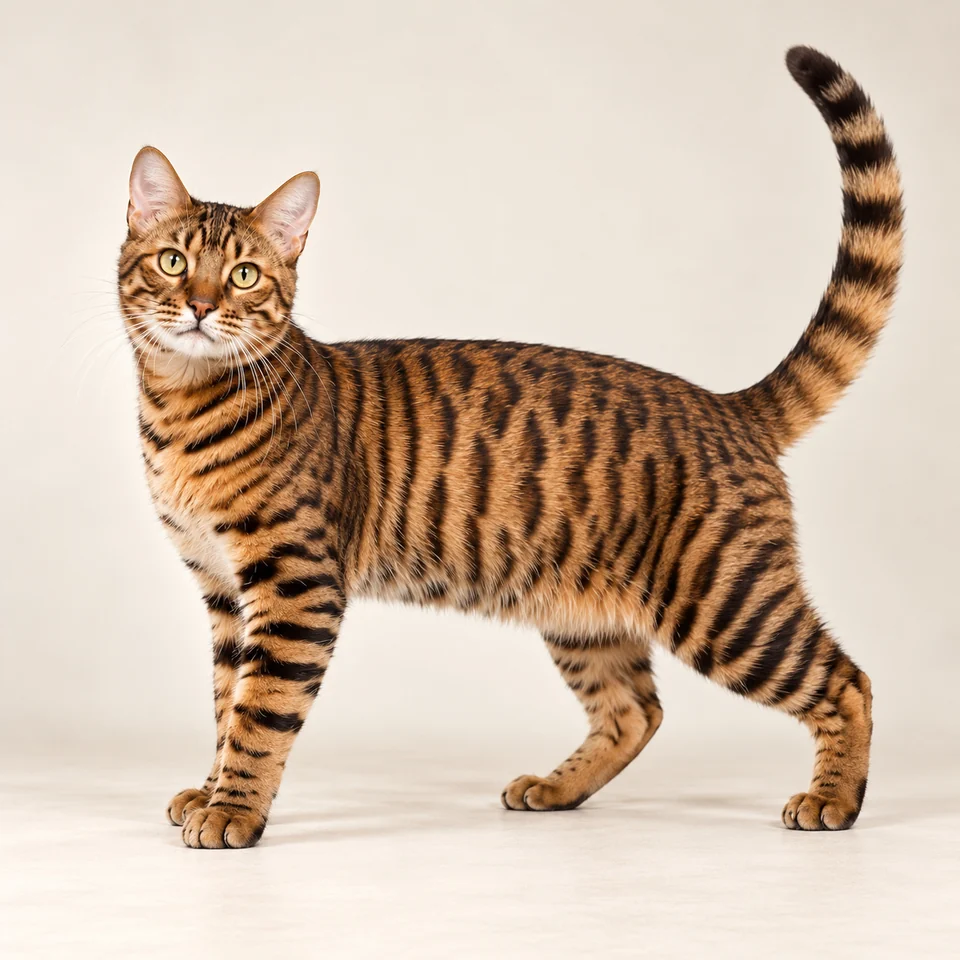
The Toyger is a "designer cat."
It is a loving, glittered, medium-sized shorthair. It is meant to remind you of the big cats in pattern, type, confidence and movement. They are living room tiger replicas. The breed was designed with active city cat owners in mind.
Source:TICA
Quick facts
- SizeTICA
- Medium sized.
- Coat lengthTICA
- Shorthair
- Coat feelTICA
- Short, thick, luxurious and unusually soft; plush but resilient. Some glitter is required. Markings may be a little longer for a sculpted look.
- WeightTICA
- Males weigh 10 to 15 pounds and females 7 to 10 pounds. The show standard allows females to be somewhat smaller and less muscular than males.
- LifespanTICA
- Life expectancy is 13+ years.
- TICA statusTICA
- Championship (since February 2007)
Appearance
The Toyger has a long, strong, muscular body and big, dense bones.
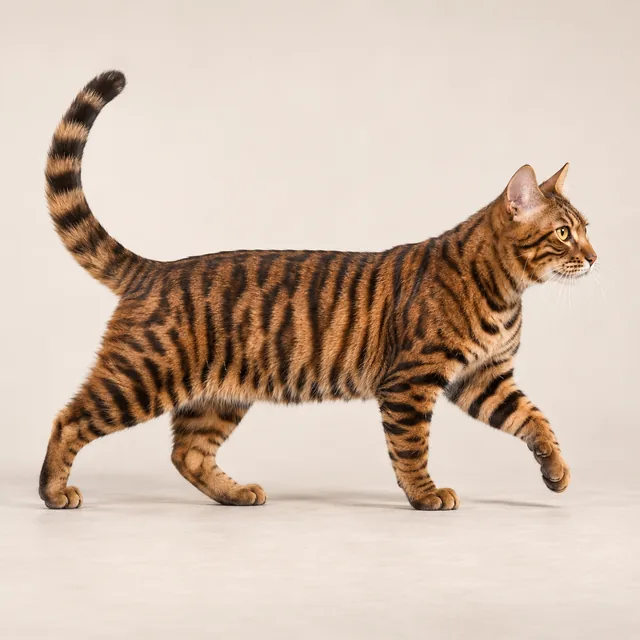
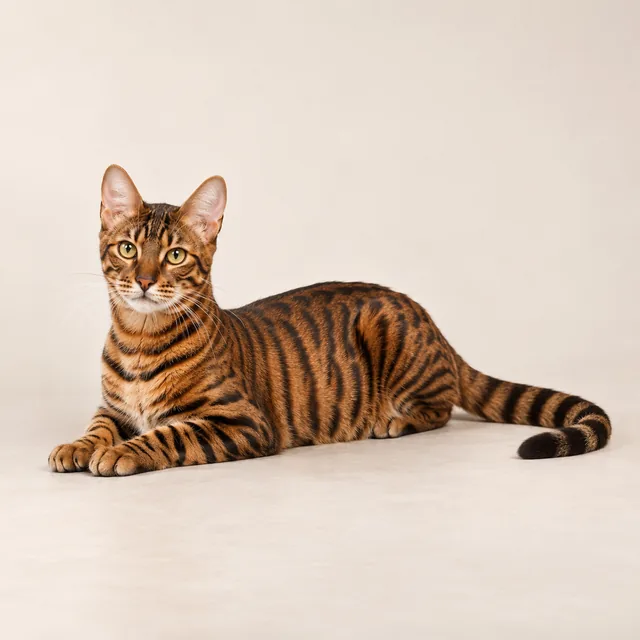
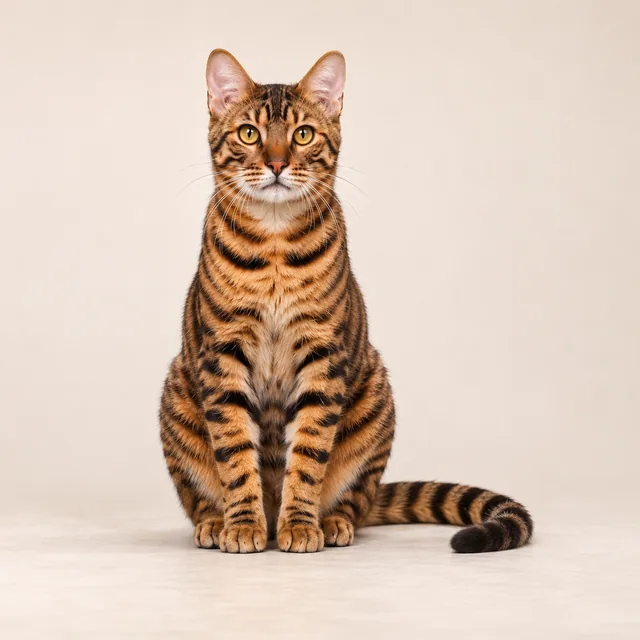
Its long tail is thick like a rope. The head is long and broad. The ears are rounded, and small ears are preferred. The eyes are small to medium and round. The short coat is thick and soft, with glitter. Body stripes should mostly run up and down. On the face, the markings circle around.
Source:TICA
Body
Long, muscular torso with rolling contours; strong and robust but not blocky; very large, dense bone.
Source:TICA
Colors and patterns
One color only: brown mackerel tabby. The stripes are a modified mackerel pattern, dark on a rich, warm ground, with a whited belly. Face markings circle the face, like a tiger.
Source:TICA
Personality
The show standard lists the traits breeders aim for.
Living with a Toyger
Care
Brush or comb them occasionally for most of the year.
Health
The Toyger is considered an overall healthy breed.
But heart murmurs have occurred in the breed. These may point to hypertrophic cardiomyopathy (HCM). Cow hocking has also occurred.
Source:TICA
Health questions to ask
Heart murmurs have occurred in the breed. These may be a sign of hypertrophic cardiomyopathy (HCM). Cow hocking has also occurred.
Source:TICA
This is what TICA says about the breed. It is not a health promise for any kitten. TrueKitten verifies breeder identities and documents, but that does not guarantee a kitten's health. Ask the breeder for test results and talk to your vet.
History
Two cats formed the base of the Toyger breed.
One was a striped domestic shorthair named Scrapmetal. The other was a big-boned Bengal named Millwood Rumpled Spotskin. The Toyger was accepted for registration in 1993. In 2000 it moved up to new breed classes. It gained full championship recognition in February 2007.
Source:TICA
Recognition dates
- 1993TICA Accepted for registration
- 2000TICA Advanced to new breed exhibition classes
- 2007TICA Full championship recognition
Source:TICA
Did you know?
- Toygers are "living room tiger replicas."
- The Toyger is a "designer cat."
- The show standard requires the paw pads and tail tip to be black.
Source:TICA
For breeders
Details from the TICA show standard. Cat show judges use it. It does not rate a kitten as a pet.
What the show standards ask for
- Overall: medium sized, glittered domestic shorthair reminiscent of the big cats in pattern, type, confidence and movement.
- Head: medium-sized, long, broad and deep; muzzle a long inverted heart shape; nose muscular, long and rounded; very strong chin.
- Ears: rounded, small preferred, set as much on the side as on top; lynx tipping undesirable.
- Eyes: small to medium, circular, with gentle hooding; rich deep color preferred.
- Body: long and muscular with rolling contours, strong but not blocky; very large, dense bone; long muscular neck.
- Legs and tail: legs as long in back as in front, long-toed feet; tail very long, muscular and rope-like, set and carried low.
- Coat: short, thick, unusually soft, plush but resilient; some glitter required.
- Pattern: modified mackerel tabby with vertical body stripes, circular facial markings, whited belly, black paw pads and tail tip.
Source:TICA
Points show how much each part counts when a judge scores a cat at a show. They add up to 100.
| Part | Points |
|---|---|
| Head | 35 |
| Body | 25 |
| Coat/Color/Pattern | 40 |
Source:TICA
TICA allowances
Females may be somewhat smaller and less muscular and may have no head ruff; well-muscled males may lack shoulder-to-neck definition; kittens may be somewhat longer coated, less rufused and rather uncoordinated; color may vary somewhat in intensity seasonally.
Source:TICA
TICA penalties
Penalize: classic alignment of mackerel stripes on body (bulls-eye or curved lines); substantially darker markings on points; a dorsal stripe; traditional tabby face markings only; no glitter; narrow nose leather; excessive size or unmuscled bulk; lockets.
Source:TICA
TICA disqualifications
Withhold all awards: ticked fur that obscures markings; belly or chest not marked; tail tip not black; blue eyes. Disqualify: mouth alignment not proper. The Show Rules mandatory disqualifications also apply.
Source:TICA
TICA breeding notes
Excellent health and longevity are important and desirable. They must be treated as a key part of the breed profile, breeding program and genetic makeup.
Source:TICA
Common questions
Males weigh 10 to 15 pounds and females 7 to 10 pounds. The show standard allows females to be somewhat smaller and less muscular than males.
Life expectancy is 13+ years.
The show standard lists the traits breeders aim for. These include a dependable, quiet temperament and a laid-back personality. The cat should be intelligent and easy to train and handle. These traits are an important part of the breed.
One color only: brown mackerel tabby. The stripes are a modified mackerel pattern, dark on a rich, warm ground, with a whited belly. Face markings circle the face, like a tiger.
The Toyger is considered an overall healthy breed. But heart murmurs have occurred in the breed. These may point to hypertrophic cardiomyopathy (HCM). Cow hocking has also occurred.
Two cats formed the base of the Toyger breed. One was a striped domestic shorthair named Scrapmetal. The other was a big-boned Bengal named Millwood Rumpled Spotskin. The Toyger was accepted for registration in 1993. In 2000 it moved up to new breed classes. It gained full championship recognition in February 2007.
Questions to ask a breeder
- Have the parents had their hearts checked for murmurs or hypertrophic cardiomyopathy (HCM)?
- Has cow hocking appeared in your lines?
- How would you describe the temperament of the parents?
- How big are the parents as adults?
Sources
Every fact on this page comes from the cat registry TICA.
Last updated