
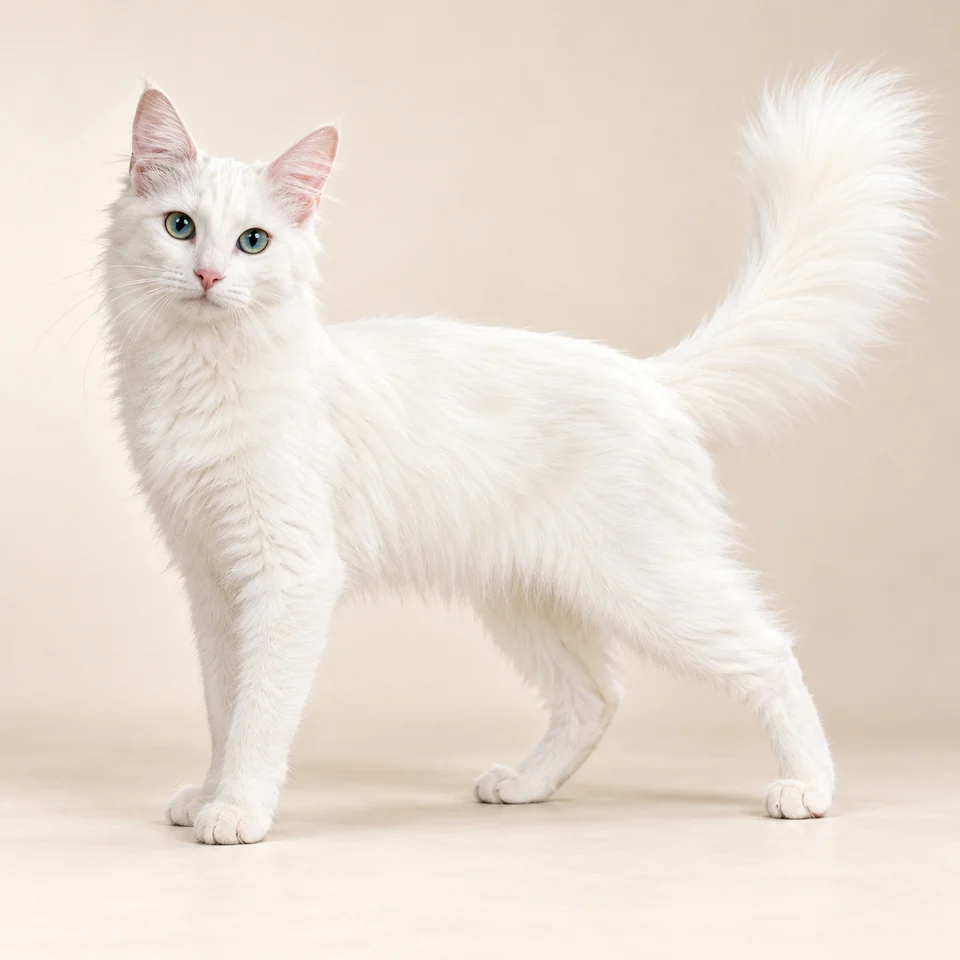
The Turkish Angora is the oldest known longhair breed.
It is a national treasure in Turkey. It looks delicate but has muscular strength and a very strong will. It is one of the most interactive and affectionate breeds. Owners say, "If you can't find your Turk, look up!"
Source:CFA
Quick facts
- Where it beganCFA
- Turkey (it is a national treasure there)
- When it beganCFA
- Its written history goes back to the 1600s, when these cats were brought to Europe from the Middle East.
- SizeCFA
- Small to medium-sized; its standard says medium in size, with balance and grace more important than size.
- Coat lengthCFA
- Longhair
- Coat feelCFA
- Fine and silky, with a sheen. It is so soft you need to feel it to believe it. Body coat length varies; tail and ruff are long and full.
- WeightTICA
- This is a medium-sized cat weighing 5–10 lb.
- LifespanTICA
- Some Turkish Angoras have been known to live into their early 20s. Life expectancy depends on health, diet, living indoors or outdoors and genetics.
Appearance
Turkish Angoras are graceful and elegant, with long bodies, long legs and a richly plumed tail.
Their large, upright ears sit high on the head. This gives a "bunny rabbit" look. Eyes are almond-shaped and come in many colors. The single coat is fine and silky and seems to shimmer as the cat moves.
Source:CFA
Body
Long, slender, firm and muscular body, finely boned; oval rather than round; long legs.
Source:CFA
Colors and patterns
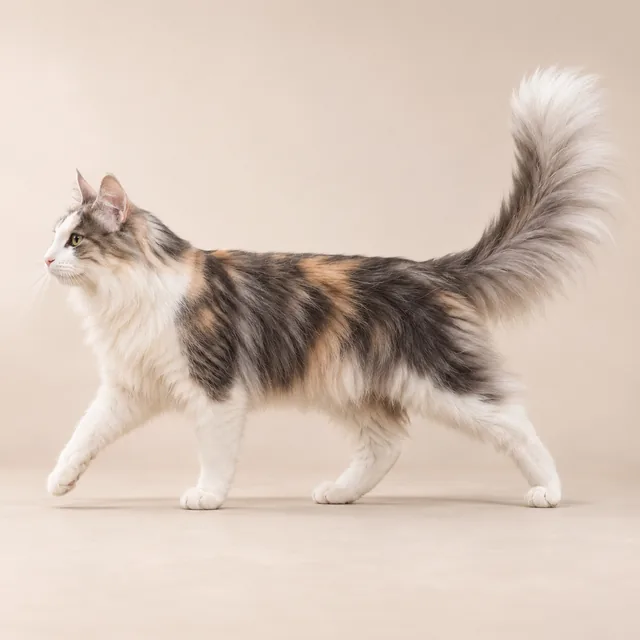
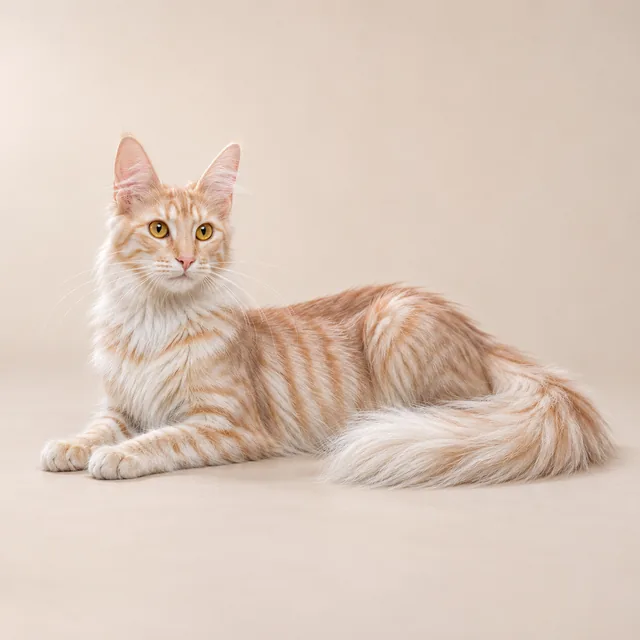
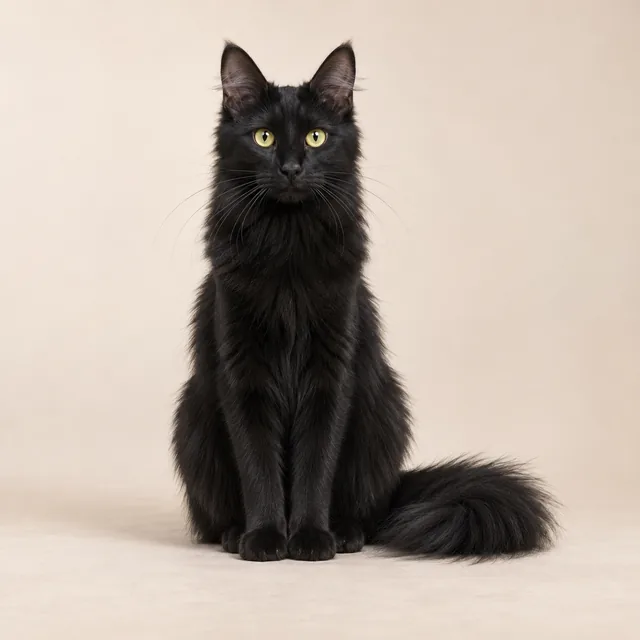
Turkish Angoras come in virtually every color. Chocolate, lilac and the pointed pattern are not eligible. White was once the only accepted color. Today solids, tabbies, smokes, shaded, parti-colors and bi-colors are shown.
Source:CFA
Eye colors
Any of blue, green, green-gold, amber or odd-eyed (one blue eye). Eye color has no link to coat color. Odd eyes often occur and are especially prized.
Source:CFA
Personality
Turks are one of the most interactive and affectionate breeds.
They are busy and curious. Intelligence can vary a lot. Some are so bright owners call them "Einsteins." Others sometimes forget where the food dish is. They are highly intelligent, with a sense of humor. They keep their kitten-like playfulness well into adulthood.
With their people
A Turk wants to be your constant companion and eager helper. Once one moves in, you will never do anything without "help." They are often called "doglike." They meet you at the door to tell you about their day.
Source:CFA
Living with a Turkish Angora
Care
The single coat does not mat easily.
This makes it one of the easiest longhairs to care for. Combing two or three times a month should control shedding in younger cats. Older cats may need it more often. A weekly comb will remove any loose hair.
Baths
If a bath is needed, a Turk will likely take it well. Turks have a natural liking for water. Dripping taps fascinate them, and some have joined their owners in the shower.
Source:CFA
Health
Turks are not known for any specific health problems.
But white cats can be prone to deafness, especially blue-eyed white cats. Choosing a colored Turkish Angora avoids any concern about deafness. Some white cats may have full or partial deafness.
Screening
In some parts of the world, white kittens must have a BAER hearing test to make sure they are not deaf. HCM is also a test all breeders should screen for.
Health questions to ask
For a white kitten, ask about its hearing. White cats can be prone to deafness, especially blue-eyed cats. Some places require white kittens to have a BAER hearing test.
Source:CFA
This is what CFA and TICA say about the breed. It is not a health promise for any kitten. TrueKitten verifies breeder identities and documents, but that does not guarantee a kitten's health. Ask the breeder for test results and talk to your vet.
History
The breed's written history goes back to the 1600s.
That is when these cats came to Europe from the Middle East. They were popular in France and are believed to have been among Marie Antoinette's pets. As the cat fancy grew in England, they were bred so much with Persians that the breed nearly vanished. In the 1930s the Turkish government began breeding programs at zoos to save it. The first Turkish Angoras came to the U.S. in 1954. Back then only white cats were seen as true Turkish Angoras.
Source:CFA
Did you know?
- Turkish Angoras are believed to have been among Marie Antoinette's pets.
- Some Turks have voluntarily joined their owners in the shower.
- It is the oldest known longhair breed.
- Owners warn, "If you can't find your Turk, look up!"
Source:CFA
For breeders
Details from the CFA and TICA show standards. Cat show judges use them. They do not rate a kitten as a pet.
What the show standards ask for
- Overall: balanced, graceful cat of angles and straight lines, medium in size with no exaggerated features; fine silky coat over a firm, long, muscular body.
- Head: small to medium, a medium long smooth wedge; profile of two flat planes meeting slightly above the eyes; no break.
- Ears: large, wide at base, pointed and tufted; set closely together, high, vertical and erect.
- Eyes: large, almond-shaped, slanting slightly upward; blue, green, green-gold, amber or odd-eyed, with no link to coat color.
- Body: medium size, finely boned, long and slender, oval rather than round; slim, rather long neck; rump slightly higher than shoulders.
- Legs and tail: long legs, hind longer than front; small round dainty paws; long tapering tail with a full brush.
- Coat: single coated; tail and ruff long, full and silky; britches on the hind legs.
- Color: all colors of equal value except hybrid colors (chocolate, lilac/lavender, pointed) and these with white.
Source:CFA
Points show how much each part counts when a judge scores a cat at a show. They add up to 100.
| Part | Points |
|---|---|
| HeadHead shape & profile 15, Ears (size 5; placement 10) 15, Eye size, shape and placement 10 | 40 |
| BodySize and Boning 10, Torso, including neck 15, Legs and Tail 5, Muscle Tone 5 | 35 |
| Balance | 10 |
| Coat | 10 |
| Color | 5 |
Source:CFA
| Part | Points |
|---|---|
| Head | 40 |
| Body | 40 |
| Coat/Color | 15 |
| Other | 5 |
Source:TICA
CFA colors and patterns
White; black; blue; cream; red; classic, mackerel, spotted, ticked and patched tabbies (brown, silver, blue, blue-silver, red, cream, red silver, cream silver); tabby and white; tortoiseshell; calico; dilute calico; tortoiseshell and white; blue-cream (and white); smokes; shaded colors; parti-color and bi-color; smoke and white; OTAC (any other color except hybrid colors chocolate, lavender, Himalayan pattern, or these with white).
Source:CFA
CFA allowances
Allowance for jowls; slight differences in length of profile planes not penalized; kittens may have a growth bump on the forehead or end of nose without penalty; lockets and buttons not penalized; leg barring on shaded cats or tabby markings on smoke cats may be present in younger cats.
Source:CFA
CFA penalties
Penalize: extremes such as obviously oversized, coarse appearance with a broad chest or hips, or verging on miniaturization; noticeable and palpable curvature in profile.
Source:CFA
CFA disqualifications
Disqualify: cobby body type; crossed eyes; incorrect number of toes; stop or break in profile; malocclusion (over or undershot chin); colors or patterns indicating hybridization (chocolate, lilac, point pattern, and these with white); directional kink of the tail.
Source:CFA
CFA breeding notes
It is important to always breed white cats to colored cats to reduce the chance of a deaf kitten.
Source:CFA
Common questions
Their loving natures and tolerance for frequent touching make them wonderful pets for young children.
Turkish Angoras are independent enough to stay home alone while people are at work or school.
Turks are one of the most interactive and affectionate breeds. They are busy and curious. Intelligence can vary a lot. Some are so bright owners call them "Einsteins." Others sometimes forget where the food dish is. They are highly intelligent, with a sense of humor. They keep their kitten-like playfulness well into adulthood.
The single coat does not mat easily. This makes it one of the easiest longhairs to care for. Combing two or three times a month should control shedding in younger cats. Older cats may need it more often. A weekly comb will remove any loose hair.
If a bath is needed, a Turk will likely take it well. Turks have a natural liking for water. Dripping taps fascinate them, and some have joined their owners in the shower.
Turks are not known for any specific health problems. But white cats can be prone to deafness, especially blue-eyed white cats. Choosing a colored Turkish Angora avoids any concern about deafness. Some white cats may have full or partial deafness.
Turkish Angoras come in virtually every color. Chocolate, lilac and the pointed pattern are not eligible. White was once the only accepted color. Today solids, tabbies, smokes, shaded, parti-colors and bi-colors are shown.
The breed's written history goes back to the 1600s. That is when these cats came to Europe from the Middle East. They were popular in France and are believed to have been among Marie Antoinette's pets. As the cat fancy grew in England, they were bred so much with Persians that the breed nearly vanished. In the 1930s the Turkish government began breeding programs at zoos to save it. The first Turkish Angoras came to the U.S. in 1954. Back then only white cats were seen as true Turkish Angoras.
Some Turkish Angoras have been known to live into their early 20s. Life expectancy depends on health, diet, living indoors or outdoors and genetics.
In some parts of the world, white kittens must have a BAER hearing test to make sure they are not deaf. HCM is also a test all breeders should screen for.
Questions to ask a breeder
- If the kitten is white, has it had a BAER hearing test?
- Do you pair white cats with colored cats in your breeding?
- What eye color does the kitten have, and do the parents have any hearing issues?
- Do you ever place retired show cats?
- How does the kitten react to handling and to children?
- Have the parents been screened for HCM?
Sources
Every fact on this page comes from the two cat registries, CFA and TICA.
Last updated