
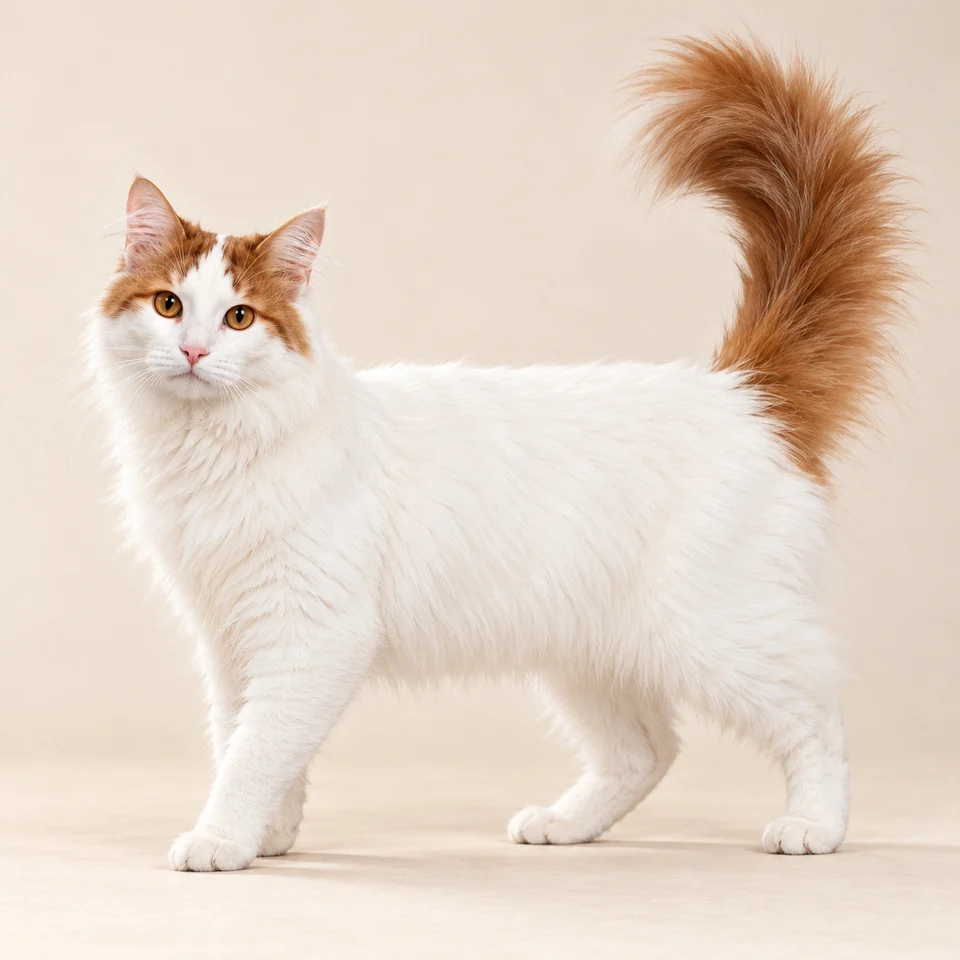
The Turkish Van is a large, strong, semi-longhaired cat from the Lake Van area of Turkey.
It is a different breed from the Turkish Angora. It is mostly white, with color on the head and tail. It is one of the most dog-like cat breeds. It is well known for liking water.
Source:CFA
Quick facts
- Where it beganCFA
- Turkey: the Lake Van area. A remote region of the Middle East.
- When it beganCFA
- The modern history began in 1955, when two cats were taken from Turkey to England. Crusaders are thought to have brought Vans to Europe earlier.
- SizeCFA
- Large. Males are substantially larger than females.
- Coat lengthCFA
- Longhair; the standard calls it semi-long.
- Coat feelCFATICA
- Semi-long and soft, with a cashmere-like feel. The short summer coat looks like a shorthair. The winter coat is much longer and thicker. The cashmere-like coat is waterproof.
- WeightCFATICA
- Males range from 10–20 lb and females from 7–12 lb. Mature males may weigh 20 lb and females are somewhat smaller.
- LifespanTICA
- Life expectancy is 13 to 17+ years.
- Fully grownCFA
- Turkish Vans take a full 3 to 5 years to mature. They keep growing until age five.
- CFA statusCFA
- Championship (since 1994)
Appearance
Vans are known for their large size, strength and soft, cashmere-like fur.
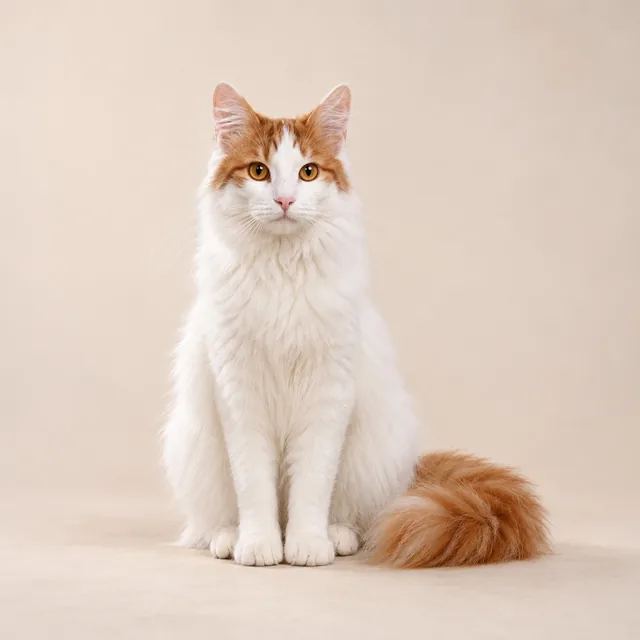
Markings are mainly on the head and tail. The head is a wide wedge with large ears set high and well apart. The eyes are large and set at a slant. The robust Van is like an Olympic swimmer, next to the ballerina-like Angora.
Source:CFA
Body
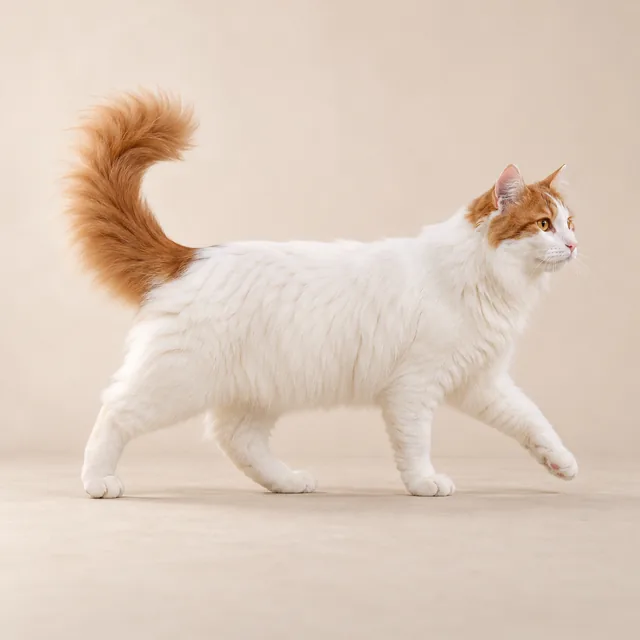
Solidly built, moderately long, sturdy, broad, muscular and deep-chested; substantial body and legs.
Source:CFA
Colors and patterns
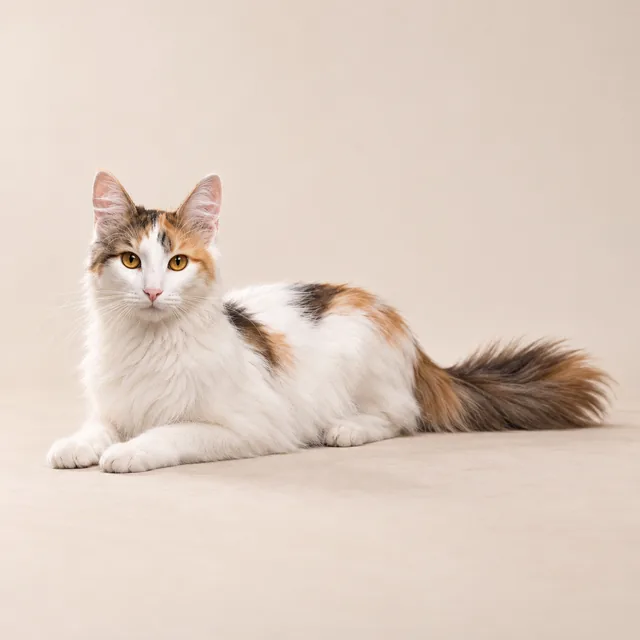
Van pattern only: a chalk-white body with color mainly on the head and tail. Some random body spots are allowed, up to 15% of the body. Colors include red, cream, black, blue, tabbies and tortoiseshells with white. Pointed, chocolate and lilac are excluded.
Source:CFA
Personality
They are loyal, very intelligent cats that are good at solving problems.
They are sweet and interested. They always enjoy a game of fetch. They are loyal and loving, and highly intelligent with a mischievous streak.
With their people
Vans crave being close to their owners. After play, they may curl up next to you on the couch. Some crawl into your lap while you watch TV. They follow you from room to room.
Lap time
A Van may crawl into your lap or curl up beside you after playtime. They will choose to curl up in your lap for a stroking session.
Being held
Vans are not fond of being held or carried. They feel more secure with all four feet on a solid surface. Vans do not want to be picked up and held or cuddled for long periods.
Voice
Vans do not have loud voices, but they are quite vocal. You will hear yours "talking."
Source:CFA
Living with a Turkish Van
Vans are large, very active cats.
They need plenty of space and regular play. Without it, they could easily become obese.
Source:CFA
With children
Vans do best with older children. Kids should understand that Vans do not like being carried. They should not pull the cat's tail.
Source:CFA
Activity
Vans have a high activity level. They love toys made of feathers or fur. They also make their own toys from crumpled paper. The breed is well known for liking water. Some founding breeders say even kittens will swim in pools or lakes on their own. The Van is "the swimming cat." Many of them enjoy water.
Training
Vans are very intelligent and good at solving problems, like how to open the cupboard with the cat food.
Source:CFA
Care
The Van is one of the easiest longhairs to groom.
It has no undercoat to tangle or mat. In the warm-weather coat, weekly combing with a steel comb should be enough. The heavier winter coat may need more care. The Van is easy to groom with weekly combing.
Baths
Vans are very clean cats. They should not need baths unless you plan to show them. If you do, ask your breeder about how to bathe and what products to use. The coat repels dirt to a large degree, so Vans do not need a lot of bathing.
Nails, ears, eyes and teeth
Keep nails trimmed, ears cleaned and teeth brushed regularly with a vet-approved pet toothpaste.
Source:TICA
Health
No specific genetic problems are known to affect the breed.
Without enough exercise, Vans could easily become obese.
Source:CFA
This is what CFA says about the breed. It is not a health promise for any kitten. TrueKitten verifies breeder identities and documents, but that does not guarantee a kitten's health. Ask the breeder for test results and talk to your vet.
History
Turkish Vans are thought to have reached Europe with returning Crusaders.
Their modern history began in 1955. Two British photographers brought a pair of Vans from Turkey to England. Their kittens founded the breed in Great Britain. In 1983, Barbara and Jack Reark of Florida imported Vans from France and the Netherlands. The breed was first recognized in 1988. It reached championship status in 1994.
Source:CFA
For breeders
Details from the CFA and TICA show standards. Cat show judges use them. They do not rate a kitten as a pet.
What the show standards ask for
- Overall: solidly built, semi-longhaired natural breed with great breadth of chest; takes 3 to 5 years to mature; balanced, with no exaggerated feature.
- Head: substantially broad wedge with gentle contours, prominent cheekbones, medium-length nose with a slight dip below eye level; jowls allowed in males.
- Ears: moderately large, set fairly high and well apart, wide at the base, slightly rounded tips, well feathered.
- Eyes: moderately large, rounded aperture slightly drawn out at the corners, set at a slant; amber, blue or odd-eyed.
- Body: moderately long, sturdy, broad, muscular and deep-chested; males substantially larger than females.
- Legs and tail: moderately long, muscular legs set wide apart; rounded, moderately large feet; long brush tail.
- Coat: semi-long, cashmere-like, no undercoat; short summer coat and much longer winter coat.
- Pattern: van pattern only - chalk-white body with color on head and tail; random body markings up to 15%.
Source:CFA
Points show how much each part counts when a judge scores a cat at a show. They add up to 100.
| Part | Points |
|---|---|
| HeadShape (boning, chin, nose, cheekbones, profile) 18, Ears (shape, placement and size) 7, Eyes (shape, placement and size) 5 | 30 |
| BodyType (boning, muscle, length, size) 18, Legs and feet 5, Tail 7 | 30 |
| Coat | 15 |
| Color and Pattern | 20 |
| Balance | 5 |
Source:CFA
| Part | Points |
|---|---|
| Head | 35 |
| Body | 35 |
| Coat/Color/Pattern | 30 |
Source:TICA
CFA colors and patterns
Van pattern only. Solid and white: red, cream, black, blue. Tabby and white: red, cream, brown, blue tabby. Parti-color and white: tortoiseshell, dilute tortoiseshell, brown patched tabby, blue patched tabby. OTVC: any other color and white (e.g. silver tabby, smokes) except Himalayan pattern and hybrid colors such as chocolate and lilac.
Source:CFA
CFA allowances
Allowances for age and sex (3 to 5 years to mature); jowling in males; seasonal coat; short coats and tail hair on kittens and young adults; color spots on paw pads acceptable; one or more random body markings up to 15% of the body.
Source:CFA
CFA penalties
Penalize: any evidence toward extremes (short cobbiness or svelte, fine boning); greater than 20% white in the tail; flat profile.
Source:CFA
CFA disqualifications
Disqualify: total absence of color from eye level to the back of the head, or on the tail; definite nose break; genetic/skeletal defects such as flattened ribcage, kinked or abnormal tail, incorrect number of toes, crossed eyes; color on more than 15% of the body (excluding head and tail).
Source:CFA
CFA breeding notes
Most breeders are committed to managing the health of their breeding cats and kittens. There are relatively few Van breeders in the U.S.
Source:CFA
Common questions
The Turkish Van is a large, strong, semi-longhaired cat from the Lake Van area of Turkey. It is a different breed from the Turkish Angora. It is mostly white, with color on the head and tail. It is one of the most dog-like cat breeds. It is well known for liking water.
Vans have a high activity level. They love toys made of feathers or fur. They also make their own toys from crumpled paper. The breed is well known for liking water. Some founding breeders say even kittens will swim in pools or lakes on their own. The Van is "the swimming cat." Many of them enjoy water.
Vans are not fond of being held or carried. They feel more secure with all four feet on a solid surface. Vans do not want to be picked up and held or cuddled for long periods.
Vans do best with older children. Kids should understand that Vans do not like being carried. They should not pull the cat's tail.
Vans get along well with dogs if properly introduced.
Males range from 10–20 lb and females from 7–12 lb. Mature males may weigh 20 lb and females are somewhat smaller.
Turkish Vans take a full 3 to 5 years to mature. They keep growing until age five.
The Van is one of the easiest longhairs to groom. It has no undercoat to tangle or mat. In the warm-weather coat, weekly combing with a steel comb should be enough. The heavier winter coat may need more care. The Van is easy to groom with weekly combing.
No specific genetic problems are known to affect the breed. Without enough exercise, Vans could easily become obese.
Vans do not have loud voices, but they are quite vocal. You will hear yours "talking."
Life expectancy is 13 to 17+ years.
Questions to ask a breeder
- How big are the parents, and how old were they when they finished growing?
- How does the kitten react to being picked up?
- Has the kitten met dogs or older children?
- How much space and play do the kittens get each day?
- How much color does the kitten have on its body, head and tail?
Sources
Every fact on this page comes from the two cat registries, CFA and TICA.
Last updated